


Emerging Markets
Opportunities, Hurdles In Serving Emerging Europe's HNW, Ultra-HNW Clientele – Deutsche
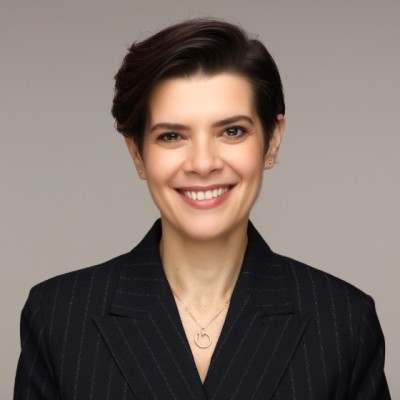
In a sector where client preferences and needs are as varied as in private banking, the complexity level goes up another gear in certain countries in the Balkans, Greece, Turkey and Israel. We recently talked to Deutsche Bank about this area.
It is a frequently made point that high net worth and ultra-HNW
individuals have common characteristics and have their
idiosyncrasies that require a bespoke wealth banking approach.
The same applies to countries.
In emerging and rapidly changing nations such as Turkey, Israel,
Greece, and various Balkan nations, this variety and need for a
tailored approach is particularly evident. Deutsche Bank recently
spelled out the complexities and opportunities in these countries
to WealthBriefing.
“You need a strategy for each country. These are usually growth
markets driven largely by entrepreneurs. There is a lot of wealth
creation and first-generation wealth,” Sofia Sool (main picture),
head of private banking for the Emerging Europe market, told this
news service at Deutsche’s London office in the City. “You need
to be clear on your value proposition in each market.”
Several of the countries under Sool’s purview have challenges
linked to politics, armed conflict and recovery from painful
financial episodes. For bankers and advisors, a deep local
knowledge, a long-term perspective and a tailored approach is
essential.
Sool knows about taking on challenges. She joined Deutsche Bank in July
2020 as the pandemic was raging. She spent more than seven years
previously at UBS, as head of Global Family Office clients
in London. Her appointment to Deutsche represented a return to
the bank; she had been at the firm for almost three years before
her time at UBS. From January 2001 to October 2010, she worked at
Credit Suisse.
Her Emerging Europe terrain involves the three booking centres of
London, Luxembourg and Switzerland with market coverage teams
working seamlessly across all three.
Turkey
WB asked Sool about the bank’s approach to serving
private banking clients from Turkey. While wealth management
clients from Turkey are served through Deutsche Bank’s
international booking and coverage network outside Turkey, the
Frankfurt-listed lender’s links to the country date back to the
late 19th century. After a period of change, the bank opened a
representative office in Turkey in 1954; the acquisition of the
US investment bank Bankers Trust in 1999 meant that Deutsche Bank
boosted its business base in Turkey. The banking licence was
changed in 2004 from that of an “investment” bank to a full
service, deposit-taking commercial bank.
“There is an extremely dynamic and entrepreneurial spirit in the
country,” Sool said. Business founders and owners are used to
handling relatively high inflation rates that have become
a feature of Turkey, she said. Business founders, including
the younger cohort, like the fact that Deutsche Bank has a long
track record in the country. Its investment banking arm, for
example, is recognised as an important business, she said.
The clients would like to see a universal bank that can handle
commercial business issues and the wealth management aspects at
the same time, she said. “Clients are very savvy about capital
markets and have a high level of sophistication,” Sool continued.
“They are open to weekly conversations and like a bank that’s
well versed about their locality.”
According to the 2025 edition of the UBS Global Wealth
Report, Turkey’s total number of dollar millionaires rose by
8.4 per cent in 2024 on a year ago, taking the total to nearly
68,000. This was the fastest pace among 56 countries that the
bank analysed. Figures from Knight Frank in 2026 showed that the
UHNW population grew 93.6 per cent from 2021 to 2026 to 4,208
people with more than $30 million. That number is expected to
grow another 13.4 per cent in the next five years.
Rising wealth explains why wealth management has traction. There
is a small, but increasingly visible family offices market in
Turkey, for example, as reported by WealthBriefing
here.
There are several rich families in the country, such as the Koç
and Sabanci dynasties, who are involved in areas such as
property, energy, retail and financial services.
Israel
Another country under Sool’s domain is Israel, which tends to
garner headlines that differ from the usual concerns of
banking and wealth management. Even so, with its famously
vigorous IT and venture capital sectors, for example, Israel is
an important market. The nation had about 195,000 millionaires at
the end of 2025 (source: UBS), rising by 4.7 per cent
year-on-year, a cohort that makes up 3.2 per cent of adults.
This year, Knight Frank said Israel’s UHNW population grew 71.4
per cent in the past five years to 5,462 in 2026. It is expected
to grow by 26.1 per cent in the next five.
Deutsche Bank has a senior team of wealth managers in Tel Aviv which is part of a large and active office in the country.
“This is a market that expects you to understand local dynamics
and expects long-term commitment and flexibility,” Sool said.
Technology entrepreneurs want, for example, early engagement by a
bank as they build their businesses, she continued.
Greece
As for Greece, to take a third of the countries in the emerging
Europe bracket, clients require both help with their
business’s affairs and their personal and family wealth, which
includes the family offices area, she said.
One marker of the German bank’s ambitions is that last November,
it set up dedicated Greek market coverage and it hired
Konstadinos Hatzinikolis as head of Private Bank Greece, based in
Luxembourg. The team has since grown with dedicated
relationship managers and investment coverage.
Greece had about 82,000 millionaires in 2025, after adding 2,762
during the year, a 3.5 per cent rise (source: UBS). The UHNW
population has grown by 74 per cent in the past five years
(from 523 to 910), Knight Frank said, and is expected to grow
another 25.3 per cent in the next five years.
“The way that most [Greek] families manage their wealth is to
keep a lot of liquidity inside the corporate perimeter, such as
on the treasury side in a holding company. This means they need
risk and liquidity management services, and corporate services.
The banking landscape has evolved, and we are seeing a niche area
for ourselves with our integrated private, corporate and
investment banking service, or a “Hausbank” approach as we call
it.”
Among other senior Deutsche Bank figures
interviewed by WealthBriefing is Marco Pagliara,
head of emerging markets, who talked about strategy and
developments in February this year.