


Tax
UK BUDGET PREVIEW: Little Relief In Sight For HNW Clients
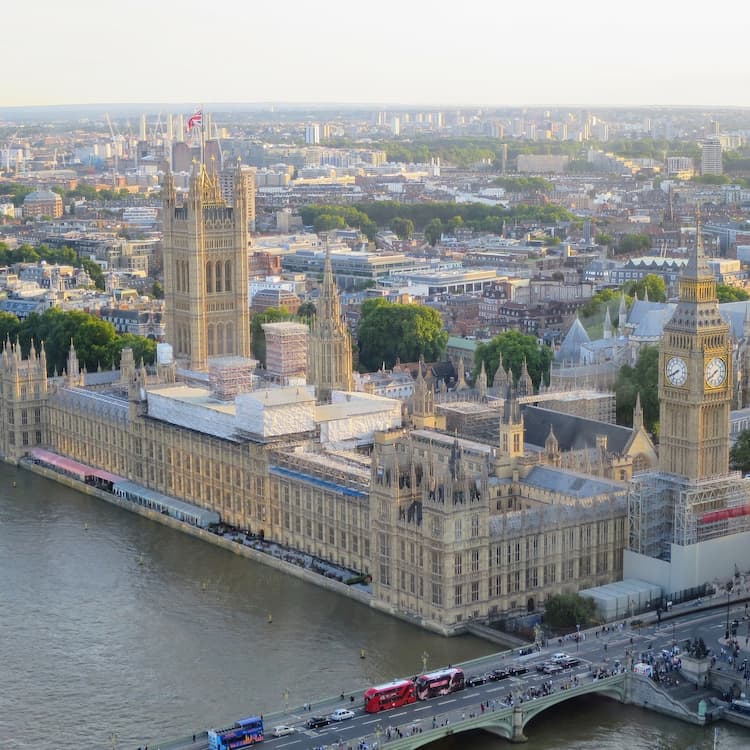
This publication considers what the UK finance minister, John Healey, might announce in parliament next Wednesday when he delivers his first Budget statement.
The UK stock of public debt has risen above £3 trillion ($4.01
trillion) and borrowing in the 2025/2026 financial year was £132
billion. Second-quarter GDP grew 0.5 per cent.
Against that background, with inflation proving stubborn and
10-year gilt yields at around 5.4 per cent, the UK Autumn Budget
on 28 October is unlikely to encourage wealth advisors to uncork
the champagne.
The Chancellor of the Exchequer, John Healey, who replaced Rachel
Reeves in the summer, will look for what revenue-raising ideas he
can, but he is constrained by concerns that tax, as a share of
gross domestic product, is already close to a post-war record of
36 per cent.
This is Healey's first Budget; Prime Minister Andy
Burnham faces what is arguably his largest test so far since
becoming premier in the summer, following the resignation of Sir
Keir Starmer in the wake of poor opinion poll figures for the
ruling Labour Party.
For those advising HNW individuals and families, few of the
likely developments will be welcome; at most, there will be
relief that some ideas being mooted, such as a wealth tax, may
not be on the agenda.
There has been speculation that Healey might raise capital gains
tax rates in line with income tax rates, although those rumours
appear to have been dampened down. Another possibility is a raid
on the allegedly “excess” profits of the banks. But if banks are
taxed more heavily, this will hardly encourage them to
expand business in the UK.
Hopes that Healey might give ground on inheritance tax (IHT), for
example, by raising the £325,000 nil-rate band in line with house
prices and other asset values, look misplaced. It also appears
unlikely that the Chancellor will completely reverse Reeves’
decision to scrap agricultural property and business property
reliefs from IHT.
No wonder: IHT receipts keep going up. Receipts in September 2026
totalled £936 million, compared with the £671 million
recorded in September 2025. From April to September, they were
£4.7 billion.
Healey’s budget comes amid continuing concerns that the UK is
leaking HNW individuals who prefer lower-taxed, more prosperous
destinations.
“The Budget should approach retaining taxpayers and raising
revenue as part of the same task. In our practice we are seeing
increasing numbers of wealthy individuals leave the UK and others
consider doing so. Giving them reasons to stay through a stable,
competitive tax regime should be central to securing sustainable
receipts,” Phineas Hirsch, partner, private client, at Payne Hicks
Beach, said in a note.
“Reports that a capital gains tax increase has been rejected,
alongside suggestions that an exit tax is not being pursued, are
encouraging, although we must await the Budget for confirmation,”
Hirsch said. “Clients have been weighing up their position
because of uncertainty about a possible charge on unrealised
gains, including those accrued before UK residence. Clarity would
help them plan with confidence rather than [making them] feel
they need to prepare for departure.”
Accountancy firm BDO said the UK Treasury
could review and possibly cap the capital value of individual
savings accounts and limit investment reliefs in Enterprise
Investment Schemes.
BDO said there is an “outside chance” that the tax treatment
of pensions will be made this year.
Another possibility, BDO said, would be replacing Stamp Duty
Land Tax and Council Tax with an annual land value
tax. While it has supporters, it could be hard to implement
quickly and valuations would be disputed, adding yet another
tax into a lacklustre property market.
In general, the opinion is that Healey has relatively limited
room for manoeuvre. With taxes already having risen considerably,
the UK is arguably exceeding the optimum level of tax that a
country can impose before taxes become self-defeating.
The UK’s fiscal challenges should not be seen in isolation; UK
public sector net debt is 95 per cent of GDP. In neighbouring
France, the net debt measure is 111.4 per cent on a comparable
basis. French President Emmanuel Macron has struggled to curb
spending. His predicament has been underlined by the civil
disorder that has wracked the country in recent days, with riots
in Paris, Lyon and other cities.
UK inflation was 3.5 per cent in the year through September,
latest figures show, up from 3.1 per cent from August. The result
is above economists' forecasts.