


Investment Strategies
ANALYSIS: Freight Rate Swings Put Maritime Investing In The Frame
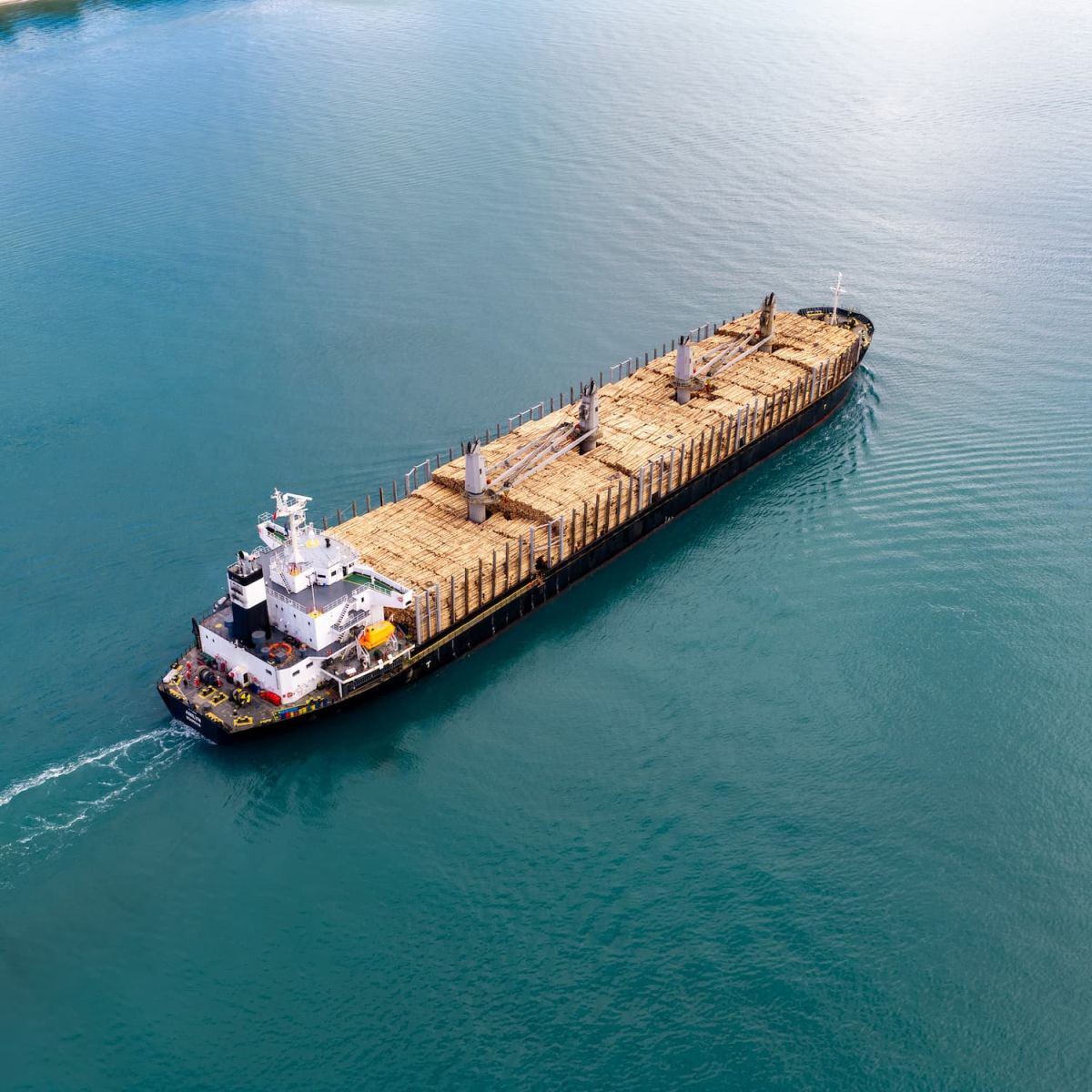
Disruption to major shipping lanes has sent freight rates on a rollercoaster ride this year. A specialist investment manager argues that shipping’s low correlation with other markets and its inflation-hedging qualities make it worth a closer look.
Interruptions to major shipping lanes in recent months, such
as the Strait of Hormuz, remind investors how important
maritime logistics are: while these problems can be a headache
for importers and exporters, they also highlight the sector’s
significance. A supply-side pinch, whatever the cause, can
inflate freight rates because it takes time to bring new ships
into the mix before the market settles at a new
equilibrium.
This is a major sector that the public perhaps takes for granted.
As much as 80 per cent of global trade is carried by sea. It is a
sector that seemingly only gets wide attention when there are
problems.
The way that shipping rates and revenues paid to ships’ owners
rise during supply interruptions can perhaps be positive for
investors seeking to diversify. This is part of the case that
Nikos Petrakakos, managing director at Tufton
Investment Management, a UK-based firm specialising in the
maritime sector, recently made to WealthBriefing.
Tufton’s assets under management, including committed pipeline
capital, are over $1.5 billion, across public and private funds
and mandates.
“The key thing about shipping is that it is uncorrelated with
other markets and it is an inflation hedge,” Petrakakos said.
“Different parts of the shipping sector don’t always move at the
same time.”
Prices have oscillated. Take the case of the Baltic Dry Index.
The BDI tracks the cost of shipping raw materials such as coal
and steel. The index is up about 36 per cent since early January
(from about 1,850 to 2,511), having surged as much as 60 per cent
from a low point in mid-January; it has fallen about 31 per cent
from its peak in September. In short, it has been a
rollercoaster.
The Drewry World Container Index, a widely-cited benchmark for
container freight, has approximately doubled since the start of
the year, reaching about $4,500 per 40ft container, with Asia-US
routes accounting for the gains (sources: Daily Cargo
News, others). Asia-Europe rates, however, have languished
since capacity returned via the Suez Canal. Reports say that
carriers are trying to push through higher Asia-Europe rates of
$4,500 to $4,800.
A website that monitors logistics, czapp.com, said the market in September and October showed regional divergence. "The global container market remained sharply bifurcated through September and early October. Transpacific rates stayed elevated, supported by strong US import demand, congestion in Asia, and capacity controls, while Asia-Europe pricing continued a steady correction from its July peak," it said.
Capturing a slice of the investment returns by navigating these
trends is what Tufton specialises in. The firm, founded in
1985, buys ships outright and then charters them out over periods
of, say, one or two years. These charters can be at a fixed rate
or linked to an index of inflation.
Petrakakos said that over the last 20 years, a diversified fleet
with low leverage and patient hold has shown to earn about 10-11
per cent. Leverage is kept low to avoid problems if the sector’s
rates go down.
There is a general shortage of shipping, Petrakakos said. “We are
bullish on this market because of that.”
“There was massive over-investment about 20 years ago,” he said,
referring, for example, to major shipbuilding activity in China.
However, several shipyards went bust and others cut activity.
Fast-forward to today, and there is a “very large” order backlog
for bulk carriers and for ships carrying cargoes such as
liquefied natural gas (LNG). The order queue for smaller ships is
not as long, he said. “Since 2008, there has not been much
construction in the smaller sizes [of ship] that we are in,” he
said.
Tufton Assets Ltd, with the appropriate stock ticker SHIP, is a
closed-ended investment company listed in London. Its portfolio
comprises 21 vessels, including product tankers, chemical tankers
and bulk carriers. Almost three-quarters of the portfolio
consists of ships aged 10 to 15 years, about a quarter of ships
aged 15 to 20 years, and the rest of ships aged five to10
years.
The company has delivered a net internal rate of return of 12.9
per cent since its inception in December 2017. Its shares trade
at a discount to net asset value at around 18 per cent.
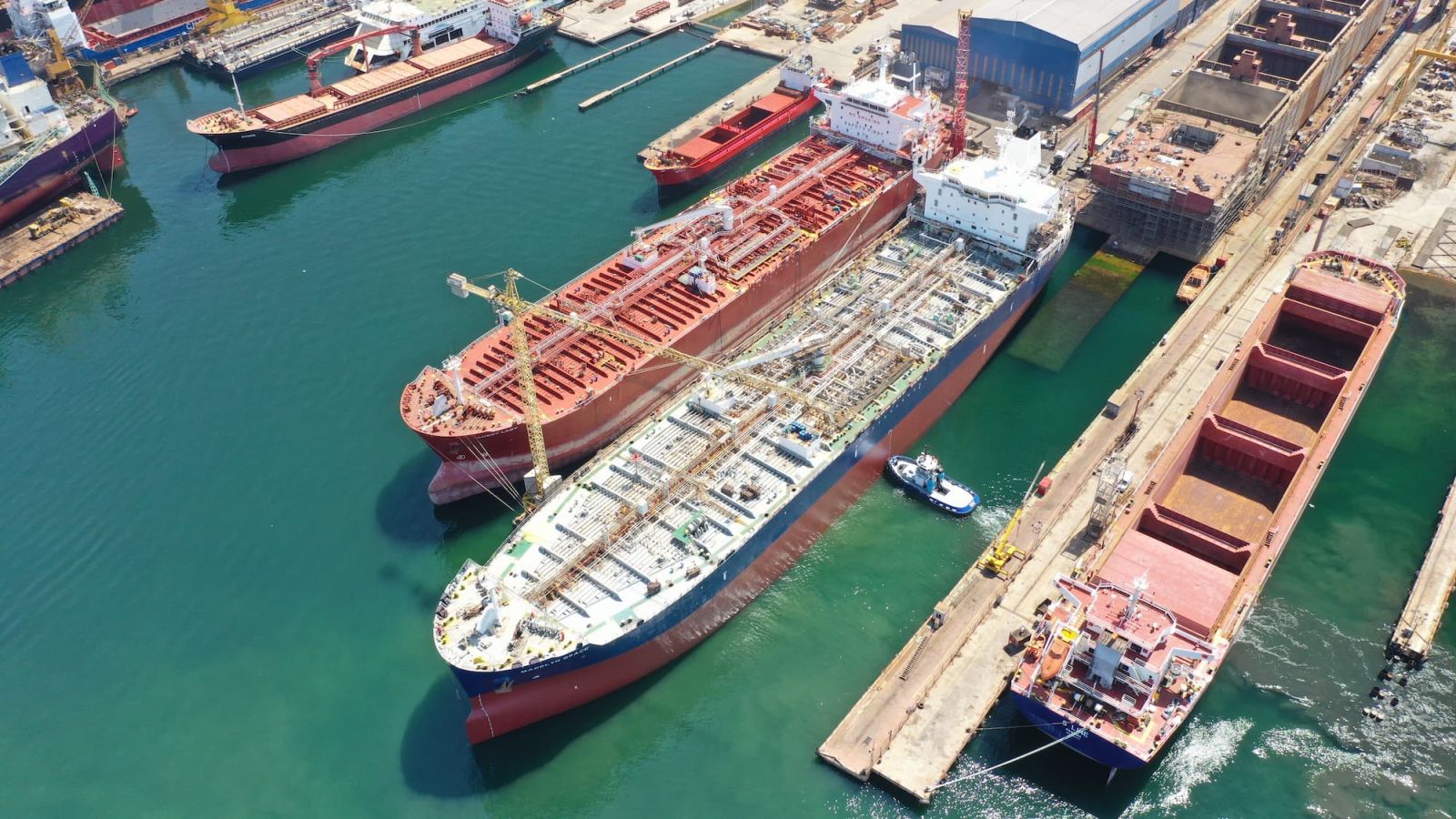
The maritime investment story
Shipping-focused funds are relatively few, but they exist in
various forms, both in unlisted and listed form, with varying
ease of accessability for private clients.
For example, Taylor Maritime Ltd (ticker TMIP), formerly Taylor
Maritime Investments, is a London-listed, Guernsey-based
investment company that owns a fleet of dry bulk ships.
There are exchange-traded funds (ETFs) that track shipping
indices, such as the US-listed SonicShares Global Shipping ETF
(ticker BOAT). There are also the stocks of listed shipping
operators to consider, such as giants AP Moller-Maersk and
Hapag-Lloyd.
Away from listed markets, examples include MPC Storm Maritime
Opportunities, a platform launched in February 2026 by MPC
Capital and Storm Capital to buy modern second-hand ships. A US
example is Hudson Structured Capital Management, which closed
Hudson Northern Shipping Fund V in 2025 with $719 million of
committed capital to provide senior loans and capital leases
secured on vessels.
Recent geopolitical events, such as around the Gulf and Red Sea area, have put the importance of shipping lanes and their flows under the spotlight. The significance of this has been growing for some time. A decade ago, for example, piracy off the coast of Somalia in East Africa sent insurance rates soaring, prompting counter-measures. The writer, Edward Fishman, addressed the challenges for ship-born trade with his 2025 book, Chokepoints: How The Global Economy Became A Weapon Of War. A contributing editor of WealthBriefingAsia, Paul Cuthbert-Brown, has examined the supply chain issue and its significance for wealth management, here. To some extent, the ability of ships to move around without hindrance from war or trade restrictions is a marker for globalisation.
Experience
Getting a handle on this sector takes experience and knowledge.
Before his current role, Petrakakos was a partner at ARGO Capital
Advisors, where he advised on fundraising for cleantech and
maritime technology startups, as well as on M&A and pre-IPO
secondary transactions. He was also a director of investment
banking and head of environmental innovation at Seabury Capital,
focusing on maritime infrastructure. In 2014, he co-founded Ursus
Maritime Capital, a provider of green ship retrofit financing, in
partnership with the Carbon War Room. Earlier in his career, he
served in executive roles at Oldendorff Carriers, HART Shipping,
PPG Industries, CMP and Maroon Capital Group.
Petrakakos, who joined Tufton more than four years
ago, relishes unearthing opportunities in the sector. Tufton
prefers to focus on smaller vessels because this end of the
market tends to be less volatile, he told WB. One reason
for the lower volatility is that there are more small ships than
large ones, he said.
Another challenge with the largest ships is port infrastructure.
“Larger container ships are designed for certain ports,” he
said.
(The largest vessels tend to carry a single commodity which
Tufton’s fleet doesn't face as they are able to go to almost any
port and carry a wider variety of commodities. This also means
less volatility versus the larger size of vessel.)
In total, covering all aspects of shipping, this global business
is worth about $2 trillion, Petrakakos said, and yet for a long
time it has not been widely accessible, if at all, to private
investors.
While geopolitics and other forces may give the shipping industry
more publicity than it would welcome, recent events are a
reminder that shipping, as an asset class, is worth attention.