


Strategy
Deutsche's Private Bank Eyes Latin America; Asia, MENA Businesses Growing
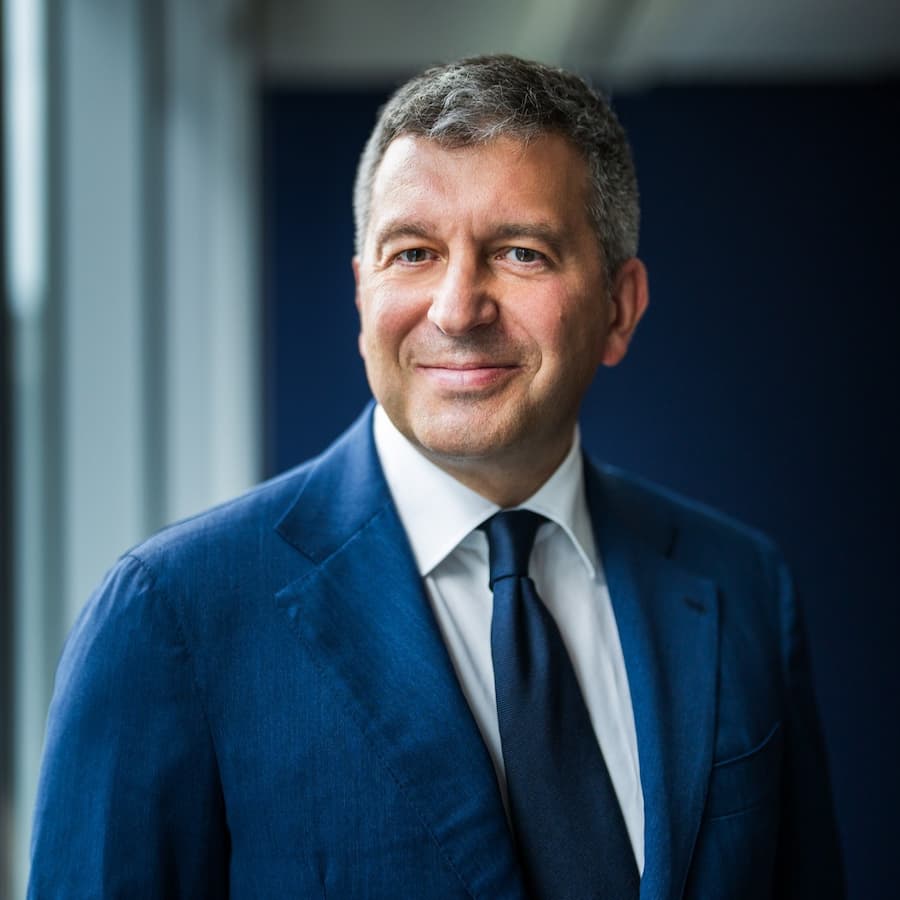
Release in early February of strong financial results for the German group seemed a good opportunity to ask one its senior private bankers about growth strategy, where the lender is focusing its activities, and more.
The fortunes and profile of emerging markets wax and wane, but
now this immensely varied collection of nations appears to be a
risk diversifier for investors rather than a way to add risk, so
asset managers appear to say.
The private bank of Deutsche Bank is
positive about growth, looking at areas including Latin America,
as well as developing its business in Asia, Africa and the Middle
East, Marco Pagliara, head of emerging markets, told
WealthBriefing in a recent meeting in the firm’s London
offices.
Like Asia, the growth markets in the Middle East, in particular
the UAE and Saudi Arabia, are very promising, as is the case with
the Latam market, he said.
Deutsche has built a “good base of profitability,” he said,
citing recent financial results. “Our wealth management model is
now proven, and we are scaling it up. While we are the leading
eurozone private bank and aspire to be Europe’s banking champion,
we still have significant room for growth outside of Germany,” he
said.
Pagliara said he is focusing on organic growth for the business
and making a range of hires.
This news service spoke to the firm a few days after
Frankfurt-listed Deutsche Bank issued its full-year and
fourth-quarter 2025
financial results. It logged a fourth-quarter 2025 pre-tax
profit of €2.027 billion ($2.38 billion), surging from €583
million a year earlier. On an attributable basis, the figure was
€1.298 billion, soaring from €106 million. In 2025, the private
bank made a pre-tax profit of €2.3 billion, rising 95 per cent on
a year before. It appears that the lender has financial firepower
to build the kind of growth Pagliara talked about.
An important strategic consideration is where banks book business
and deploy talent to obtain the right mix of revenue growth and
manageable regulatory compliance.
WealthBriefing asked Pagliara how and where he
considers locating booking centres. He is drawn to the
idea of connections between hubs, as akin to “corridors” of trade
and people (a subject we
wrote about late last year).
“Clients from different regions have definite preferences for
where they source advice and where they establish custody,” he
said, and this can explain the different client preferences with
regards to how they engage with banks in different financial
centres.
Dubai is an opportunity for Deutsche Bank, he said. “This is an
obvious place for Non-Resident Indians and Gulf
clients. Most international banks have limited capabilities
while Deutsche Bank has a strong, well-established and growing
line-up of advisory,” he said.
Intermediaries approach
This publication asked Deutsche Bank how it has changed
its approach to handling intermediaries such as
external asset managers (EAMs) and family offices in recent
years. (See
an interview this news service conducted last year with the
bank about its Asian EAM operations.)
Today, it focuses on the largest of such organisations. Deutsche
Bank goes after EAM partners who are in the top tier of this
segment of the wealth management market. The bank sees EAMs as
integral to its institutional offering for the UHNW segment,
enabling the bank to reach beyond the clientele that it serves
directly.
“For years we treated EAMs like private clients. In Asia, it was
relatively significant in terms of client activity. It made sense
to centralise it,” he said.
Having a centralised, efficient controls system in place makes it
easier for banks to manage risks.
He was asked about the
tough compliance regime in Singapore, and concerns from the
industry about long
onboarding times.
“Compliance standards are strong in Singapore and have been
further uplifted in recent years,” he said, referring to KYC and
other tests. “In that context, Deutsche Bank anticipated and
prepared for the tighter control environment.”