



Client Affairs
GUEST COMMENT: "Mid-Wealthy" Feel The Squeeze On Luxury Assets
Lisa Vizia, Director, and Philip Radford, senior manager, Saffery Champness Registered Fiduciaries, Guernsey, write about the changing fortunes of luxury property assets.
Lisa Vizia, Director, and Philip Radford, senior manager, Saffery Champness Registered Fiduciaries, Guernsey, write about the changing fortunes of luxury property assets. The editors are pleased to share this material with readers but point out that they do not necessarily endorse all the views expressed here.
The recession has not tempered the appetite of the uber-wealthy for “trophy assets”. But for those with mid-tier wealth it has been a different story with lower returns and maintenance costs continually rising. Consequently, many wealthy private clients want to convert their high value assets to cash.
This then leads to complications for trustees when it comes to discussing with clients the acquisition and disposal of high value assets and how best to structure them.
Probably the most conspicuous of the “toys” favoured by the mega-rich have traditionally been top-end super yachts and private jets. Such assets are worth hundreds of millions and billionaires are paying for them in cash.
When the latest large commercial aircraft is launched onto the market the very wealthy aspire to acquire one for private use. For example, in the last year or so, several rulers of countries are said to have placed orders with Boeing for the new 747-800 aircraft, which is much bigger than the previous incarnation of the 747. Such owners will use their aircraft as some would a chauffeur-driven vehicle for their own personal travel.
In addition, certain business assets have moved into vogue as prestigious new possessions to own. As well as football clubs, there is a trend towards London hotels, typically for Middle Eastern and Russian clients. Hotels appeal because the owner may wish to reside in the penthouse or the entire top floor with full hotel services on tap when they visit London. There is also the potential for the hotels to be converted into residential properties in the future.
Complexity
All this makes life interesting for the trustee as there are quite a number of complexities when dealing with these types of assets. The owner will want to enjoy their possession at any time, often at short notice, and the trustee’s role is to ensure that all formalities have been dealt with in order to make this possible.
For example, a private aircraft may spend a good deal of time in an airport hangar but it also needs to be flown in order to be kept “current”. A hangar may need to be purchased and this has its own complications when compared to buying other forms of commercial property. The trustee will need to appoint expert specialist advisers in order to ensure that things are done properly.
Questions to address may include: How should the asset be structured? Are there issues around VAT and chartering? What legal and tax advice is appropriate, according to where the asset is being built, acquired, held and used?
Then there are operational matters to consider, such as those for superyachts: A new-build can take several years, during which much monitoring and liaison will take place; the contracting out or employing of the crew; mooring – will it need to take pride of place at the Cannes Film Festival or the Monaco Grand Prix and then be moved to a less conspicuous mooring out of season?
Finance
A key issue with the acquisition of such assets by the uber-wealthy is that finance is rarely involved so they have not been impacted by the credit crisis and they don’t need bank loans.
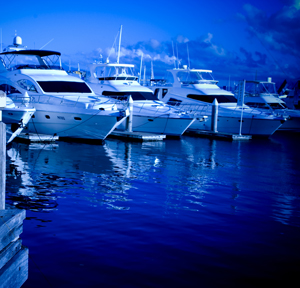
For the mid-tier wealthy however it can be a very different story. It is a buyer’s market and there are many yachts on the market, worth up to £50 million, because the owner is unable to continue financing the build or cover the running costs. Chartering out the boat may be one solution but wear and tear and running costs also need to be considered.
The most saturated space is between £5 million (around $8 million) and £15 million, where the market is awash with yachts between 35 and 50 metres which are being offered at massively discounted prices. Such yachts can start with an asking price of around $10 million and then end up selling at a much lower value.
Even then disposal can bring some relief to the owner as maintenance can be very expensive, such as servicing costs and staying “in class”, in themselves running into hundreds of thousands and sometimes millions. Furthermore, the client’s liquidity may be needed elsewhere.
Many of the yachts which have dropped in value have been financed and as loans are coming up to maturity the banks are either withdrawing funding or seeking additional alternative security to finance the loan.
Price reductions are being reported at up to 30 per cent (for yachts of around 60 metres)and deals remain hard fought and won, with the risk of collapse at any moment. As a general rule of thumb one would be ill-advised to spend more than 10 per cent of overall wealth on a yacht because of the running costs which are high in proportion to the reduced capital value, plus, with lower returns on investments, liquidity and cash flow could be further issues.
In summary, the uber-rich are still keen to invest in the latest must-have “toy”, necessitating an interesting and specialist role for trustees. The challenges lie with the mid-tier wealthy, where much-loved assets are dropping in value and sometimes crippling an already strained portfolio. Here, trustees will need to hold their nerve and steer their clients through the options to find the least painful and most cost-effective solutions.