


Banking Crisis
OPINION OF THE WEEK: Could UBS Move Swiss HQ If Proposed Capital Rules Bite?
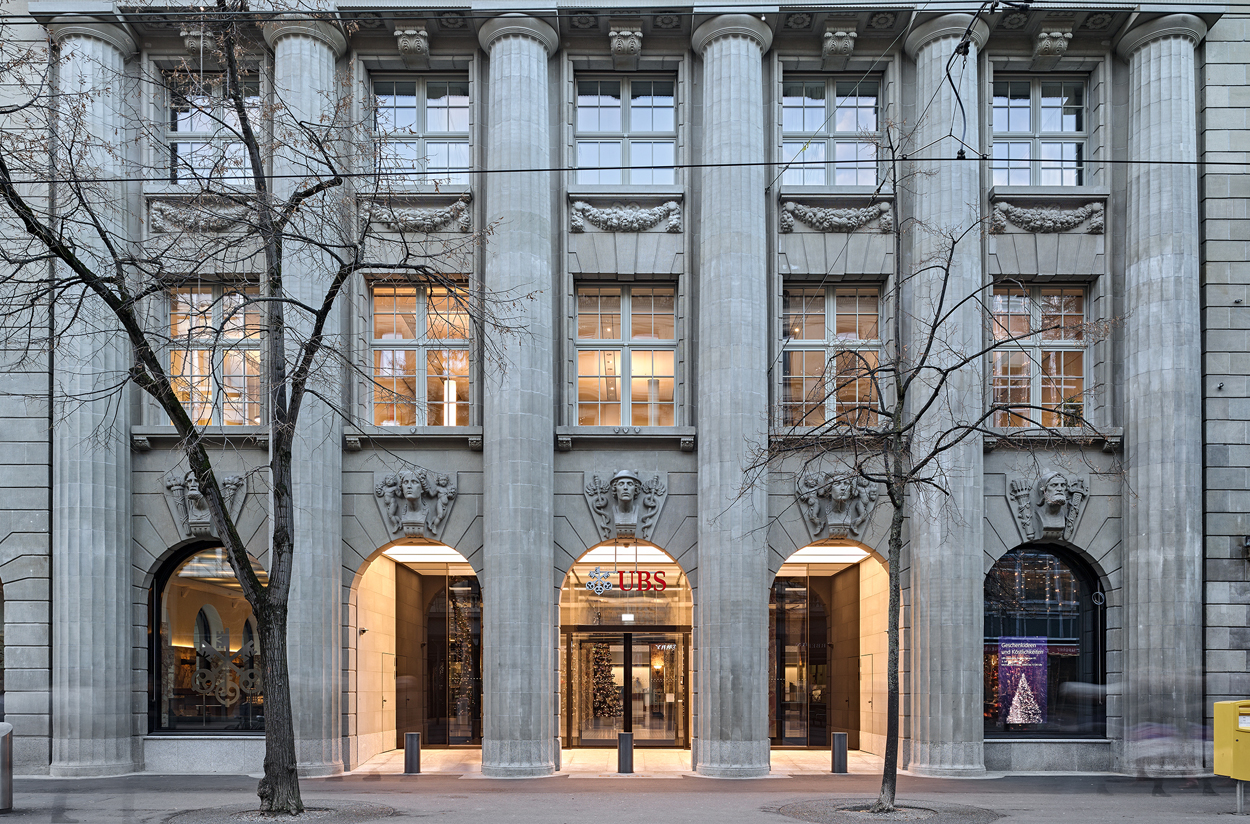
The editor considers what UBS might do if proposed federal Swiss capital rules, likely to be finalised next year, put it in an uncomfortable competitive position against international rivals.
When UBS reports its third-quarter financial results on Wednesday, perhaps more than is usual, we journalists will want to find any clues as to what CEO Sergio Ermotti (pictured below) and colleagues think of the suggestion that the bank might contemplate shifting its HQ out of Switzerland or make major corporate changes.

Sergio Ermotti
Why such a dramatic step? Because, as some reports suggest
(Wall Street Journal, 14 October), UBS fears that
heavier capital rules being contemplated by Swiss federal
lawmakers will threaten its competitive edge against
international rivals. UBS might decide to quit the country, at
least as far as its corporate HQ is concerned. (The main
picture shows the UBS HQ.)
Even if an HQ move to abroad is unlikely, how might UBS, from a
corporate structure point of view, respond if new rules
are imposed? Might it separate itself from some
international operations? Your correspondent will be Zurich for
most of this week, so I will be interested to take views.
At the core of UBS’s worry is that its foreign business lines in
key regions such as Asia and North America, are important
business drivers. The Zurich-listed group prides itself on a
broad, international footprint. It is part of its appeal. At the
same time, the “Swissness” of UBS is also a feature, not a bug.
The UBS emergency takeover of Credit Suisse in 2023, carried
out at the behest of the Swiss authorities, has dented
Switzerland’s image but there is plenty
of vigour in the country’s banking sector. Switzerland
is the world’s second largest centre for
cross-border financial services, as stated earlier this year
by Boston
Consulting Group. (Hong Kong is now the largest.) With
political and financial strains in neighbouring European
countries such as France, the safe-haven Swiss brand carries
appeal.
Some background: In late September, Switzerland's upper house of
parliament voted for capital rules that would require UBS, the
country’s sole universal bank, to back its foreign units with 90
per cent CET1 capital. The upper house narrowly rejected a
proposal agreed by an upper house committee to allow UBS to back
foreign units with 50 per cent CET1 capital and 50 per cent
Additional Tier 1 (AT1) capital, a cheaper form of asset.
Lawmakers would prefer UBS to fully capitalise all its large
foreign subsidiaries instead of funding them with borrowed
money.
This “90 per cent” proposal will add a cost of $16 billion in
extra shares, UBS says. Additionally, the proposed package will
load a further $2 billion to the cost. That $18 billion total is
an increase of 25 per cent on top of UBS’s current common equity.
Banks understandably want to run as lean a business as possible
rather than tie up capital in these capital “buffers” where every
added amount cuts into return on equity.
The issue has been brewing since UBS bought Credit Suisse. UBS
possibly thinks the risk of such heightened capital rules is
scant reward for that rescue, and says that the proposed rules
are more
severe than those facing its rivals. In the minds of
lawmakers, however, is the shadow of the 2008 financial crisis
and whether, if UBS were to find itself in serious financial
trouble, it would be too large for the Swiss taxpayer to bail
out. As
reported in April 2024, the Federal Council wants
systemically important Swiss banks, such as UBS, to
hold significantly more capital against their foreign units. UBS,
Raiffeisen Group, Zürcher Kantonalbank and PostFinance are deemed
systemically important lenders.

Federal parliament in Berne
Reports point to growing calls for change. For example, a report
by the WSJ earlier this month said UBS executives are
preparing to ditch their Swiss home base. Options being
considered include buying a US-based financial institution and
relocating, merging with a European rival or selling itself to a
US firm seeking to serve wealthy clients.
It is possible that speculation was partly fuelled by UBS's
announcement in March this year that it had secured clearance to
convert its US bank, UBS Bank USA, to a nationally
chartered bank. However, from this news service’s
conversations with UBS in the US, this was more about providing
its US-based wealth arm with access to a US-chartered bank under
the same UBS banner, and not suggestive of anything more
significant.
As of the time of writing, it seems that Ermotti believes it
is important for the bank to protect its Swiss HQ.
During a CNBC interview on 6 October (source:
WSJ), he said he thought that having UBS based in
Switzerland was good for the Swiss economy, clients, and
shareholders. “But of course we will need to consider what needs
to be done in the future in order to preserve and take care of
the interests of our shareholders, our clients, but also our
people,” Ermotti was quoted saying. However, reports also noted
that asset manager Artisan Partners, which owns a stake in the
bank, told UBS directors: “The simple fact is that Switzerland is
no longer an attractive or desirable location for UBS.”
One option might be for UBS to shift the HQ to its
investment bank, typically the most capital-hungry arm of a
lender, out of Switzerland, and keep the rest of the business
under its Zurich HQ. This may be far preferable to a complete
move from a country that, for all the challenges since the demise
of bank secrecy for cross-border accounts, is still envied for
stability, rule of law and economic strength. But any corporate
change will be a difficult act to pull off: management will want
to avoid disruptions that will alarm its high net worth and
ultra-HNW clientele.
Shares in UBS have risen 0.4 per cent since the start of January.
Investors will look for more clarity on this issue before that
price can go significantly higher.
To comment, contact the editor, email tom.burroughes@wealthbriefing.com