


Family Office
For Family Offices In Motion, It's Much More Than Just Taxes
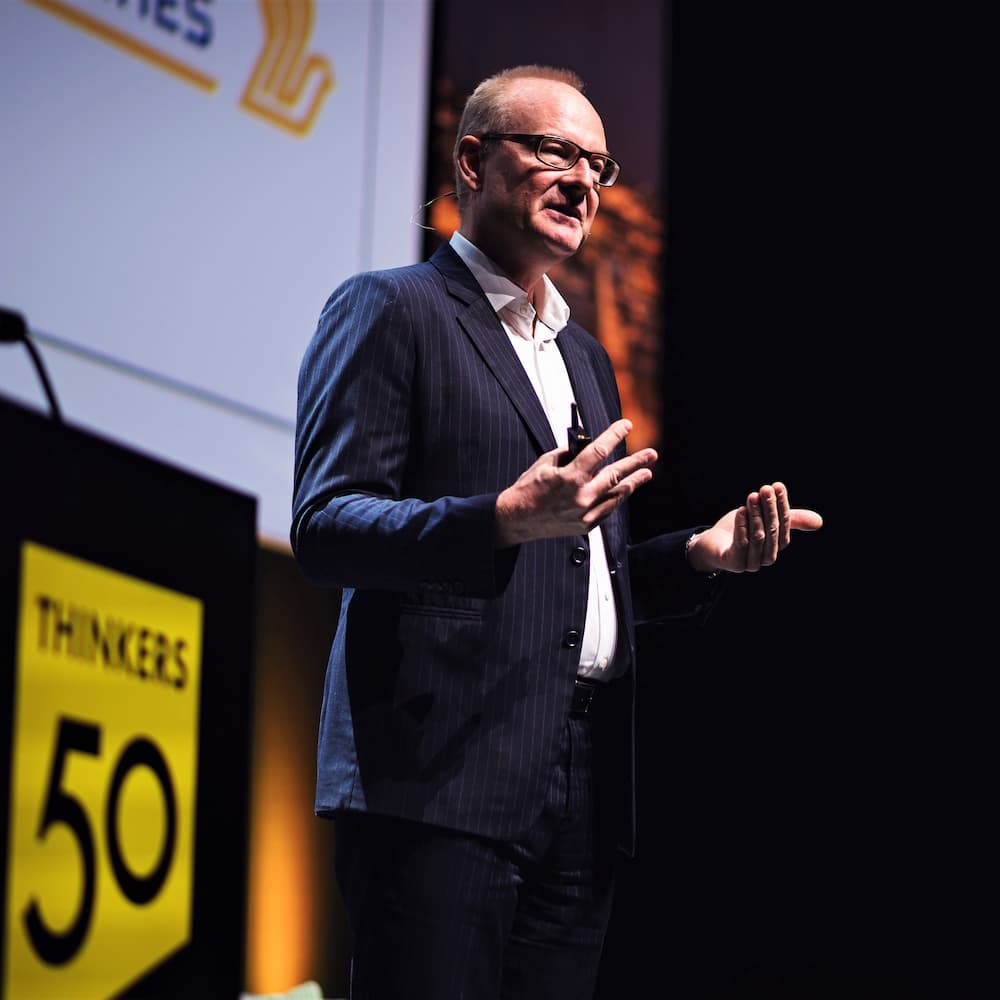
Continuing our look at the changing footprints of family offices around the world, we talk to a Denmark-based family business and family office expert who works with UHNW clients.
In our recent coverage of “family offices in motion” – see our
articles
here and
here – one point that jumps out is that there is far
more involved in moving to a new location than simply considering
the tax implications. Irrespective of all the noise about
"non-doms" fleeing from the UK, or the threat of
a Californian
wealth tax, it is an important point.
Family offices and the UHNW people that these entities are
designed for need to be in thriving “ecosystems” – financial
centres with network benefits where they can swap ideas and gain
a level of mutual support. Those benefits don't always correlate
with the lowest-tax jurisdictions.
WealthBriefing recently explored such ideas with Martin
Roll (main photo), a global family business and family office
expert who runs his eponymous business, Martin Roll Company,
which serves family firms and family offices. A Danish
national who resides in Copenhagen but travels to 40 countries
yearly, Roll works with business families and family offices
across the world on strategy, leadership, transformation,
stewardship, succession, governance, professionalization,
ownership, and other critical topics for long-term,
inter-generational success.
Roll has expertise and experience with most types of
business family dynamics, multi-generational and next generation
challenges, and long-term planning and strategy
situations. He is also senior advisor with McKinsey & Co
and a Distinguished Fellow at INSEAD, the
France-headquartered business school, and is the editor and host
of the INSEAD Family Business
Podcast. Roll counsels on the family dynamics and
psychology of business families, and deals less with the
financial, legal and tax implications, although they overlap.
Protecting what is passed on is a key factor in deciding where
family offices are based and how they function. “You don’t want
to be the one that squanders grandma’s business,” Roll told
WB.
“Family offices are really about stewardship, and securing the
legacy, heritage and longevity for a family firm,” he said. “Most
of them aspire to be successful for a very long time – often over
generations. Family offices are unique structures to enable
long-term business for families. In my view, they are less
about the financial aspects and wealth, but rather about
stewardship and keeping the business family together over
time.”
What about all the commentary on UHNW individuals and family
offices opening new offices, moving to new, more favourable
jurisdictions and taking their wealth with them?
Such issues should be seen in a long-term context, Roll said.
“Family offices move around to de-risk and to seek opportunities.
They think in terms of 100 years…you need to de-risk, hedge and
think about this. You also need to be able to regularly renew
what the business family is all about and therefore think in
terms of ecosystems and learn from other family offices. Every
generation in a business family typically makes a big move to
push the needle forwards,” he said.
As a rule, family offices have an “anchor” or legacy location,
and they sometimes have several small offshoots in different
places, such as Dubai and Singapore.
Some of the movement is influenced by the availability of service
providers, sources of expertise and the legislative
environment.
Roll and others who work with UHNW families, aiding and guiding
them in these areas, such as Philip Marcovici and Gregg Robins
(see interviews we have done with them
here and
here respectively), work at a time when rising wealth
and complexity is creating demand for family offices.
According to a 2024 report from Deloitte, there are an
estimated 8,030 single-family offices in the world today – a 31
per cent increase from 6,130 in 2019. This number is projected to
grow to 9,030 family offices by 2025 and 10,720 by 2030, marking
a potential 75 per cent rise in just over 10 years. Collectively,
they hold $5.5 trillion, and by 2030, they will hold $9.5
trillion.
Competition
There has certainly been a concerted push by jurisdictions such
as Dubai –
with its new family offices hub – and
Singapore to reach out to family offices – albeit with
tightening rules to weed out bad actors. Hong Kong has
actively targeted the space. The small Mediterranean island
of Malta (a European Union member state) has crafted legislation
designed to attract family offices. There are structures in place
in IFCs such as Jersey, for example, and for multi-family offices
in Monaco. (To illustrate: Law 1.439 in Monaco, enacted in
December 2016, regulates MFOs; they have to be authorised by the
principality’s regulator, altough it excludes single-family
offices, so SFOs don’t need a specific licence.)
Competition and innovation mean that the family office chessboard
is never static.
“We should see all these moving [tectonic] plates as a form of
innovation,” Roll said.
Ultimately, what drives all the changes is, hopefully, the desire
by family offices’ members to remain competitive and keep the
family and business united, he continued.
“Essentially, the success of family businesses depends on whether
the business families have the burning flame of entrepreneurship.
The original founder always has it, and that desire to build and
scale across generations is important to nurture in any
subsequent generation. It requires a deep understanding of why
the family exists and the legacy that makes it unique while at
the same time keep renewing it. That typically creates naturally
tensions that must be managed. That is the burning flame
needed.”
Varying approaches among generations feed into the movement, he
said.
“Generational differences mean younger members of a dynasty will
often have a different mindset and approach. They want to
identify and decide on what they want to do, and mitigate the
pressure from family expectations, the feeling of guilt and other
matters. They typically settle for one or more of the three
roles: 'owner’, 'steward’ and/or 'operator’. Roles will evolve
over time. For example, they work outside the family business and
return later, or work in the family business for years trying to
rise to the top,” Roll said.
We’re all in this together
Moving away from what might encourage family offices to move
around, Roll also reflected on other matters that arise.
“The most important challenge for business families is to make
sure that all family members have meaningful roles and feel
included in the ecosystem. That does not always mean being part
of running the company or sitting on [the] board, but they should
be recognised and feel they are part of the family,” he
said,
“Younger people are super-entrepreneurial and sometimes you need
them to go out, fly and try something. Maybe even fail – and
learn from it,” he said.
“I ask them if their entrepreneurial desires and energy to build
could be done under the umbrella of a family office? In many
cases, younger family members can start an adjacent business
rather than completely separate from a family. This renewal can
be powerful, and the history books of generational business
families are full of examples,” Roll added.