


Banking Crisis
Endgame Approaches For UBS In Tussle Over Swiss Capital Rules
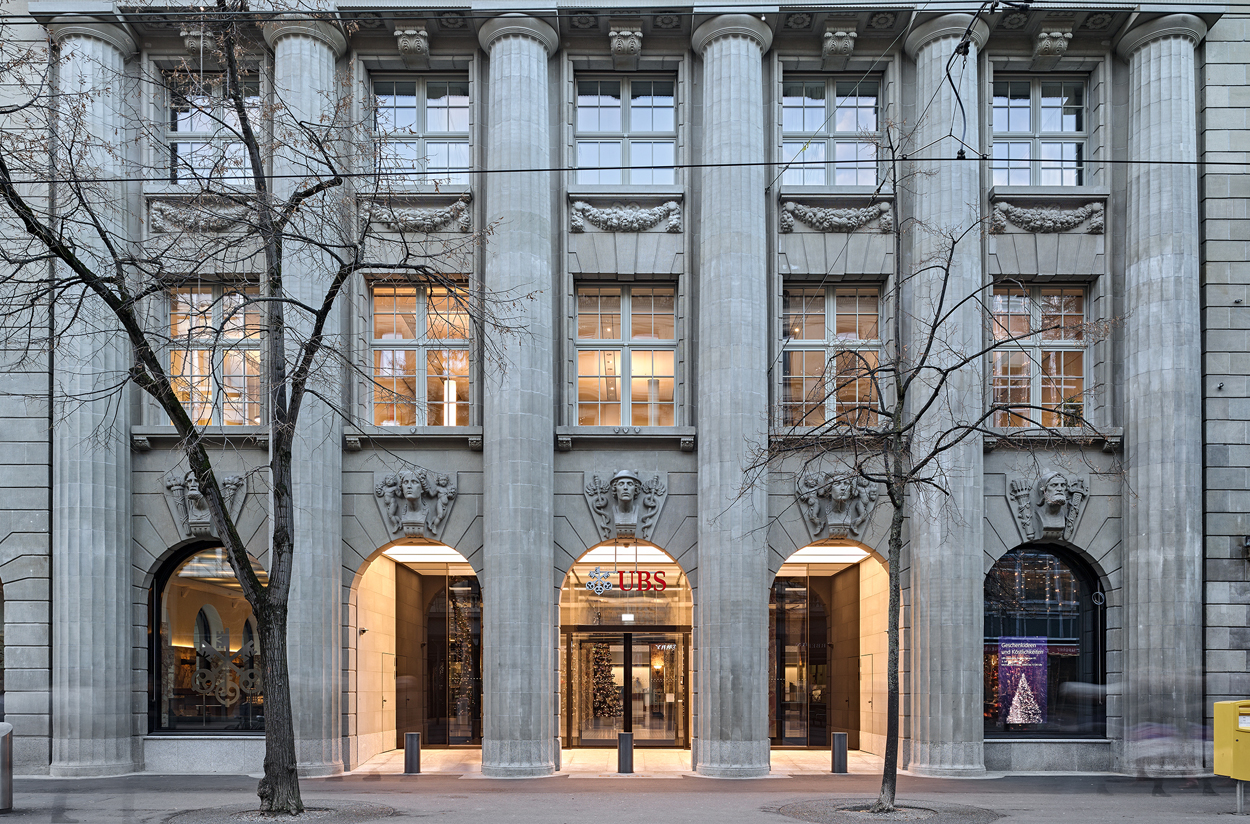
Reports said UBS is close to conceding over tougher proposed Swiss capital rules.
UBS appears to be closer
to losing its tussle with Swiss lawmakers about how much capital
it has to set aside to cover risks in non-Swiss entities, a
development that raises questions about the Zurich-listed bank’s
future structure.
Bloomberg and other media reported yesterday afternoon
that lawmakers from the committee in the parliament’s lower house
supported a plan that would force UBS to hold 90 per cent CET1
capital against its foreign units. The committee’s vice
president, Paolo Pamini, was quoted as saying that the decision
opens a path to a swift resolution of the capital question, after
the upper house already supported the measure.
UBS has made it clear from previous statements that it resists
such a development. This publication has reflected
on whether fears that the bank might even shift its corporate HQ
out of Switzerland are well founded.
Yesterday, the Swiss
Bankers Association criticised the decision by the National
Council’s Committee on Economic Affairs and Taxation (WAK-N)
regarding the capital requirements for foreign
holdings.
“A requirement for 90 per cent of such holdings to be
underwritten by common equity tier 1 capital would constitute a
special regulatory measure that goes far beyond international
standards. It would weaken the competitiveness of the Swiss
financial centre, with consequences for the real economy,” it
said in a statement.
“Switzerland already has very high capital requirements. UBS is
currently required to cover 45 per cent of its foreign holdings
with common equity tier 1 capital. A 90 per cent requirement
would double this and, by international standards, represent an
enormous ‘Swiss finish’. It would tie up a large amount of
additional capital and make international business from
Switzerland considerably more expensive,” the SBA said. “This
would place a burden on investment and services. The impact would
not be limited to a single bank but would affect the entire
financial centre as well as businesses and customers.”
UBS was quoted by Bloomberg yesterday as saying:
“Today’s recommendation by the committee would result in a
further excessive tightening of Swiss capital requirements, which
are already among the most stringent globally.”
The committee’s recommendation to the lower house will lead to a
binding vote, probably in December. Debate remains on exactly how
harsh revised capital rules should be. They stem from lawmakers’
fears that after its emergency takeover of Credit Suisse in
2023, the enlarged UBS could be too large for the Swiss
taxpayer to rescue in a crisis.
The controversy highlights tensions between protecting taxpayers
against bailouts – and the moral hazard that they create – and a
need to protect the competitiveness of a financial hub.
Switzerland is the world’s second-largest cross-border financial
centre, second only to Hong Kong, according to Boston Consulting
Group.
The SBA warned that Switzerland’s competitiveness in financial
services is on the line.
“An internationally oriented Swiss economy needs access to
international capital markets, financing and global networks. Our
banking centre comprises a unique and diverse ecosystem of
cantonal, Raiffeisen, regional, private and foreign banks, as
well as asset managers and fintechs.
“This also includes a globally competitive ‘national champion’
headquartered in Switzerland that provides vital services to
other banks, SMEs and large corporations in our country.
Furthermore, it strengthens access to capital and global
expertise, helping to ensure that key decisions are made in
Switzerland. Regulation that structurally impairs its
international competitiveness is not in Switzerland’s interests
as a business location.
“The SBA is confident that Parliament will, in the country’s
overall interest, find a balanced compromise that takes account
of both stability and competitiveness. A capital adequacy
requirement of 90 per cent does not meet this requirement,” the
SBA added.