
The economic and financial prospects of Africa, and why wealth managers should take them seriously, are topics this news service has covered before, such as here. Another discussion point is about the various “corridors” linking one financial centre with another.
Africa’s links to Asia have been busy for years. Mauritius, for example, plays a role, to some extent, as an entrepôt of capital into Africa from countries such as China and the UAE. (See here, for example.) The markets of north, south, east and west Africa vary widely, defying generalisation. Questions about political, legal and economic instability in various countries have often proven a barrier, but the picture is a varied one. These are markets where it’s advisable for investors to look beyond headlines and accumulate specialist knowledge. There is rising wealth and an expanding, affluent middle class. (See this report about the growth of various African countries in terms of HNW individuals.)
In this article, WealthBriefingAsia contributing editor Paul Cuthbert-Brown (pictured below), and Dr Paul Terna Gbahabo (see below for more details below about the writers), examine the forces connecting Asia and Africa. (See a previous article by Paul Cuthbert-Brown for this news service.
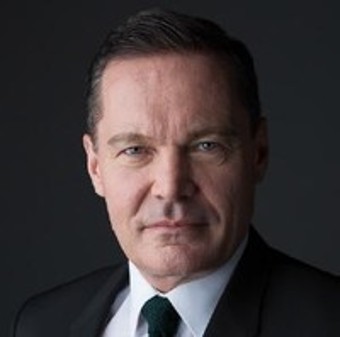
Paul Cuthbert-Brown

Dr Paul Terna Gbahabo
We hope readers are interested by this analysis, and welcome comments. Email the editors at tom.burroughes@wealthbriefing.com and amanda.cheesley@clearviewpublishing.com
Much of this century’s economic growth will be driven by the regions with the youngest populations. Asia holds substantial pools of capital, while Africa offers demographic dynamism, abundant resources and significant investment opportunities. For Asian wealth managers and family offices, the question is no longer whether to invest in Africa, but how. Increasingly, capital flows the other way, too.
A demographic hinge
Africa’s median age is about 19 years, compared with nearly 43 years in Europe and almost 50 years in Japan, according to the United Nations World Population Prospects 2024 (2025 estimates). This striking demographic contrast may reveal more about the direction of global capital flows over the next half-century than many conventional economic forecasts.
Africa’s population surpassed 1.5 billion in 2024 and is projected to approach 2.5 billion by 2050, when more than one in four people worldwide will be African. Its working-age population (aged 20 to 64) is expected to grow from about 883 million in 2024 to 1.6 billion in 2050, almost a quarter of the global total, according to the UN Economic Commission for Africa. The World Bank projects that sub-Saharan Africa alone will account for more than three-quarters of the global increase in working-
age population to 2050, making the continent the principal source of future labour-force growth and a potentially transformative destination for long-term investment.
Asia sits on both sides of this demographic divide. India and much of Southeast Asia remain young. North Asia is ageing rapidly, and some of the world’s deepest pools of savings sit in Japan, South Korea, China and Singapore, where households, insurers and pension funds increasingly look abroad for returns that shrinking workforces and slower growth cannot provide at home. The developed West faces the same pressures.
Capital ultimately follows working-age populations. One defining capital flow of this century will move from ageing, capital-rich economies to younger, growing economies. The Asia–Africa corridor is poised to become one of the most direct and consequential channels for this exchange, creating opportunities for investment, trade and economic growth in both directions.
The geopolitical pivot
For decades, Africa’s external financing has flowed predominantly through Western aid agencies, banks and capital markets. That landscape is now being reshaped. Washington’s sharp reductions in development assistance in 2025, coupled with the expiration of the African Growth and Opportunity Act (AGOA) in September 2025 and its subsequent short-term reauthorisation through December 2026, have underscored a growing reality for African governments: longstanding trade preferences and development partnerships can no longer be taken for granted.
Asian economies are increasingly filling this space, each pursuing a distinct approach. Through the Forum on China–Africa Cooperation (FOCAC), China has gradually shifted from large, state-backed infrastructure lending to smaller, more commercially oriented and environmentally sustainable projects. Japan’s Tokyo International Conference on African Development (TICAD) increasingly emphasises private-sector investment alongside traditional development assistance. India is expanding its engagement through trade, pharmaceuticals and digital public infrastructure.
Meanwhile, South Korea, which hosted its inaugural Korea–Africa Summit in 2024, has placed critical minerals and strategic economic partnerships high on its agenda. Singapore has emerged as an important hub for structuring and facilitating Asia–Africa trade and investment, while Gulf states are also expanding their economic engagement across the continent.
A stronger sense of African agency is increasingly evident. African governments and financial institutions are taking a more active role in choosing their partners, diversifying funding sources and engaging directly with Asian capital markets rather than relying predominantly on traditional Western financing channels. This shift was evident on 15 October 2026 in Bangkok, where Singapore-based Global Markets and the ECOWAS Bank for Investment and Development (EBID) jointly convened the West Africa–Asia Capital Dialogue. The meeting brought together African central bankers, development finance institutions and risk insurers with leading Japanese and Chinese banks. Its purpose was clear: to move beyond dialogue towards bankable transactions and sustainable flows of Asian capital into African economies.
A quieter shift is also underway: Africa’s growing resilience. For decades, tightening and turmoil in advanced economies triggered severe shocks across the continent, from the debt crisis of the 1980s to the 2022 interest-rate shock. Yet sub-Saharan Africa grew by 4.5 per cent in 2025, its fastest pace in over a decade, despite global trade tensions and financial uncertainty.
Macroeconomic reforms in Nigeria and Ethiopia, stronger fiscal positions and sovereign rating upgrades have all contributed to it. Despite renewed energy-market disruptions linked to conflict in the Middle East, the IMF’s October 2026 outlook projects 4.5 per cent growth in both 2026 and 2027. As Abebe Selassie, who led the IMF’s African Department until this year, observed, “Don’t underestimate how much African countries have done to contain the impact of successive shocks.” Africa remains exposed to global financial conditions, but stronger policy frameworks are adding to its appeal for long-term investors.
For Asian institutional investors, the investment case also centres on diversification. Excessive concentration in G7 markets carries its own risks. A portfolio with little or no exposure to some of the world’s fastest-growing economies isn’t necessarily neutral; it reflects a deliberate bet on established markets at the expense of emerging growth opportunities.
Resources and the energy transition
Africa holds many of the minerals essential to the global energy transition. The Democratic Republic of Congo supplies over 70 per cent of the world’s mined cobalt, while South Africa leads in platinum production and is a major manganese supplier. Zimbabwe is emerging as a significant lithium producer, and Guinea holds the world’s largest bauxite reserves, along with Simandou, one of the world’s richest iron-ore deposits, which shipped its first ore in late 2025. Ghana remains Africa’s leading gold producer. For Asia’s battery, electronics and steel industries, secure supply of these minerals is a strategic imperative, not merely a commercial opportunity, and competition for them is intensifying.
The terms of engagement, however, are changing. African governments increasingly seek to move beyond raw mineral exports towards domestic refining, processing and job creation, embedding local value-addition requirements in mining policies and licensing frameworks. This creates opportunities for patient Asian capital to invest in mineral beneficiation and integrated value chains rather than simply securing raw materials.
Gold illustrates this potential. Much of Africa’s gold continues to be exported with limited domestic refining, financing and traceability. Expanding access to producer financing, responsible refining and regulated trading hubs such as Singapore could capture more value within Africa while offering Asian investors more transparent, traceable and commercially attractive investment opportunities.
Investing in societies: education and health
A youthful population becomes a demographic dividend only when it is healthy, educated and productively employed. Without these conditions, demographic growth risks becoming a source of economic strain and social instability, with consequences that investors cannot easily diversify away.
This makes healthcare and education among Africa’s most critical investment priorities, with growing potential for commercially viable financing. Regional hospitals, primary healthcare networks and local pharmaceutical manufacturing increasingly attract development finance, often backed by sovereign or multilateral guarantees. Across West Africa, regional hospitals now appear alongside roads and power plants in development-finance pipelines.
Education requires similar investment, particularly in vocational and technical training aligned with emerging industries. Both sectors depend on essential infrastructure: reliable electricity, including small hydropower and solar mini-grids; clean water; transport; and digital connectivity.
Artificial intelligence could transform the economics of education and skills development. For generations, rural and remote communities have faced persistent shortages of qualified teachers, textbooks and classrooms. AI-enabled tutoring, accessible through affordable smartphones and increasingly available in local languages, could deliver personalised learning at substantially lower costs, complementing rather than replacing teachers. These technologies could also expand access to professional training for nurses, community health workers, agricultural extension officers and small-business owners who might otherwise need to travel to urban centres or abroad to acquire new skills. By making education and training more accessible, AI can help develop human capital where people live, rather than concentrating opportunities in established educational institutions.
The technology, however, is only as effective as the infrastructure supporting it: affordable connectivity, reliable electricity and accessible devices. Content must also align with local curricula, languages and labour-market needs if learning is to lead to employment. For investors, this presents a layered opportunity spanning telecommunications networks, solar mini-grids, device financing and digital education platforms, where Asia’s experience with digital public infrastructure and mass-market technology is directly relevant.
These investments are not simply acts of charity. When development finance institutions structure them appropriately, support them with guarantees and back them with sustainable revenue models, they can generate stable, long-term returns. More importantly, they develop the skilled workforce, productive capacity and consumer markets on which Africa’s broader investment potential ultimately depends.
ESG: where Africa is the real test
Much of Asia’s ESG investment has traditionally focused on green bonds issued by familiar institutions in established markets. Africa presents an opportunity to test the framework more comprehensively, where environmental, social and governance considerations are deeply interconnected. In Africa, the social (S) and governance (G) dimensions matter at least as much as the environmental (E).
Social outcomes can be substantial and measurable: patients treated in hospitals, students graduating from schools, jobs created in processing plants and households gaining access to electricity. Governance, meanwhile, remains a critical source of investment risk, demanding rigorous due diligence, transparency and accountability.
The climate investment case is equally compelling. Africa contributes relatively little to global greenhouse gas emissions yet bears a disproportionate burden of climate-related damage. Investments in adaptation, resilient infrastructure and clean energy can deliver significant benefits, particularly where the alternatives are diesel-powered electricity or no reliable energy access at all.
Mechanisms to manage these risks already exist. Regional and multilateral development banks provide project appraisal, procurement oversight and monitoring; blended finance can use concessional capital to absorb first losses; and credit and political risk insurers can cover eligible transactions. Rating upgrades in several African economies signal improving creditworthiness, although they do not remove governance risk.
Another dimension receives too little attention: the loss of human capital. Climate pressures, conflict and limited opportunity push people to leave, often the young, skilled and entrepreneurial. Western debates on migration focus on receiving countries; far less attention is paid to the cost to countries of origin, which lose doctors, nurses, engineers and entrepreneurs, and the public investment made in educating them.
Addressing this challenge requires investment at its source: education and vocational training linked to meaningful employment, reliable healthcare systems and businesses capable of creating sustainable local opportunities. Such investments can benefit countries of origin, receiving economies and the investors financing long-term development.
For Asian wealth managers, the proposition is straightforward: integrate Africa meaningfully into ESG investment allocations, prioritising measurable development outcomes, sound governance, commercially sustainable projects and strong local ownership, rather than treating the continent as a peripheral investment destination.
The West Africa story
West Africa is where many of these trends converge. The Economic Community of West African States (ECOWAS) represents a market of more than 350 million people, with a youthful and rapidly urbanising population. Its major economies offer distinct but complementary investment opportunities.
Nigeria, Africa’s most populous country, is navigating difficult but long-awaited economic reforms, including exchange-rate liberalisation. Côte d’Ivoire has sustained strong economic growth over the past decade, while Ghana is recovering from debt restructuring, supported by its gold sector. Senegal is emerging as an oil and gas producer, and Guinea is positioning itself as a major global mining economy.
The withdrawal of Mali, Burkina Faso and Niger from ECOWAS, and their formation of the Alliance of Sahel States, is a reminder of the region’s political complexity, and of the value of regional institutions that sustain economic cooperation across borders.
Much of the region’s investable pipeline flows through development banks and financial institutions that finance roads, hospitals, energy infrastructure and industrial projects. Historically dependent on European and American funding, these institutions are increasingly seeking to diversify their financing partnerships towards Asia, where lenders and institutional investors are beginning to respond.
Rwanda: Africa’s Singapore?
If West Africa offers scale, Rwanda offers a model. Small, landlocked and relatively resource-poor, it has used political stability, administrative efficiency and international connectivity to build influence beyond its size, and its leadership has long looked to Singapore. It aims to play for East and Central Africa the role Singapore plays in Southeast Asia: a trusted, well-regulated centre for structuring, holding and managing regional investments.
The (KIFC), established in 2020, embodies this ambition. It reports more than 300 investors set up there, from holding companies and special-purpose vehicles to investment funds and foundations, and Kigali ranked third among African financial centres in the September 2026 Global Financial Centres Index, behind Casablanca and Mauritius. KIFC has also built links with Singapore’s financial technology ecosystem.
Asian private wealth is beginning to explore this opportunity. Singapore-based has opened a representative office in Kigali and signed a capital mobilisation agreement with the Rwanda Development Board, targeting private investment in hospitality, tourism, real estate, entertainment and infrastructure around Kigali, Bugesera and Musanze, including projects linked to Rwanda’s Formula One ambitions. It is a different channel: Asian private wealth mobilised through a family office rather than government or development-bank funding.
A balanced assessment must also weigh Rwanda’s political and geopolitical risks, including concerns about domestic political freedoms and international scrutiny of its role in the conflict in eastern Democratic Republic of Congo. Kigali none the less shows how an African economy can position itself to attract and intermediate international capital.
How Asian capital gets in
The financing routes available to Asian investors are broader than many realise. One of the most established channels is lending to African development banks and trade finance institutions, either bilaterally or through syndicated facilities, often supported by credit or political risk insurance. Private placements and private credit funds can offer higher yields for investors willing to accept lower liquidity. Capital markets are also opening new opportunities, with African issuers exploring Panda bonds in China and Samurai bonds in Japan, providing access to Asian investors through familiar, local-currency instruments. Co-investments alongside development finance institutions (DFIs), infrastructure and impact funds, and trade finance facilities further broaden the investment landscape.
Risk mitigation is as important as instrument selection. Credit insurance from institutions such as the African Trade and Investment Development Insurance (ATIDI), political risk guarantees from the World Bank Group’s Multilateral Investment Guarantee Agency (MIGA), and appropriate currency-hedging solutions can help make unfamiliar African exposures more acceptable to Asian institutional investors and credit committees.
Singapore is well positioned to serve as a structuring and investment hub for these transactions, complemented by African financial centres such as Kigali, Abidjan, Lagos and Nairobi. For wealth managers and family offices, the practical approach is to start with rated institutions and appropriately insured structures, maintain prudent initial exposures and build relationships before formal capital-raising exercises begin.
It would be a mistake to see the corridor only as a channel for Asian capital into Africa. African investors have backed some of Asia’s most successful growth stories.
South Africa’s Naspers invested about $32 million in Tencent in 2001, one of the most successful technology investments of its generation. Morocco’s OCP Group, a global leader in phosphates and fertilisers, has built extensive partnerships across India and South Asia, and Mauritius has long been a major conduit for investment into India.
African sovereign wealth and pension funds, such as South Africa’s Public Investment Corporation and Nigeria’s Sovereign Investment Authority, can allocate internationally, and African entrepreneurs and wealthy families increasingly use financial centres such as Singapore, Dubai and Hong Kong. That makes them prospective clients and co-investors for Asian wealth managers and family offices, not merely counterparties.
The central lesson for Asian wealth managers is clear: Africa is not merely an investment destination. It is also an emerging source of clients, capital and strategic co-investment opportunities.
The capital of the young
Demography is among the most predictable forces shaping the global economy. The future belongs increasingly to younger generations, a growing share of whom will be African. Much of the capital needed to finance their education, healthcare, housing and businesses resides in Asia.
Investors who establish relationships today, while Africa remains underfinanced and under-researched, will be better positioned to capture opportunities as global interest in the continent grows. Those who also recognise African capital as a partner in Asia will discover that the investment corridor offers opportunities in both directions.
The conversations have begun. The challenge now is to turn them into transactions.
About the authors
Paul Cuthbert-Brown is a contributing editor at WealthBriefingAsia. He works with Global Markets Pte, which co-convened the West Africa–Asia Capital Dialogue with EBID and advises EBID on its Asian funding programme.
Dr Paul Terna Gbahabo is a Postdoctoral Research Fellow at the University of South Africa and serves as Director of Research and Thought Leadership, Africa–Asia, at Global Markets Pte. Ltd., Singapore.