


Strategy
Wealth Q&A: RBS India Private Banking Head, Shiv Gupta - Exclusive

India's millionaire population is tipped to more than double to 400,000 by 2015. Fortunately for The Royal Bank of Scotland Private Banking, it has had a foot in the door for a while - and according to its head of private banking for India, is well-placed to grow.
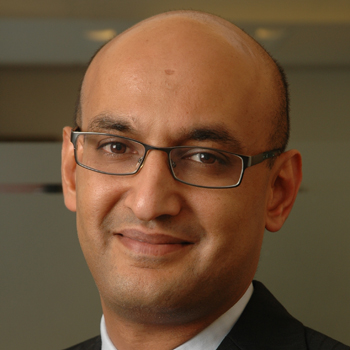
Shiv Gupta
India's millionaire population is tipped to more than double to 400,000 by 2015, according to a survey this month by CLSA Asia Pacific Markets and Switzerland's Julius Baer. Eager to tap the nation's burgeoning wealth are a flurry of private banks, who in recent months have made aggressive steps towards growing market share. Fortunately for The Royal Bank of Scotland Private Banking, it has had a foot in the door for a while - and according to Shiv Gupta, the head of private banking for India, is well-placed to grow.
RBS' Indian Presence
WBA: Where is RBS Private Banking currently positioned in the Indian wealth management market?
Shiv Gupta: RBS Private Banking is focused on the high net worth and ultra-high net worth space operating out of Mumbai, Delhi, Chennai and Bengaluru. These markets combined represent 70 per cent of the estimated market size. We'd like to think we bring a true private banking experience and proposition to the Indian wealth management arena which draws on brands in the RBS Wealth Division stable like Coutts.
The market is currently quite fragmented and whilst the bank has reasonable scale relative to domestic peers, the overall percentage is still small but growing. Looking ahead, we see the opportunity to scale up significantly in this market.
WBA: According to the latest Capgemini and Merrill Lynch World Wealth Report, there are more Indian millionaires than ever before. How are your clients looking to maximise their new wealth?
SG: There are several sources of wealth creation which include rising compensation levels, corporate profits, business income and rising asset values (including real-estate).
The bank's strategy is to work as an efficient aggregator of products and services that address the needs that come with this wealth, primarily in the areas of banking, investments, estate planning and credit services. The approach is to provide specialist expertise in each of these areas and to use these components to provide bespoke solutions to our clientele.
Following the developments in the markets over the past 3-4 years, including the 2008 crash, the discernible changes in client behaviour toward investments are in the following areas: clients want to understand the risks and features of investments better, they want to be involved in decision making a little more and, encouragingly, there is a growing acceptance and recognition of the importance of fundamental investment principles like diversification and asset allocation.
Challenges faced by the industry are mainly in the areas of an under-represented product suite and also a not-so-well-defined pricing structure, particularly in the areas of long-term AUM-based fees. This said, however, we do see encouraging signs of clients valuing the longer term approach and being happy to pay for advice.
Philanthropy and NRIs
WBA: India's wealthy are also now more open to philanthropic endeavors. What do you think is the root of this shift and do you see it happening more?
SG: The philanthropic orientation of the Indian wealthy is rooted in our culture and a desire to give back to the community -- a disposition to charity which can be seen as a societal attribute rooted in our culture. With an exponential increase in wealth creation, this has started becoming more visible, gained greater magnitude and has started manifesting itself in the form of more organized philanthropic endeavors. We see this trend continuing in ever increasing magnitudes.
WBA: How are you dealing with wealth linked to non-resident Indians? What regions and asset classes do you like as an investment play?
SG: When looking at NRIs, one needs to be cognizant of the fact that one is dealing with three assets pools: their residence country assets, their global asset pool and the Indian asset pool. A successful NRI strategy would involve the ability to address at least two, if not all three, of these pools. RBS Wealth's approach is to use the connectivity of our businesses in key NRI centres like Singapore, Hong Kong, the Middle East and the UK in conjunction with the onshore business to provide this capability.
As far as investment into the country is concerned, we have been seeing progressive increases in this pool and use our considerable onshore expertise to provide new and innovative investment ideas and opportunities to our NRI clients on an ongoing basis.
Hiring
WBA: Much is being said about human capital and developing personal relations with clients. What is your strategy in terms of hiring and orienting wealth managers into this growing market?
SG: To begin with, the hiring strategy places an emphasis on finding people with the right attributes for relationship management while maintaining a flexible approach toward the sectors from which we source candidates. Typically, however, we look at hiring from within the sector or from associated sectors that have a similar client relationship orientation within them.
It is inevitable that banks will need to have a strategic plan for learning and development that will meet the needs of the business and the scale that it is addressing itself to. Accordingly, apart from a comprehensive formal induction programme that has already been implemented, RBS is implementing a development syllabus for staff known as the "Learning Journeys," which encompass all aspects of development including technical skills, personal effectiveness skills and leadership and managerial skills.
The Future
WBA: Where is RBS Private Banking Indian operations headed?
SG: Our plan is to focus on the domestic market through our existing branches in Mumbai, Delhi, Chennai and Bengaluru and to broaden and deepen our coverage in these locations by increasing the number of relationship managers.
We take a holistic view of wealth management. In addition to our existing banking and investments platform augmented by the services of our wealth planners and the upcoming the soon-to-be-launched credit platform, the bank is planning to introduce the capabilities of its Wealth Institute to India. These encompass the areas of Philanthropy, Family Business & Next Generation services with activities around advice and networking opportunities.
These themes, either individually or in combination, resonate very well with many of our clients and prospective clients, particularly in the UHNW segment, and will serve as a powerful overlay to our comprehensive product proposition.
WBA: What lessons may be derived from working with such a rapidly rising economy?
SG: The rapid rise of the economy with its associated scale of wealth creation brings its own sets of challenges, particularly with a regulatory and market framework that is still evolving and struggling to keep pace with the rate of economic growth.
Under such circumstances, success will depend on the ability of organisations to be flexible to adapt to changing circumstances quickly. Further, given the ambitious entrepreneurial environment, those organisations that have the ability to provide a broader array of financial solutions across personal and corporate banking would have be at a distinct advantage.
---
Shiv Gupta is Head of Private Banking of RBS NV India and is also a member of the RBS India Executive Committee. The Indian private banking business presently has 53 staff members, including 20 private bankers in four offices across the country.