


Investment Strategies
US, Switzerland And UK Hike Rates – Reactions
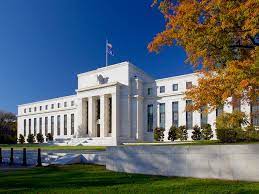
Central banks are now tightening monetary policy – some faster than others. We carry a range of reactions from economists and strategists.
Interest rates are rising everywhere. Yesterday, the US Federal
Reserve announced its biggest increase in the benchmark Fed Funds
rate since 1994, at an 0.75 percentage point (to 1.75 per cent).
The Swiss National Bank, which has been running negative official
rates for about seven years, has moved from -0.75 per cent to
-0.25 per cent. The Bank of England today, as expected, raised
its official rate by 0.25 per cent, or 25 basis points, to 1.25
per cent. The European Central Bank has clearly flagged that it
is going to start tightening.
Recent months have seen inflation rise strongly to multi-decade
highs, bringing back memories of the late 70s and early 80s (at
least for those old enough to recall this episode). The reasons
for the inflation pressure are various: a decade of central bank
quantitative easing (a form of monetary creation);
pandemic-induced supply chain disruptions, Green energy
transition policies that have squeezed oil and gas production
such as fracking, and the Russian invasion of Ukraine. Not all
these events work in the same way, and are susceptible to rises
in borrowing costs. There’s a risk of recession.
Whatever happens, a world of rising inflation and rates presents
wealth management advisors with asset allocation and risk
management decisions they may not have had to confront for many
years. (Some younger advisors may not even have been in a job the
last time there was a recession.) So what do they make of what
central banks have done?
Here are reactions
UBS, Global Wealth Management, commenting on the
Fed
We see no reason to change our broad investment theme of favoring
value over growth, but the events of the past week do increase
the difficulty of Fed policy achieving a “softish landing.”
However, in our view, the bond market’s reaction to the data,
bringing 10-year yields toward 3.5 per cent at the start of this
week, was a signal to the Fed that it had lost too much of its
inflation-fighting credibility. The Fed’s rapid response – a 75
bps hike – is a sign that it intends to win that credibility back
at a higher risk of recession.
The Fed’s messaging is likely to continue to be hawkish until we
see clearer evidence of a deceleration in inflation. The
stubbornness of inflation and the shift in the Fed’s reaction
function have pushed up expectations on the terminal rate, which
at the time of writing is priced at just under 4%. Although the
Fed may not need to hike all the way to 4% in practice, the risk
that it does so has increased, and with it the risk of a
recession.
Taking this into account, we forecast 10-year US Treasury yields
to trade at 3.25 per cent by December and acknowledge they may
trade even higher in the interim. Volatility in bond markets is
likely to continue with each policy announcement and each new
data on inflation and inflation expectations. We expect yields to
decline more sustainably only in 2023 as inflation fears pass and
as the market begins to consider the possibility of future rate
cuts to support growth.
Homin Lee, Asia Macro Strategist at Lombard Odier,
commenting on the Fed
Three things about the Fed’s new communication stands out, in our
view. First, the median of the new FOMC projections show a rate
cut in 2024 despite penciling in an above-target core PCE
(personal consumption expenditure) inflation of 2.3 per cent for
the year. This shows that the median forecaster in the committee
wishes to cap the real interest rate in the US at 1.2 per cent in
2023 and 2024.
Second, the FOMC expects both growth and labor markets to keep
softening in the rest of 2022 and 2023, partly due to its
frontloaded tightening. This suggests that the Fed will monitor
possible deceleration in real indicators such as output and
unemployment in the medium term despite its current inflation
focus. Third, Chair Powell in his press conference has made the
magnitude of the rate hike in July conditional on incoming data.
This means that softer May PCE inflation (to be released on June
30) or June CPI inflation (to be released on July 13) could lead
to a smaller 50 bps hike in the next FOMC meeting (scheduled on
July 26 to 27). In light of surprisingly weak retail sales data
for May, markets are now pricing a rate hike that is halfway
between 50 bps and 75 bps for the July meeting.
In aggregate, these messages suggest that the Fed is holding onto
its soft-landing ambitions with aggressive frontloading of rate
hikes in 2022 and a slightly higher inflation tolerance in the
long-run. This stance is not significantly different from what
market now expects, as the Fed’s median forecast for fed fund
rate is close to the fed fund futures market pricing for 2022
year-end prior to the meeting.
Capital Economics, commenting on the Swiss National
Bank
Given its history of making unscheduled policy announcements, we
think it more likely than not that the [Swiss National] Bank will
raise interest rates again, to over zero even into positive
territory, before the next scheduled meeting, in September.
Given the shifting global policy landscape it was always a case
of “when” rather than “if” the SNB would start to normalize its
policy settings. As a result, as policy shocks go, today’s
decision is not in the same league as the ‘Frankenshock’ in 2015.
Nonetheless, whereas 2 of 26 respondents to a Reuters survey had
predicted a 25bp hike today, a 50bp move blindsided all
SNB-watchers.
Consumer price inflation in Switzerland is currently much lower
than in the euro-zone (2.9 per cent versus 8.1 per cent), but
today’s move shows that Swiss policymakers have clearly seen
enough. The Bank explained that “tighter monetary policy is aimed
at preventing inflation from spreading more broadly to goods and
services in Switzerland.” It also raised its conditional
inflation forecasts to 2.8 per cent in 2022 (previously 2.1 per
cent) and 1.9 per cent and 1.6 per cent in 2023 and 2024
respectively (both previously 0.9 per cent), and noted that the
forecasts “would be significantly higher” in the absence of
today’s rate rise.
BlackRock, Rick Rieder, chief investment officer of
global fixed income and head of the BlackRock global allocation
investment team
In the coming months, we think it’s increasingly likely that
we’re going to witness a growing “wedge” between the core PCE
measure of inflation and the headline CPI [consumer price index]
metric, which can’t be ignored. One of the key reasons for this
divergence will be the likely role of volatile food and fuel
prices, which may keep headline inflation sticky on the high
side, even as core PCE moderates somewhat. It seems fairly clear
to us that if inflation doesn’t broadly cool off in the next
several months, it will be due to higher than anticipated food
and energy price increases.
Hence, the action on Wednesday was very much needed and will
ultimately be viewed as beneficial in its speed and for drawing
policy closer to neutral, with a clear set of intentions to get
there and at least a bit beyond. Whether this will require
markedly tighter policy from that point is still unclear. In
fact, this proverbial automobile may require being put into drive
at that stage, versus in reverse, as the amazingly flexible and
adaptive US economy will self-calibrate itself to a slower
demand function over the coming weeks and months. But being in
neutral will allow the vehicle of policy adjustment to adapt and
pivot to what is required months from now. Predicting where that
will be is not clear to virtually anyone but being in the
front-seat with a firm hand on the gear shift is where the Fed is
closer to being now and the economy, and markets, will ultimately
benefit.
Ben Laidler, global markets strategist at social
investment network eToro, on the Bank of England
The Bank of England is walking an increasingly uncomfortable line
between curbing inflation and tipping the economy into a
recession, with the UK the global poster-child for stagflation.
Today's fifth straight interest rate hike, by 0.25 per cent to
1.25 per cent, is being left behind by more determined central
banks like the US Fed.
UK inflation is running at 9 per cent, the highest among
developed economies, and it's set to rise even further in the
coming months given the October fuel price cap and the fact that
natural gas prices are surging again this week. Meanwhile
unemployment is at a 25-year low and wage expectations are
rising.
The more gradualist approach by the Bank of England may spare
some pain for the UK economy for now, but is keeping long-term
inflation expectations well above those in the US, and
undermining sterling. A weaker pound may be welcomed by many
exporters and the FTSE 100, but it also supports high-for-longer
inflation and hurts more domestic-focused mid caps like the FTSE
250.