


Philanthropy
Understanding Passion, Strategy And EQ: The Life Of Philanthropy Advisors

Philanthropy is an increasingly important element of wealth management as HNW clients seek structured guidance on the best way of using their capital for impact. Senior figures at LGT and Barclays talk to this publication on their approaches to the role.
Whatever the arguments are about whether philanthropy can or
should fill spaces that governments cannot or will not occupy,
the role of charity in directing HNW individuals’ money and
resources to various causes remains as solid as ever.
The final weeks of the year – often associated with the idea of
“the giving season” – are typically a useful time to take stock
not just of what has happened in philanthropy and the demands
upon it, but also to reflect on the job of the philanthropy
advisor.
The role of an advisor in the sector “is an essential component
of helping wealthy citizens in managing their wealth and being
fulfilled,” Silvia Bastante (pictured below), head of
philanthropy advisory at LGT Private Banking, part of
Liechtenstein-headquartered LGT, told WealthBriefing
in a recent interview.
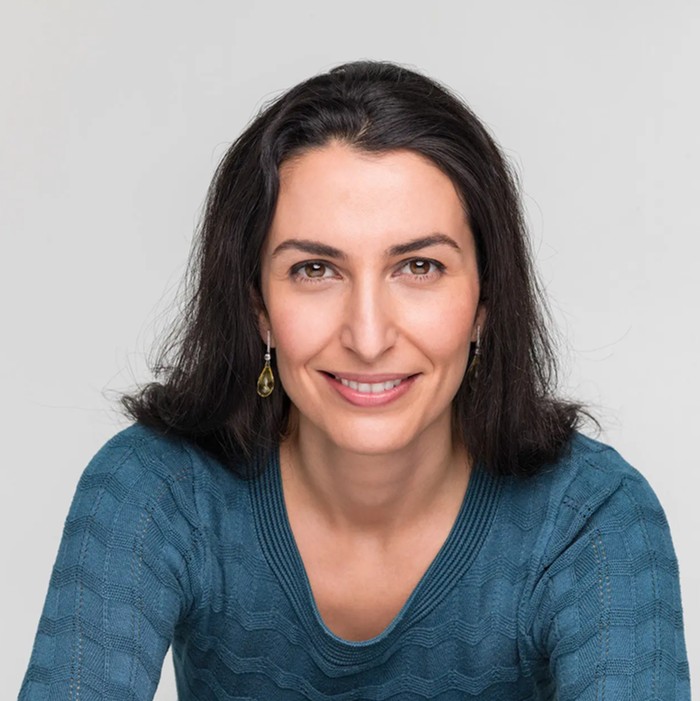
Silvia Bastante
This news service also spoke to Juliet Agnew (pictured below), head of philanthropy at Barclays Private Bank & Wealth Management, at Barclays, on such topics.

Juliet Agnew
“[At LGT] most of my time is spent with clients to help them
with their philanthropic aspirations. For people, it is not
obvious to know how to go about it,” Bastante said. “There is an
element of passion in philanthropy,” she added, noting that it is
important for donors to be committed so they stay for the longer
term.
Agnew said advisors can show real value to their clients – and to
institutions – by guiding them around the reefs and shoals
of the space. “People really want structured advice. Philanthropy
is an increasingly important part of the wealth management
conversation,” she said. “Wealth holders think it’s important for
their advisors to proactively raise the topic of
philanthropy.”
A large, listed lender such as Barclays will want a return on
spending money on building philanthropic advice capabilities,
hoping that it helps to attract new clients, deepens existing
relationships and gives the bank added information on what makes
their clients “tick.”
LGT’s Bastante observed that in the US it is considered normal to
charge a specific fee for philanthropy advice to HNW clients,
whereas in Europe and Asia it is expected to be provided as part
of a broader service.
There are standalone groups in the UK that advise people on the
best way to execute their ideas on giving, such as New
Philanthropy Capital, for example.
Core, not niche
As both Agnew and Bastante agreed, philanthropy is no longer just
a “nice-to-have” element – it sits within a cluster of expertise
offerings that banks use to attract and retain clients and their
offspring. At a time of multi-trillion wealth transfer, and wider
concerns about communities and the world, philanthropy is an
obvious conversation prompter.
In the UK, for all the uncertainties around the domestic economy,
public spending and tax – or perhaps because of these issues –
charitable activity appears brisk. In the HNW space, this is
borne out by recent Barclays data. Research from Barclays Private
Bank & Wealth Management, based on responses from 500 HNW
individuals and issued in October, found that more than
three-quarters (77 per cent) began making sizeable charitable
donations once they reached £2 million ($2.7 million) in personal
wealth. The study also found that 51 per cent started to make
significant transfers before reaching £1 million.
Top causes include health and social welfare (supported by nearly
80 per cent of respondents), followed by climate and
environmental causes (73 per cent) and social justice and
development (69 per cent).
Career journeys
The career paths of Bastante and Agnew shed light on the type of
professionals shaping this field. Besides her LGT role as a
senior advisor in philanthropy advisory, Bastante is also a
senior advisor to Co-Impact, a global collaboration of major
philanthropists focused on systems change.
There is an academic dimension: she teaches for the Master of
Advanced Studies in Philanthropy at the University of Geneva’s
Center for Continued Education, is a senior fellow at the Center
for Sustainable Finance and Private Wealth at the University of
Zurich, serves on the board of the I AM WATER Ocean Conservation
Foundation, and is an advisory board member for VALUEworks, an
independent multi-family office in Zurich.
Turning to Agnew, she has been in her role since May 2021 and was
previously MD and strategic advisor at the Utley Foundation (the
Utley Family Office) for six years. Before that, she was director
and philanthropy head at IG Advisors. She has also worked at
Nationwide Building Society and spent a year as director,
philanthropy services for UK/UBS Optimus Foundation at UBS.
Advisors to HNW individuals must be adept at nudging and
encouraging clients to use their philanthropic wealth wisely.
Sometimes this means suggesting that writing a cheque to an art
gallery and having their name on the wall is not necessarily the
best route. It might even mean explaining that simply giving $10
million to a good cause could do more harm than good, and that
encouraging beneficiaries to build a genuine business or
prioritise education might be more effective. To that extent, a
good advisor must adopt the same stance as they would in
investment and asset allocation: they must be that friendly hand
on the shoulder. This is why effective advisors require emotional
intelligence as well as technical skill.
Discussions on philanthropy help people explain the meaning
of their wealth, why they accumulated it, their values and their
aspirations, Bastante said.
Expectations
Framing clients’ expectations and listening carefully to their
concerns are crucial.
“EQ needs to be hired and trained for. Philanthropy isn’t just
about giving; it’s deeply connected to personal values and family
dynamics. It touches on questions of wealth, raising responsible
children, the legacy families want to leave, and how individuals
wish to be remembered. With a major generational wealth transfer
underway, it’s vital that advisors recognise the emotional and
psychological dimensions of these conversations, not just the
financial ones,” Agnew said.
“A successful philanthropy advisor in a private bank needs to
have technical understanding, such as around charities and
foundations. The complexity of the area can be a barrier [for
clients]… the technical aspects are really important,” Agnew
said. “Working with clients will require discretion and
sensitivity.”
Misconceptions
Public debate about “gaps” in aid and the need for philanthropy
can lead to misunderstandings of what actually goes on.
“There is a huge misunderstanding about how much money there is
in international philanthropy,” Bastante said. “Most philanthropy
is local, and particularly in the Global South.”
Based on research conducted at Co-Impact, Bastante estimates that
around 40 per cent of US philanthropy used to be international,
with the rest domestically focused; in Europe, the figure is only
about 30 per cent.
Systems and fragmentation
“You can have a more strategic form of philanthropy that is more
about effecting systems change,” Bastante said. This raises
questions on scale, about what changes before and after a
programme, and whether activity leads to sustainable results.
A certain amount of Bastante’s time is spent advising clients on
how to implement their philanthropy and exploring alternative
structures to the traditional foundation.
An ongoing challenge is duplication and fragmentation. In
Switzerland, for example, there are 13,000 foundations. “There
could be a lot of consolidation, but this doesn’t happen. More
than 50 per cent of foundations have less than $1 million in
assets,” Bastante said, citing a global philanthropy report from
Harvard University. Tax avoidance is not a major driver of this
proliferation, she added.
One reason for duplication is that foundation creators are often
unaware of what others are doing and therefore miss opportunities
to collaborate.
In terms of financial efficiency, it only makes sense to create a
new standalone foundation when an HNW individual has more than
$50 million to commit, Bastante said.
This logic of efficiency explains the value of donor-advised
funds, she noted. Agnew agreed that DAFs are becoming more
significant.
Whatever the future holds, the business of advising on
philanthropy is likely to remain a prominent topic.