


Investment Strategies
Trump Nominates New Fed Chair – The Wealth Management Verdict
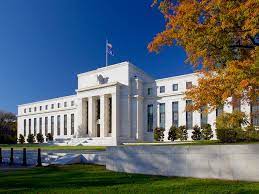
Thought of as being possibly more open to further interest rate cuts, Kevin Warsh has also had a reputation as a monetary policy hawk, which means that the Fed might not be as favourable towards easing as some might suppose.
While his appointment to Federal Reserve chair remains subject to
Senate confirmation, President Donald Trump’s nomination of Kevin
Warsh to be the next Fed boss ends months of speculation about
who will take over from Jerome Powell. If Warsh gets the post, he
will take up the role in May.
And contrary to expectations that a new Fed chair will
automatically do the bidding of Trump on interest rate cuts,
Warsh has been seen as something of a monetary policy
“hawk,” although Trump’s backing appears to suggest that
further rate cuts could take place. The end of uncertainty
appears to have pulled the rug from underneath those betting on
further large rises in the gold price. In the past few days, for
example, the safe-haven asset of gold has fallen from near $5,600
per ounce to below $5,000.
Warsh – a figure who has advised the president before – has
already been a Fed governor.
The choice of who is the next head of the world's most powerful
central bank has been a topic for analysis for months, amid
concerns that Trump wants the Fed to ease monetary policy. It
turns out that such a calculation is not so straightforward.
“I have known Kevin for a long period of time, and have no doubt
that he will go down as one of the great Fed hcairmen, maybe the
best,” Trump wrote on his Truth Social platform. “On top of
everything else, he is ‘central casting,’ and he will never let
you down.”
According to media reports (Bloomberg, others) Trump was
quoted as saying that he had not asked Warsh to commit to cuts.
“Kevin Warsh brings an unusual combination of hawkish instincts,
openness to innovation, and deep respect for Fed independence,”
Dan Siluk, head of global short duration and liquidity and
portfolio manager at Janus Henderson,
said.
“His nomination suggests a policy regime that is more flexible on
rates, more disciplined on the balance sheet, less communicative
in its forward signalling, and influenced by a structural
productivity narrative shaped by AI,” Siluk said. “Markets should
prepare for a Fed that is simultaneously more unpredictable and
more orthodox, a blend that marks a genuine shift in the post
crisis monetary landscape.”
“Despite alignment with some of the administration’s policy
preferences, Warsh has a long record of stressing institutional
independence,” Siluk said. “He is unlikely to remain a political
loyalist if the data push him in a different direction. His
historical willingness to dissent, and even leave the Fed, over
policy disagreements underscores that independence.”
UK-based wealth manager Evelyn
Partners sees the Fed as taking a more “dovish”
course.
“While historically regarded as a policy hawk, Warsh’s selection
by a president who has consistently pushed for lower interest
rates may appear as a contradiction to investors,” Daniel Casali,
chief investment strategy at Evelyn Partners, said.
“The result may be a ‘Wishy Warshy’ Fed regime of uncertainty
over monetary policy, which could manifest itself in a blend of
rhetorical caution, political influence and a dovish underlying
bias,” Siluk continued.
Mark Dowding, CIO of BlueBay Fixed Income at RBC
Global Asset Management, said the “presumption” is that Warsh
will seek to justify a dovish stance, advancing the notion that
AI productivity gains will ensure inflation is held in check.
Consequently, futures markets continue to price two cuts from the
Fed this year, as has been the case for a number of months."
“Relative to some of the other potential picks, it is possible
that Warsh is seen as less dovish than some. In prior meeting[s]
with others at the Fed, there is a sense that Warsh is well
respected and not a Fed Chair likely to represent a threat to the
Fed’s independence,” Dowding said.
“In this sense, some of the fears with respect to the possible
undermining of institutional credibility in the US may have been
exaggerated in some quarters. There is also an understanding that
Warsh will be inclined to shrink the Fed’s balance sheet and
narrow parts of its mandate,” Dowding added.