


Real Estate
The Swiss Real Estate Window: Institutional Capital Flourishes
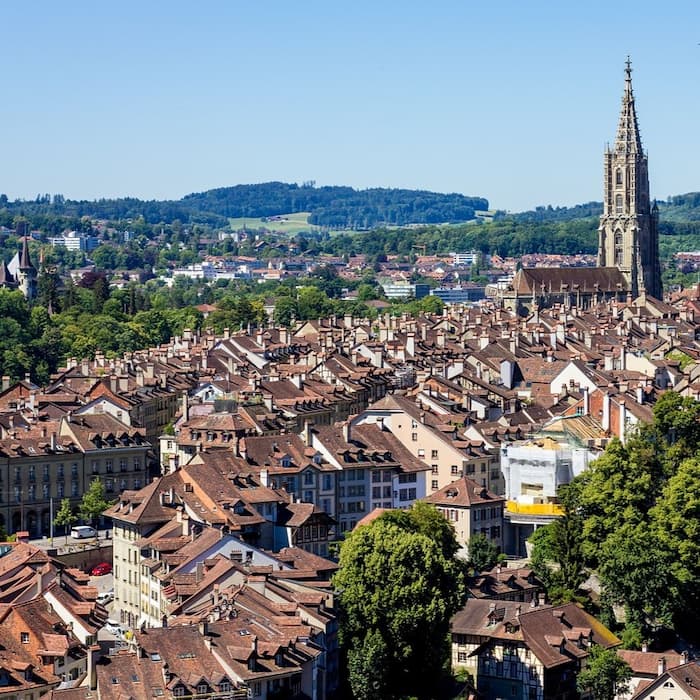
The author argues that in a European property landscape increasingly defined by cyclical correction, Switzerland offers something structurally different.
The following article comes from Dounia Azouini, co-founder
of Equitera Swiss
Capital. The author – perhaps unsurprisingly – is positive on
real estate in the country and gives various reasons. At times,
Switzerland’s negative official interest rates posed a challenge
of inflated asset prices – including property. The post-pandemic
rise in rates also presented difficulties. On the other hand,
geopolitics have reinforced the attractions of Switzerland as a
relatively secure jurisdiction, encouraging inflows to areas such
as property. There are planning regulations on certain types of
building that can curb supply – a factor helping to underpin
prices.
The editors of this news service are pleased to share these
insights and invite replies. The usual editorial disclaimers
apply. Email tom.burroughes@wealthbriefing.com
and amanda.cheesley@clearviewpublishing.com
European real estate is in recalibration. Rising financing costs,
a volatile macro environment, softening demand, and overbuilt
development pipelines have forced institutional investors to
reassess valuations across much of the continent. Markets that
once attracted aggressive capital allocation are now generating
caution.
Switzerland is the exception and, increasingly, it is
attracting serious attention from international family offices,
sovereign wealth funds, and private institutional allocators who
are not chasing growth, but protecting it.
Understanding the underlying opportunity of investing in Swiss
real estate requires moving beyond headline yields. It requires
examining the structural features that make this market
fundamentally different from anything else available in Europe
today.
A monetary environment built for capital preservation
Switzerland's macroeconomic framework is, by design, among the
most conservative in the world. Following a series of rate
reductions beginning in 2024, the Swiss National Bank brought its
policy rate to near zero in 2025 as inflation remained firmly
contained and the Swiss franc continued to strengthen against
major currencies.
The result for property investors is meaningful: stable financing
conditions, predictable capitalisation rates, and a financing
environment that does not generate the rate-driven valuation
swings seen across the eurozone and the UK over the past three
years.
For institutional allocators managing multi-jurisdictional
portfolios, Swiss real estate increasingly functions as a
portfolio anchor, a position that provides income resilience
without the cyclical and economical volatility that has
characterised other European markets.
This is not a market for investors seeking outsized returns. It
is a market for investors who understand that in the current
global environment, the preservation of capital is itself a form
of outperformance.
The Swiss franc advantage
For investors allocating from US dollar, euro, or
dirham-based portfolios, Swiss property offers something rare:
built-in currency protection.
The Swiss franc has functioned as a global safe-haven currency
for decades. Over the past 10 years, the Swiss franc has
appreciated by approximately 30 per cent against the dollar and
maintained its purchasing power through multiple cycles of global
financial stress, the 2008 crisis, Covid-19, and the post-2022
inflation shock.
This means that a Swiss real estate investment does not merely
generate rental income; It generates rental income in one of the
world's most resilient currencies. For Middle Eastern and
North American investors, many of whom hold dollar-pegged
portfolios, this Swiss franc exposure provides a diversification
layer that very few asset classes can replicate.
In a period where currency volatility has become a material
driver of cross-border investment returns, this is not a marginal
consideration. It is central to the investment strategy.
Structural scarcity: The supply constraint that never resolves
If monetary stability explains Switzerland's resilience,
structural supply constraints explain its scarcity premium, and
why that premium is unlikely to erode.
Swiss zoning regulations, land use restrictions, and municipal
approval processes are among the most rigorous in the world. New
commercial and residential development projects routinely take
five to 10 years from planning to delivery. In Alpine resort
markets, Verbier, Crans-Montana, Zermatt, for example. new
construction is effectively capped by both geography and
regulation, preserving the local market and economic
interest.
The data reflects this reality. National residential vacancy has
fallen from 1.72 per cent in 2020 to about 1 per cent in 2025,
one of the lowest rates in Europe. In prime commercial districts,
office vacancy remains around 5 per cent, with central business
district availability considerably tighter.
For investors, structural scarcity translates directly into
income resilience. When supply cannot respond rapidly to demand,
rental income streams are less exposed to the oversupply cycles
that have eroded returns in markets such as London, Frankfurt,
and Paris over the past decade. This is a market where patience
is rewarded and where long-term ownership has historically been
the dominant strategy of the most sophisticated domestic
allocators, and Swiss pension funds and insurance companies, who
have held core assets for decades.
The deal-flow paradox, and why access is everything
Here is the paradox at the heart of the Swiss market: demand from
international capital is rising, yet the number of available
transactions remains structurally limited.
Institutional-quality Swiss assets, prime commercial properties,
hotel assets, mixed-use developments, rarely reach widely
marketed sales. A large proportion of transactions occur
off-market between parties with long-standing local
relationships. This is not an anomaly. It is the defining
characteristic of how this market operates.
For international investors, this creates a structural barrier to
entry that capital alone cannot overcome. An investor arriving in
Switzerland with a mandate and a term sheet will find a small
pool of publicly marketed assets where pricing is already highly
efficient, and a much larger universe of opportunities that they
will never see.
This is the fundamental reason why access to local operating
expertise via an operating partner, established networks, and
off-market deal sourcing has become the critical differentiator
for international capital seeking Swiss real estate exposure.
The question for a family office or institutional allocator is therefore not only should I invest in Switzerland, but how do I access the right assets?
Where the opportunity is concentrated in 2025
Three segments of the Swiss market currently present the most
compelling entry points for international investors.
Alpine hospitality assets represent perhaps the clearest value
opportunity. The integration of Verbier's 4 Vallées into the Epic
Pass network for 2025/26, alongside Vail Resorts' SFr30 million
infrastructure investment in Crans-Montana, is structurally
expanding the international demand base for Alpine destinations.
Hotel assets in these markets are benefiting from rising
occupancy, higher average daily rates, and an influx of North
American visitors which was not a material factor five years ago.
Yet hotel valuations in these markets have not yet fully priced
in these demand dynamics, creating a window for investors who
move before the broader market catches up. Furthermore, these
hotel markets are fundamentally in need of change: a large part
of the hotel supply remains within generational family ownership,
with great opportunities for increasing operational
efficiency.
Lakeside and urban mixed-use assets alongside the Lake
Geneva Riviera, Montreux, Lausanne, and Vevey, combine strong
year-round demand with exceptional scarcity of available stock.
Heritage buildings with commercial or hospitality use cases, as
well as industrial developments, are particularly sought-after
and rarely reach the open market.
Healthcare and clinic real estate is an emerging segment
receiving growing attention from institutional capital.
Switzerland's ageing population, world-class medical
infrastructure, and long-term demographic trends are creating
durable demand for medical real estate assets with
characteristics, long leases, creditworthy tenants,
inflation-linked contracts, that are well-suited to institutional
mandates.
A narrow window, and a clear entry strategy
The structural features that make Switzerland attractive,
scarcity, stability, Swiss franc strength, also limit how quickly
the market can absorb new capital. This is not a market that
expands rapidly to accommodate demand. It is a market where
timing and access determine outcomes. For international
investors, whether family offices in the Gulf, institutional
allocators in London, or private wealth managers in New York, the
current environment represents a rare alignment: a period of
global macroeconomic uncertainty, in which Switzerland's defining
characteristics of stability and scarcity become more valuable,
not less.
The entry strategy that has consistently delivered results for
international capital in this market is built on three pillars:
local operating expertise, off-market deal sourcing, and a deep
understanding of Swiss regulatory and transactional
frameworks.
In a European property landscape increasingly defined by cyclical
correction, Switzerland offers something structurally different.
And in today's investment climate, structural moderation, backed
by one of the world's strongest currencies and most resilient
legal frameworks, is not a compromise, it is the strategy.
About the author
Dounia Azouini is co-founder of Equitera Swiss Capital, an
independent Swiss real estate investment advisory and asset
management platform for international investors. Equitera
specialises in off-market acquisitions, hotel assets, and
cross-border transaction structuring across Switzerland's Alpine
and lakeside markets.