


Company Profiles
Tackling Family Offices' Operational Challenges – In Conversation With Armundia's CEO
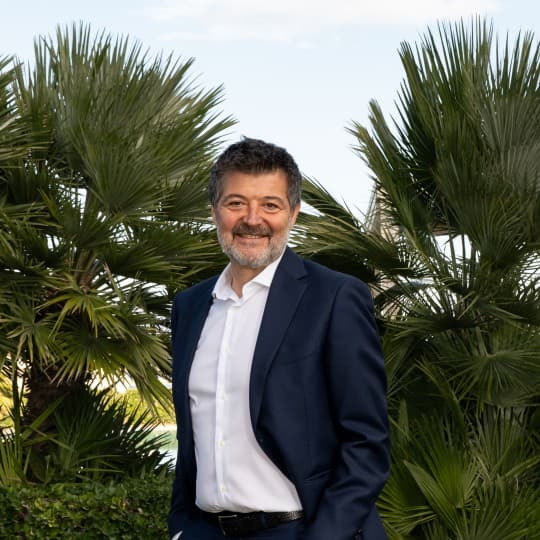
This news service recently sat down with the CEO and chairman of a fintech business – headquartered in Italy – that has launched a platform which it says will address some of the practical, operational challenges family offices face.
As reported in late January this year, Italy-headquartered fintech firm Armundia Group has launched a new platform to support single- and multi-family offices in running complicated portfolios – Armundia 3SIXTY FamilyWealth.
The platform, which provides asset aggregation, analytics, risk
and compliance and AI-powered insights, addresses two main
operational challenges for family offices: making fragmented
assets visible and turning data into actionable intelligence for
strategic decision-making. Armundia has main offices in London,
Milan, Rome, Luxembourg and Tirana. It was founded in 2007 and
employs 250 people in 11 countries across Europe and the
Middle East.
WealthBriefing recently spoke to Gianluca Berghella
(main picture), chairman and CEO of Armundia Group, about this
business and its strategy. Since 2014 Berghella has served as
sole director of Armundia and as chairman and CEO of Armundia
Group. He is a prominent Italian entrepreneur focused on
innovation strategies in fintech and insurtech.
WealthBriefing: What sort of problems/challenges
does Armundia exist to solve and how did you notice that these
challenges existed?
Berghella: The starting problem is structural and well
documented: the vast majority of digital transformation projects
in financial institutions fail, or at least fall short of their
stated objectives in terms of time and budget. The reasons are
recurring: underestimation of accumulated technical debt, legacy
systems that are difficult to integrate, internal teams working
in silos, and a cultural tendency to think of transformation as a
single, all-encompassing event – the so-called “big bang”
approach.
Armundia exists to address this reality, drawing on the strategic
understanding we have of the financial industry. We’ve seen first
hand how banks, financial institutions and insurance companies
find themselves caught between the need to innovate and the
reality that innovation disrupts day-to-day operations. That
awareness has shaped our fundamental architectural choice: to
build modular, customisable solutions that allow organisations to
evolve gradually, without having to replace the entire system.
The goal is to deliver innovation that is concrete, integrated
and incrementable over time.
The scale of the problem is significant. Across Europe, banks and
asset management institutions have accumulated decades of layered
technology infrastructure. Modernising it is a priority
– but also an enormous operational and financial challenge.
We offer a path that reduces risk and preserves continuity.
WB: The family offices sector in Europe and wider world has grown tremendously. What in your view is the scale of opportunity for Armundia?
Berghella: The family office sector is in a phase of structural
growth, driven by the rise in global private wealth and an
increasingly sophisticated demand for integrated wealth
management. The very definition of “family office” is fluid
– encompassing entities that differ considerably in size,
structure and objectives – but this, paradoxically,
represents an opportunity for those who offer flexible
solutions.
With 3SIXTY FamilyWealth we’ve developed a platform designed
specifically for the needs of family offices: consolidated wealth
visibility, multi-asset and multi-custodian management,
customised reporting and governance tools. Instead of imposing a
predefined operating model, we adapt the solution to the specific
structure and requirements of each family or office.
We offer this in markets where the concentration of private
wealth is highest and where demand for sophisticated services is
growing. This year, our 3SIXTY FamilyWealth roadshow will visit
Singapore, Hong Kong, the Middle East, Luxembourg, Malaysia and
Italy – six very different markets, but with a common
denominator: family offices seeking tools that meet the
complexity of the wealth they manage.
WB: What's the best way to describe your business?
Berghella: We define ourselves as a “techfin,” not a fintech
– a distinction that, for us, is not merely rhetorical. We
are a technology company that has finance as its core vertical,
with over 18 years of experience in the sector. We did not set
out to “disrupt” the banking system: we started from within, with
a deep understanding of the processes, regulations and
operational pressures that characterise banks, wealth managers,
asset managers and insurance companies.
And with a very clear vision of the future we want to help build.
WB: What is the revenue model?
Berghella: Armundia's approach is open and flexible. Our methodology is to stand alongside our clients – not opposite them – acting as a genuine partner that supports growth through solutions built around each client's specific positioning and development strategy.
Before defining any scope of work, Armundia conducts a
consultative assessment to identify the client’s priority areas
for intervention, the modules to be supplied, the implementation
costs and the project timeline. The aim is a turnkey proposal in
which the partnership approach translates into something concrete
and measurable.
The commercial model follows the same logic. Solutions are
delivered on a modular basis, with investment structures that
allow clients to begin a programme of technological renewal
within sustainable budgets – whether through licences or
progressive annual subscription fees. This is complemented
through Armundia Services, our maintenance and application
management services tailored to each client's needs via agreed
Service Level Agreements (SLAs). Where appropriate, the scope can
extend to BPO services to further optimise the client's
operational processes.
For fund monitoring solutions such as 3SIXTY FundWatch, the
variable component is indexed to assets under monitoring – a
deliberate choice that aligns our interests with those of the
client over the long term.
WB: How do you define what "success" is for your business?
Berghella: We measure success by the operational results of our
clients. For instance, when a depositary bank using our 3SIXTY
FundWatch platform reduces manual errors by 90 per cent, cuts
internal email volume by 65 per cent and shortens onboarding
times by 40 per cent, that is our benchmark.
More broadly, we consider a project successful when the client
has acquired a capability they didn’t have before – not
simply a new tool, but a different and more efficient way of
working. Technology should free people up for higher-value
activities, not merely automate what already exists. It’s this
mindset that we want to promote and enable.
On the commercial side, success is the trust that clients
demonstrate through renewing and growing their relationship with
us over time – as well as our ability to grow in new
geographical markets without losing depth in the existing ones.
WB: Can we talk about the business model a bit more – you described a "modular" approach and how your model is a "light" one. Please expand on how this works.
Berghella: Modularity is not a marketing term for
us – it is a precise architectural choice, with concrete
consequences for the way clients adopt our solutions and grow
with us.
Our systems are built on independent, interoperable components. A
client can activate a single module without having to acquire or
replace the entire platform. This radically reduces
implementation risk, lowers the barrier to entry and allows value
to be demonstrated quickly.
When we talk about a 'lightweight' model, this is what we mean:
we don’t ask our clients to rebuild their infrastructure in order
to adopt our solutions. We work through standard APIs, integrate
with existing legacy systems, and enable a gradual adoption that
follows the pace and priorities of each organisation. It is the
opposite of the 'big bang' model that has produced so many
failures over the past decade.
The API-first architecture also facilitates integration with
emerging technologies – AI, data analytics, cloud services
– without requiring a full transformation project each time.
WB: Geographically, where are you seeing most growth and most potential? Can you talk about the sort of opportunities you see in the UK.
Berghella: We currently operate across continental
Europe – with an established presence in Italy and
Luxembourg – in the UK, and in Asia, with partnerships in
Singapore and Hong Kong. Each market has its own characteristics,
but we are seeing growth across all three regions.
Luxembourg remains a strategic hub for European fund management,
with consistent demand for solutions serving depositary banks,
investment managers and regulatory compliance – an area
where FundWatch has delivered very tangible results. In the UK we
see a significant opportunity. The market is sophisticated,
competitive and open to innovation, but many institutions are
still grappling with ageing technology infrastructure. Armundia
UK is our global gateway, and we’re building relationships with
banks, wealth managers and insurance operators who recognise the
value of a modular approach over large-scale monolithic
transformation projects.
WB: You mentioned Armundia and Singapore. What sort of clients do you engage with there? What sort of trends do you see unfolding?
Berghella: Singapore is a priority market for us, for several
reasons. It is a regional financial hub with a high concentration
of wealth managers, family offices and asset management operators
serving both Asian and international clients. The regulatory
environment is mature, clients are demanding, and there is a
genuine willingness to work with technology partners who bring
deep vertical expertise rather than generic solutions.
The trends we observe are clear: growing private wealth across
the region, increasingly sophisticated demand – with
multi-generational family offices requiring more advanced tools
– and a sharper focus on governance and ESG reporting. On
all these fronts, our solutions – in particular 3SIXTY
Advisory and 3SIXTY FamilyWealth – address very concrete
needs.
WB: Whom would you say are your peers, or do things that might be similar in some respects? What are your differentiators?
Berghella: There are players operating in areas adjacent to ours
– wealth management platform providers, finance-specialist
system integrators, fund administration solution vendors. We
don’t name competitors, but we can describe precisely what sets
us apart.
The first differentiator is genuine modularity. Many vendors
claim to offer modular solutions, but in practice deliver
monolithic platforms with configurable interfaces. We are modular
by architecture, not by marketing – each component is
genuinely independent and can be adopted individually.
The second is domain depth. After 18 years in the sector, we
understand financial processes from the inside – depositary
banking, fund management, wealth management, insurance. We don’t
need to learn the client's business before proposing relevant
solutions. The third is geographical coverage and the ability to
serve very different markets with solutions that are consistent
yet adaptable to local specificities.
WB: Please talk about the relationship between your firm and the University of Luxembourg.
Berghella: Our relationship with the academic and research world
is strategic in nature, not merely reputational. We believe that
the most relevant innovation in fintech happens at the
intersection of industry practice and fundamental research.
We collaborate with several centres of excellence in this space:
the Fintech & Insurtech Observatory at Politecnico di Milano, one
of the leading research centres tracking digital transformation
in financial services; the DISIM department at the University of
L'Aquila; and the Gran Sasso Science Institute, an independent
postgraduate research school recognised internationally for its
work in applied sciences.
In Luxembourg, we are currently engaged in a research
collaboration with the Luxembourg Institute of Science and
Technology – a partnership we expect to be able to discuss
in greater detail in the coming months.
WB: You mentioned potential in the UK for the "bancassurance" market. Please elaborate.
Berghella: The bancassurance market in the UK is
historically less developed than the major continental European
markets – Italy, France, Spain – where the model has
been central to retail distribution of insurance products for
decades. In the UK, the separation between banking and insurance
has been more pronounced, both culturally and technologically.
But the conditions for significant growth are clearly in
place.
The digitalisation of banking has accustomed consumers to
managing their financial services within a single environment.
Demand for integrated solutions – protection, savings and
wealth planning within a single relationship – is growing,
driven in part by an ageing population seeking coordinated
answers rather than separate products managed across different
platforms. The major British institutions have recognised this:
Lloyds and Barclays are already moving towards models in which
insurance products are integrated directly into the mobile
banking experience.
The regulatory landscape adds a dimension that is particularly
relevant to us. The Financial Conduct Authority has introduced
the Consumer Duty as the reference standard for customer
protection across all retail financial services, including
bancassurance distribution. The Consumer Duty imposes stringent
obligations for transparency, product suitability and the
traceability of outcomes for the end client. At the same time,
the FCA is simplifying rules for the insurance sector, with the
explicit aim of supporting growth and innovation by reducing
unnecessary regulatory constraints. The signal is clear: greater
rigour on customer protection, less bureaucracy around product
architecture. A balance that rewards those with flexible
technology infrastructures and compliance embedded by design.
This is precisely where 3SIXTY Bancassurance comes in: our
modular, customisable platform that integrates insurance
processes directly into the banking ecosystem – product
distribution, client data, compliance workflows, reporting
– without requiring a full replacement of existing systems.
The architecture is structurally aligned with Consumer Duty
requirements: every component is traceable, configurable and can
be documented, enabling institutions to meet FCA standards
without adding operational complexity. Banks can activate the
modules they need, in the sequence that reflects their own
priorities, and expand the integration progressively.
The UK market is still in a defining phase. The institutions that
build the right infrastructure today – modular, compliant,
integratable – won’t need to scramble to catch up when the
model matures. That advantage is built now.
WB: What sort of big trends do you see affecting your industry and what should the industry talk about more, or is even overlooking?
Berghella: There are three trends we consider
structural.
The first is artificial intelligence applied to financial
processes. We are not talking about generic AI, but agentic
systems – capable of operating autonomously on complex
datasets, executing monitoring tasks, generating reports and
supporting decisions. In areas such as fund management,
depositary banking and wealth management, the potential is
enormous. But the issue the industry consistently underestimates
is the governance of these systems: who supervises the AI's
decisions? What control mechanisms exist? Our position is clear:
technology serves people, it does not replace them. Human
oversight remains central, particularly when systems are
operating on assets and sensitive data.
The second is the growing regulatory pressure – a global
phenomenon, not confined to any single jurisdiction. Wherever we
operate – in Europe, the UK, Asia, the Middle East
– financial institutions are facing increasingly stringent
requirements to ensure transparency, client protection,
operational resilience and ESG reporting. Compliance is no longer
a cost to be optimised: it has become a driver of technological
transformation. Institutions that equip themselves today with
flexible, adaptable infrastructures will be better placed
tomorrow, when requirements change again – as they
inevitably will.
The third is the concentration of private wealth and the growth
of family offices – a genuinely global phenomenon, touching
Europe, Asia and the Middle East in different but convergent
ways. This growth generates demand for sophisticated tools,
advanced wealth governance and consolidated reporting across very
different asset classes and markets. It is not a demand that can
be met with standardised solutions.
What the industry tends to underestimate is the cost of inertia.
Delaying technological modernisation doesn’t pause the problem
– it exacerbates it. Technical debt accumulates,
transformation windows narrow, and the gap between those who have
invested in flexible infrastructures and those who haven’t
becomes increasingly difficult to close.
WB: How would you sum up your business philosophy?
Berghella: Technology must solve real problems, not create new
complexity. This means designing tools that simplify people's
working lives, streamline processes, enhance skills and
contribute to broader wellbeing – not just organisational
efficiency.
To achieve this, three things are required: a culture of service,
conscious design, and the humanisation of processes. When we talk
about technological innovation, and artificial intelligence in
particular, we’re referring to tools that must simplify working
life, enhance human capabilities and contribute to individual and
collective wellbeing.
Three principles guide us:
-- Human processes: technology must lighten the workload,
not add to it;
-- Intelligent strategies: not replacing people, but
empowering them; and
-- Value-driven solutions: improving the competitiveness of
the organisation and the quality of service, not just the KPIs.
WB: Are there any other points you would like to make?
Berghella: Another trend worth highlighting is the
growing complexity of AIF monitoring obligations. Depositary
banks and AIFMs are under increasing pressure to demonstrate
continuous, granular oversight of the funds they supervise
– and the operational tools available to most institutions
have not kept pace with these regulatory expectations.
This is an area where we see significant demand, and where our
3SIXTY FundWatch platform is gaining growing interest. The
ability to automate data ingestion, run continuous quality
controls and generate audit-ready reporting is no longer a
competitive differentiator – it is becoming a baseline
requirement. Institutions that still rely on manual processes or
fragmented spreadsheets are carrying a risk they may not yet have
fully quantified.