


Investment Strategies
Russia Invades Ukraine, Rocking Markets – Reactions
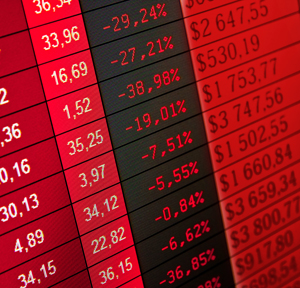
Economists and market watchers give early reactions to the momentous developments taking place in Ukraine, now under military attack.
Russian military forces invaded Ukraine today, with attacks on
cities reported across the country, plunging Europe into arguably
its worst crisis since the conflict in former Yugoslavia in the
1990s and perhaps since the Second World War. Equity markets in
Asia fell, US stock futures took a slide while “safe-haven”
assets such as gold rose. Oil prices continued to climb.
The blow to confidence comes at a time when globalization – a
term covering the expansion of trade, human interaction and
travel since the end of the Cold War – had already been in
partial retreat because of the pandemic, US-China tariffs, and
political backlashes against the supposed inequities of market
economics. The Russian invasion, however, is likely to increase
the pace of the world breaking into trading blocs. China has – as
of the time of writing – been quiet in its official
pronouncements about the invasion of Ukraine.
The crisis also raises question marks about Western countries’
energy policies. Germany is already reportedly reconsidering its
decision to shut down nuclear power because that country is now a
large user of Russian natural gas. Opposition to domestic
fracking in the UK – to go after oil and gas – could be overcome,
and the UK may also ramp up nuclear energy, although such
investment takes time. Rising inflation will hit living
standards. On the other side of the ledger, oil producers in the
Middle East will see their revenues surge, adding to the wealth
of the MENA region.
Investment confidence, which started under a cloud in January,
was actually improving earlier in February before the Ukraine
situation deteriorated. The Global Investor Confidence Index,
produced by State Street, rose to 103.9, up 13.9 points from
January’s revised reading of 90.0. The increase was led by a jump
in North America and a rise in Europe, although it fell slightly
in Asia. (That index tracks the actual buying and selling conduct
of investors.)
At UBS, the banking group argues that the limit on what Russian
president Vladimir Putin will do is his “own assessment of the
costs of a wider campaign in terms of resources, Ukrainian
resistance, and political support at home in the event of wider
conflict.”
“Ultimately, we also think that Putin has a strong interest in
continuing to sell energy and other commodities to Europe, which
speaks against a long-lasting military engagement. The risk case
is that the crisis remains a source of continued volatility for
an extended period until a new point of stalemate is reached,”
UBS continued. “In the extreme risk case, which we would define
as one that has a lasting and material negative impact on global
growth, the conflict escalates to a level that pushes Western
nations to accept disruption to Russia's energy flow. If oil
prices were to rise to $125/bbl or higher for two quarters, it
would result in roughly half a percentage point lower in global
GDP growth, and higher inflation affecting consumer spending
power. Should Russia’s energy flow be disrupted, higher risk
premiums and lower global earnings estimates would likely trigger
more long-lasting losses for equity markets,” it said.
The bank, one of the world’s largest wealth managers, added that
historically, “the greatest risk for investors from geopolitical
crises has come from overreacting and under-diversifying.”
In a spin
The news that broke during Asian and European trading hours
rocked markets. European stocks tumbled, with the UK’s FTSE 100
falling 2.5 per cent, while France's CAC 40 dropped 4 per cent
and Germany's DAX 30 shed 4 per cent. Russian stocks cratered –
its main index fell 45 per cent. In Asia, Hong Kong's Hang Seng
Index dropped 3.2 per cent, its biggest daily loss in five
months. South Korea's Kospi fell 2.6 per cent. Japan's Nikkei 225
(N225) lost 1.8 per cent and China's Shanghai Composite slipped
by 1.7 per cent lower.
US stock futures fell; Dow Jones futures (source:
CNN, others) fell 2 per cent and S&P 500 and Nasdaq
futures were down 2 per cent and 2.5 per cent respectively. In
the gold market – a classic safe haven asset – it is
over $1,960 per ounce. Brent crude oil prices are more than $100
per barrel. West Texas Intermediate was trading around $99.6
(source: CNBC, New York Mercantile Exchange).
Some commentators in Europe as the news unfolded were even more
blunt about the impact of Putin’s actions.
“The Russian invasion of Ukraine will decimate global stock
markets. Unsurprisingly, investors stampeded into safe haven
assets, with bond yields collapsing and precious metals, such as
gold and silver, soaring,” Antonia Medlicott, finance editor at
the financial comparison website, InvestingReviews.co.uk, said in
a note.
“It’s no overstatement to say Europe has just entered its most
dangerous period since WW2. Market volatility will be extreme in
the short-term. The people of Ukraine are rightly front of mind
and the call to arms is something few thought they would see in
their lifetime. For people globally, it’s hard to compute what
they are seeing on their TV screens. Putin has crossed the
Rubicon,” she said.
Susannah Streeter, senior investment and markets analyst,
Hargreaves Lansdown, said of the news: “Moscow’s bullying tactics
have turned into a full scale assault, with Ukraine’s worst fears
materialized as Russian forces have begun a major attack on the
country. This is a devastating turn of events for citizens in
Ukraine who had waited in vain for a diplomatic resolution.
Already the invasion has caused shockwaves across the world’s
financial markets as cities in Ukraine have come under
fire.”
She noted that the UK’s bellwether stock market index, the FTSE
100 of large-cap stocks, fell 2.6 per cent on the open, and
France’s CAC 40 and Germany’s DAX fell 4 per cent, following
Asian markets deep into the red.
“The threat of war had already been hanging over investors, and
the shock of the invasion sent the price of oil hurtling up by
more than 7 per cent way above $100 a barrel, reaching more
[than] $103 before falling back a notch. Oil and gas prices are
likely to stay highly elevated with hard hitting sanctions set to
be imposed by the international community. Market volatility has
increased since the beginning of the year, stoked by rising
interest rates, and today’s news has added fuel to the market
turbulence,” Streeter said.