


Strategy
Resurgent Hong Kong Sets Out Five-Year Growth Plan – Reactions
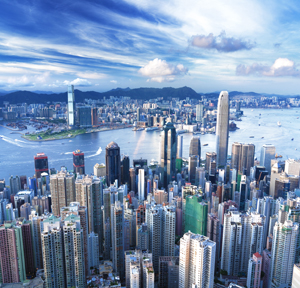
Wealth managers and banks appear to have been broadly supportive of a new policy programme for Hong Kong that includes developments such as a "Northern Metropolis" and continued incentives for the financial industry.
Hong Kong has, by some measures, already
surpassed Switzerland as the world’s largest financial centre
and the city’s government isn’t taking its foot off the pedal,
judging by its recently-unveiled five-year plan. Banks appear to
be broadly enthusiastic, their public comments show.
The blueprint for reform is targeting the city’s wealth
management sector, along with areas such as the idea of building
a “Northern Metropolis.”
The city plans to extend tax concessions to precious metals,
private credit and digital assets. Hong Kong also intends to help
at least another 220 family offices to expand and get
established, taking the total to 3,600 by 2028.
“The Five-Year Plan provides a strong platform for Hong Kong's
next phase of growth by enhancing connectivity and reinforcing
the city’s role as a gateway linking the Chinese Mainland with
regional and global markets,” George Tung, chief executive, UOB
Hong Kong, said in a statement this week.
UOB Hong Kong said it was encouraged by the plan’s aim to
strengthen the city’s role as a global offshore renminbi
business hub, international wealth management centre and
international risk management centre, alongside emerging growth
areas such as digital finance, green finance and commodity
trading.
At DBS, which issued a note on the speech by Hong Kong government
CEO John Lee, “continued expansion in trade, tourism, talent and
foreign-company presence should support services growth, while
higher innovation spending and new-industry output could lift
productivity over time.”
“We welcome the city’s inaugural Five-Year Plan and the 2026
Policy Address. They set out a clear vision and actions to
further elevate Hong Kong’s position as the world’s largest
cross-boundary wealth management centre," Chi Man Kwan, group CEO
of Raffles Family Office, said in a note.
“A deeper, better-connected environment – reinforced by the preferential tax regimes for funds and single-family offices, and a broader push to bring global capital to be managed here – strengthens the ecosystem in which an independent multi-family office operates, and widens what we can deliver for the families we serve," Chi Man Kwan said. "For those families, wealth is never a single asset class. Broadening the range of available products and deepening Hong Kong's role as a ‘Super Connector’ between Mainland China and global markets will be essential as an estimated $5.8 trillion in wealth passes to the next generation across Asia-Pacific by 2030."
Already, Hong Kong has unveiled incentives to boost sectors
such as private equity, family offices and asset management. For
example, hedge fund managers in the city could benefit from a law
change that removes levies on performance-related income for some
funds, aka carried interest.
The city, which competes against rival hubs such as
Singapore and Dubai, has recovered some of its old pre-pandemic
vigour, including playing host to a strong IPO market. Figures in
the wealth sector say they’ve seen a rise of business
interest.
A few concerns
There are concerns, however. Beijing now
imposes a 20 per cent tax on offshore trust income –
affecting some businesses in Hong Kong.
In its commentary on the government’s plan, DBS said Hong Kong’s
expanding financial and professional services fields should
attract more mainland and overseas companies. Regional
headquarters rose 11.5 per cent last year.
Hong Kong is eyeing potential growth in the gold market, mindful
of how some central banks, especially in China, are increasing
holdings. China’s gold imports via Hong Kong surged by 92.4 per
cent on a year earlier to 499 tonnes in August, DBS said. China’s
global reserves reached $350 billion in August, rising from $253
billion a year earlier. DBS said a tax concession should attract
trading and financing activity.
A main plank of the five-year plan is the idea of a “Northern
Metropolis, designed to ease Hong Kong’s housing shortages and
create capacity for new industries. The government is
targeting around 900 hectares of land ready for
construction, with about 70,000 housing units over the five years
to the 20230/31 financial year.
More than half a decade ago, the rise of the Wealth Connect
system, linking stock market investors in Hong Kong, the mainland
and Macao, was seen as an important driver of integration.