


Practice Strategies
Piguet Galland Puts Trust At The Heart Of The Augmented Banker
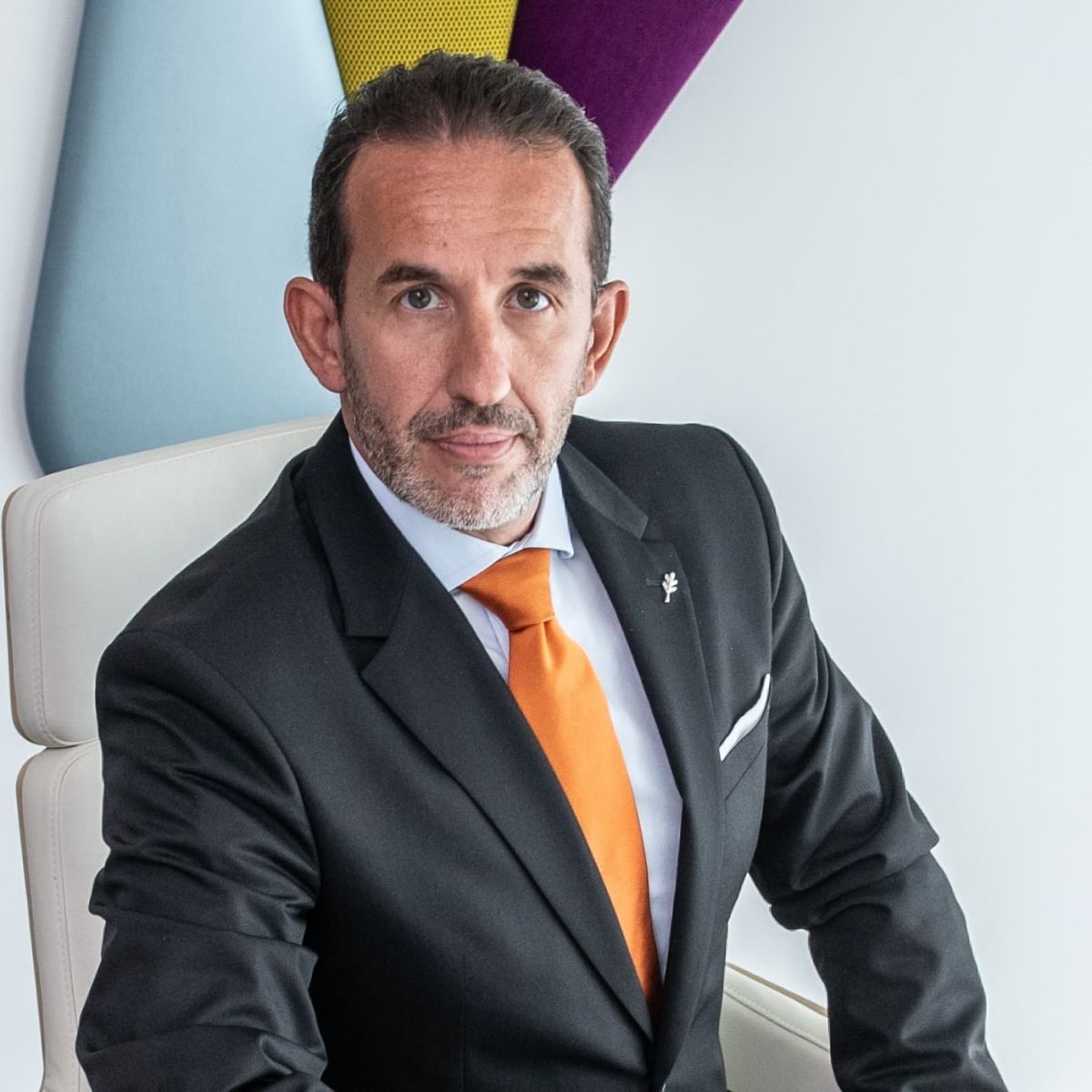
In an article that is part of a number of items ahead of a research report, this news service talks to Swiss private bank Piguet Galland about how AI features in its business.
This article continues WealthBriefing’s interview series ahead of its forthcoming AI in Wealth Management research report, produced in partnership with Arta Finance.
For Swiss private bank Piguet Galland, AI’s
value lies in helping employees work more efficiently while
preserving the personal relationships on which private banking
depends.
Jordi Domenech (main picture), who leads the bank’s technology
function, describes this as the “augmented banker”: a human
advisor equipped with better tools, whose expertise and judgment
remain central to the service.
Clients may welcome quicker processes, but important
conversations about their finances still call for human contact.
The bank is still cautious about putting AI directly in front of
clients.
Practical gains from everyday tools
Domenech said earlier investment in cloud infrastructure,
document classification and employee training helped the bank
introduce Microsoft Copilot quickly. He personally delivered
voluntary training, with usage initially building gradually
before gaining wider acceptance.
His priority was measurable improvement in everyday work. He
reported efficiency gains of around 10 per cent, explaining that
across a workforce of 180, even modest individual improvements
could have a substantial collective impact.
The approach also gives employees room to experiment. Domenech
said about 10 in people in business teams had built prototypes
that changed the way in which they worked, without relying
on IT to develop the initial solution.
Those experiments are treated as prototypes. Before wider
deployment, the technology team reviews them, applies appropriate
guidelines and integrates them into the bank’s systems.
For a smaller institution, the challenge is to combine the speed
of experimentation with controls that make new applications
dependable. Employees need both permission to explore and a clear
route towards supported operational use.
More recently, Piguet Galland deployed internal large language
models on its own infrastructure, opening up experimentation with
internal data. Potential operational applications include
ticketing and help-desk processes. Domenech described a
differentiated approach, matching tools and models to technical
specialists, operational teams and everyday users.
Avoiding a divide between employees
For Domenech, adoption is as much a workforce question as a
technology project. He warned against creating two groups within
the same bank: employees advancing rapidly with AI and colleagues
who feel increasingly left behind.
“We should not leave people behind,” he said.
He challenged the assumption that younger employees necessarily
bring the strongest understanding of how to apply AI. Familiarity
with a tool does not automatically confer knowledge of the
business processes it might improve.
Experienced colleagues hold expertise that can help shape useful
applications. Pairing them with younger employees offers a way to
develop tools while transferring knowledge and teaching people
how to assess the results critically.
That transfer also matters when experienced staff retire.
Domenech sees scope to capture elements of their knowledge in
reusable agents and skills, while ensuring that successors
understand how to use them wisely.
Expertise must remain visible
AI is also changing the questions clients bring to their
advisors. Domenech described the incidence of clients
arriving with conclusions generated by public AI tools and
expecting their banker to respond.
Simply dismissing those answers risks weakening the relationship.
Instead, he argued, advisors should be equipped to examine them
against reliable information, the client’s circumstances and the
bank’s expertise.
The banker’s value lies in explaining what is relevant, what may
be misleading and which risks have been overlooked. Human
judgment remains essential to maintaining confidence in the
advice.
“The machine is just there to assist,” Domenech said.
The forthcoming WealthBriefing report, produced in
partnership with Arta Finance, will explore how firms turn AI
experimentation into practical value, including the training,
governance and organisational changes needed to support adoption.