


Investment Strategies
Ninety One Positive On Middle East Investment
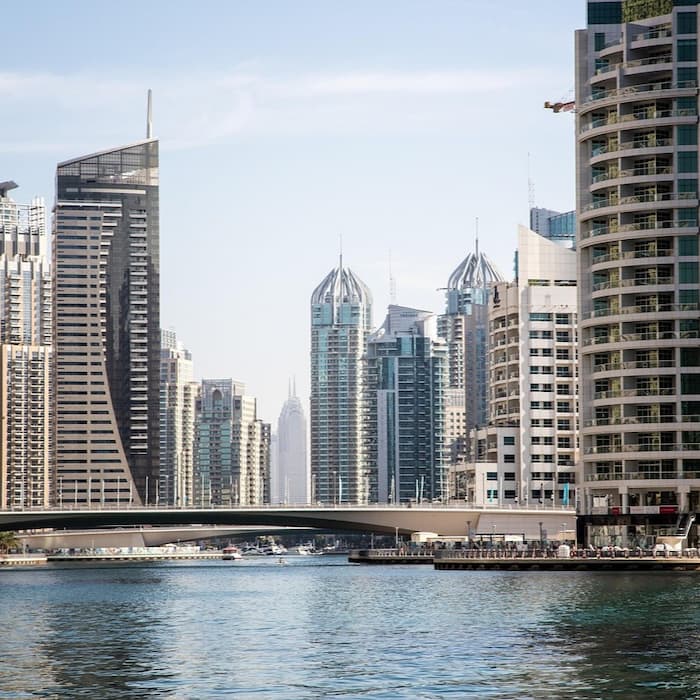
The London-headquartered asset management house has set out why it thinks countries in the Gulf region, for example, are significant growth prospects, while setting out a broadly positive assessment for emerging market jurisdictions around the world.
Global investment manager Ninety One is upbeat
about the Gulf region of the Middle East, as it
looks through geopolitical dramas to capture returns in
an emerging region.
“The underlying backdrop of the region is strong,” Victoria
Harling, chief investment officer for Middle East and co-head of
emerging market corporate debt, told journalists at a briefing
last week.
The Gulf region has the sort of buzz that London had more than 20
years ago, Harling, who is based in the Middle East because of
her desire to get closer to the area, said. “It has been pretty
miserable [in London] for the past 15 years, to be honest,” she
continued.
Ninety One, which has emerging market investment as a major
business area, oversaw £171.8 billion ($231 billion) in assets
under management at the end of March this year.
For all the worries about security, fund managers appear to be
voting with their feet, setting up new offices in Gulf states
such as the UAE. Groups such as Bain Capital, Barings and
Hillhouse Investment have established offices in Abu Dhabi,
reinforcing the emirate’s growing role at the centre of global
capital flows. In early May, Man Group, the UK-listed hedge funds
group, established an office in the jurisdiction.
On 15 May, as reported by WealthBriefing, Partners
Capital opened an Abu Dhabi office.
Volatility in the region has calmed down and there has been no
“meaningful disruption” to Saudi Arabia and the United Arab
Emirates, Harling said. “Qatar has some work to do but ultimately
it should be fine,” she said.
The conflict pitting Israel and the US versus Iran in March,
leading to Iran closing the Strait of Hormuz, has sent crude
oil prices soaring because of the importance of this supply route
to the world market.
Ninety One said an assessment of impact from higher energy prices
will depend on how long disruption lasts. The “winners
and losers” range from higher oil prices among emerging markets,
depending on which ones are net exporters, such as Saudi Arabia,
Indonesia and Nigeria, and net importers, such as Argentina,
India, Malaysia and Turkey.
Commenting on the equity side, Archie Hart, portfolio manager,
emerging market equity at the firm, said that over the past five
to 10 years, the Gulf region has been one where “we have
seen the most positive social change,” which he said bodes
well for the economy. There has been a large rise in women being
employed; the region is increasingly opening to tourism, sports
and music festivals; and there has been a sign of
loosening religious controls to accommodate groups such as
the substantial India expat population, he said.
A theme expressed by several of the Ninety One investment team
last week was that developed and emerging markets are converging
– with the latter increasingly standing out for having relatively
low debt-to-GDP ratios, younger demographics, fast-improving
corporate governance and stability, and robust foreign exchange
reserves and external balances. In regions such as Europe, by
contrast, countries are in an “age of grievance.”
The average rating of emerging market has been above the US
investment-grade level for the past five years, but investors
receive a superior payout for holding the same level of
risk.
Alan Siow, co-head of emerging market corporate debt, said there
are misconceptions about emerging market debt that must be
cleared up. These include claims that EM debt is “all
high yield” when in fact more than half of it is investment
grade, or the idea that emerging markets are niche sectors and
illiquid, when they are collectively worth about $2.5 trillion,
comparable with the euro corporate market.
A result of these misunderstandings is that emerging market debt
has a persistent valuation discount that stems from perceptions
instead of reality, he said.