


Emerging Markets
MSCI Fires Downgrade Warning Shot At Indonesia, Equities Weaken
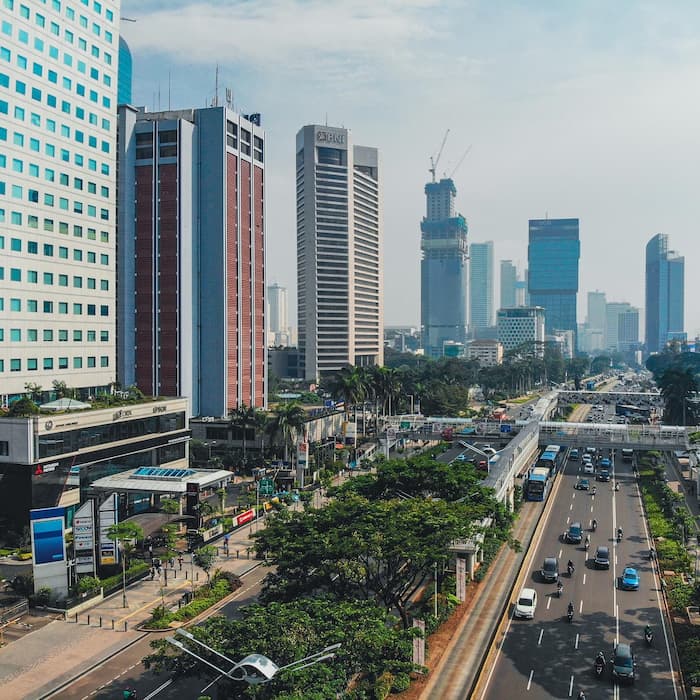
The market index organisation, whose benchmarks are widely used by investors, says that concerns about opaque shareholding structures and “suspected co-ordinated trading” means that it may strip the Asian country of its emerging market status.
Shares in Indonesian equities fell yesterday, adding to recent
losses, after MSCI said late last week that it was consulting on
a proposal to reclassify the MSCI Indonesia Indexes from
“Emerging Market” to “Standalone Market” status.
The organisation said it will announce its final decision by the
end of June 2027 and may provide an interim update on market
participant feedback during the consultation period.
The warning has added to losses in Indonesian stocks. The
Jakarta Composite Index (JCI/IHSG) is down about 40 to 43 per
cent since the start of 2026. The Index was falling weeks before
the MSCI announcement, and shares continued to slip after its 15
October announcement. The rupiah, its currency, has depreciated
by approximately 8 per cent.
“As part of the June 2026 Market Classification Review, MSCI
reported that market participants had raised significant concerns
regarding the investability of the Indonesian equity market,
including persistent opacity in shareholding structures and
suspected coordinated trading behaviour,” MSCI said in a
statement.
“While the Indonesian authorities have announced reforms,
including enhanced disclosure of shareholders with ownership
above 1 per cent, more granular investor classification
disclosure, High Shareholding Concentration (HSC) reporting, and
a roadmap towards a minimum free float requirement of 15 per
cent, institutional investors have emphasised the need for
consistent implementation and evidence of sustained material
impact from these announcements,” it said in a
statement.
MSCI indicated in June that if sufficient progress was not
evident by the November 2026 Index Review, it would consider
launching a consultation on reclassifying the Indonesian
market.
“Market participants have indicated to MSCI that, to date,
sufficient progress has not been observed consistently across the
Indonesian equity market. Despite the announced reforms,
significant concerns remain around market dysfunction, including
continued suspected coordinated trading behaviour and lack of
evidence of meaningful enforcement,” it said.
“Accordingly, MSCI considers Indonesia’s continued classification
as an Emerging Market no longer appropriate and is launching a
consultation on a proposal to reclassify Indonesia as a
Standalone Market,” it continued.
The organisation said feedback from market participants suggested
that reclassifying Indonesia to Frontier Markets status “would
not properly recognise the depth of the market
problems.”
“MSCI expects to proceed with the proposed reclassification
unless the consultation identifies clear evidence of material
improvements in market governance and functioning to warrant
reconsideration,” it said.
The organisation said it continues to apply the existing freeze
on certain index-related changes for Indonesian securities
resulting from index reviews or corporate events until further
notice.
The move, if MSCI acts, will be a blow to one of the largest
Southeast Asian economies. Indonesia’s economy is about $1.4 to
$1.5 trillion in nominal terms, making it about the 17th largest
in the world. It has expanded by about 5 per cent per annum since
the pandemic.