


Investment Strategies
It's A Lot Easier To Advocate Gold Than Before – Industry Veteran
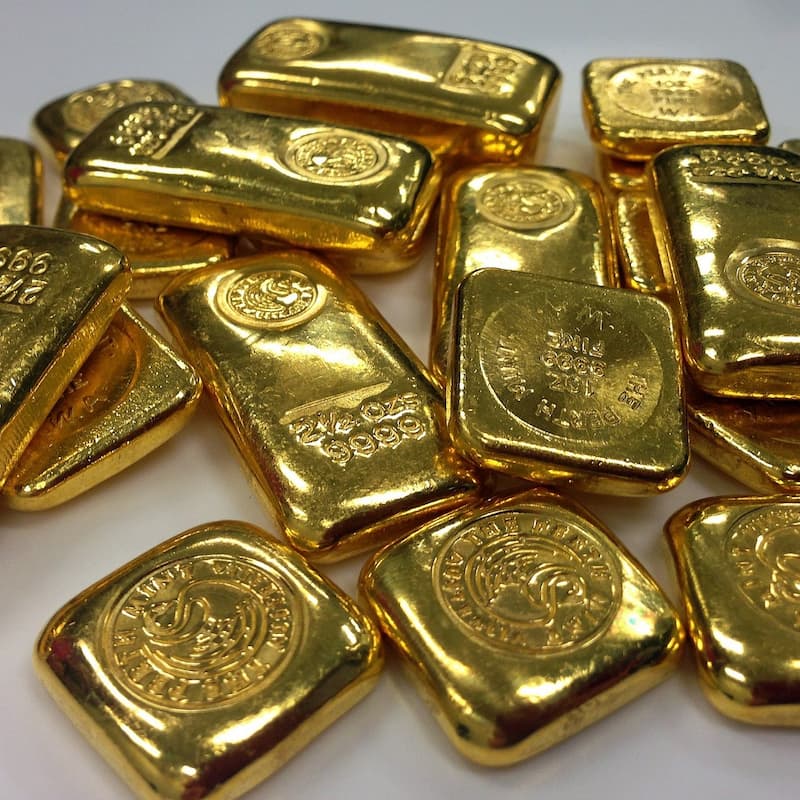
Written off decades ago as a "barbarous relic," a mix of geopolitics, changing financial conditions and an understanding of diversification has put gold emphatically back on the market map in recent years. We talk to the World Gold Council's senior market strategist.
(Updates with added
commentary.)
Among the market winners of 2025, gold was undoubtedly among
them. Judging by some wealth managers’ comments already in early
January, the yellow metal has further potential to shine.
As reported here, Daniel Casali, chief investment strategist at UK wealth manager Evelyn Partners, has argued that the surge in gold prices demonstrates a “clear preference for security over returns.” Worries about heavy public debts in developed countries, a weaker US dollar and geopolitical uncertainties have played into gold’s strengths.
During 2025, spot gold rose about 62 per cent, closing out the year at $4,332 per ounce. By comparison, the MSCI World Index of developed countries’ equities shows gross returns of 21.6 per cent; the MSCI Emerging Markets Index result is 34.36 per cent. On the fixed income side, the Bloomberg US Agg Total Return Value Unhedged USD Index, a measure of fixed income returns, is up by around 7.6 per cent.
Perhaps it’s not surprising then that the World Gold Council, a not-for-for profit industry association of goldminers and other companies in the sector, thinks market developments give the gold a strong profile.
“Gold is a diversifier of risky assets and over the long term, gold returns on average are negatively correlated with equity market returns,” John Reade, the WGC’s senior market strategist for Europe and Asia, told WealthBriefing late last December. Reade is based in London. “My job has got a lot easier in the last few years. Gold has proved repeatedly in the data, and in recent crises, that it has a role in portfolios.”
“Gold is very much a `Marmite’ asset," he said, referring to a yeast extract spread that one either loves or hates. “It is unevenly appreciated. Some people really 'get it’. But quite a lot of people don’t appreciate it and aren’t interested," he said.
The balance towards those who are interested has been shifting, however, Reade said.
The stance of central banks has shifted considerably. In the 1990s, and most famously in the case of the UK under former Chancellor of the Exchequer, Gordon Brown, the UK sold off a chunk of its gold reserves. That was seen – in hindsight – as unwise, but at the time the arguments were that gold was more volatile as an asset than government debt, and hence a more expensive reserve asset, coupled with inflation being relatively low at the time. At one point in the wake of the old gold-based systems of the Gold Standard and later Bretton Woods, gold could account for as much as 70-80 per cent of bank reserves.
One “vibe shift” around gold is that demand for it is a relatively strong feature of developed, rather than emerging market, countries.
“In the past, the price [of gold] was driven more by emerging markets, and central banks’ buying of gold,” Reade said. “This year, it is more of a Western investment story.”
As Evelyn Partners’ Casali said: “Globally, net bullion purchases have accelerated since Western sanctions on Russia in 2022. At the current pace, central banks are on track to buy around 1,000 tonnes for what would be the fourth consecutive year in 2025, compared with an annual average of 48 tonnes sold between 1970 and 2021.”
Keeping track of these shifts in thinking and action is part of Reade’s role. He’s been at the World Gold Council since 2017. He develops strategy for gold and engages with all aspects of the gold market. He is also one of the principal spokespeople for the organisation. In total, Reade has worked in the gold industry for more than three decades, working for gold-mining companies in production and project evaluation. He has also worked for investment banks as an equity analyst and gold strategist; and at an asset manager as gold strategist and portfolio manager. Metal and mining were early passions: Reade has a degree in mining engineering from the Royal School of Mines, a constituent of Imperial College, London.
His understanding of the mining industry gives him an insight on the supply-demand dynamic of gold.
Mining output on the supply side looks set to be at its 2018 record, Reade said.
There are challenges about bringing fresh mine capacity into the market. Supplies from existing mines become depleted, so new sources are needed to sustain output; gold also tends to be in places that are often difficult for firms to operate in, because of geopolitical conflict, environmental restrictions, permitting and local regulations, Reade said.
Other metals benefit from the rising gold price.
The rise in gold and supply constraints means that other precious metals such as silver and platinum attract investors. India’s large jewellery market shows signs of switching to silver because of relative price attractions, Reade said. Swiss banks tend to be more willing to introduce clients to the idea of gold and are more capable of providing services, given the country’s infrastructure of smelting, storage, etc, than was the case in the UK.
“In many countries such as Switzerland and China physical gold can be bought easily from high street banks. Wider availability of gold, along with greater understanding of gold’s merits would likely boost demand for the metal as an investment,” Reade said.
Crypto lessons
WealthBriefing asked Reade what he makes of the
vertiginous rise of cryptocurrencies such as bitcoin, the
volatility of this area, and whether cryptos can attain a
“digital gold” ranking in time.
“For a long time crypto was marketed as gold 2.0, but that has slipped. I don’t see crypto as a threat to gold or as a competitor,” he said. However, the bitcoin impact has been positive in driving conversations about what money is and should be. “A lot more people today understand what a fiat currency is than before cryptocurrencies came in.”
With a new year upon us, and conditions continuing to play on nerves, the outlook for gold appears positive.
“The outlook for gold is supportive on the macroeconomic and geopolitical side," he said, citing the US Trump administration’s likely appointment of a new Fed chairman more amenable to cutting interest rates, and concerns about the US budget deficit/debt level.
A UK wealth management house, TrinityBridge, agreed with a positive stance on gold.
“Just because the calendar has flipped it doesn’t mean the investing backdrop has changed. I expect gold to reflect 2026’s macro regime, just as it did in 2025, and the year before that. Gold is in a multi-year uptrend where moves have historically run further and longer than most expect when a breakout is underway," Giles Parkinson, head of equities at TrinityBridge, a UK wealth management firm, said in a note today.
"The metal is commonly quoted in US dollars: The revealing moment is when gold makes new highs across a variety of currencies, which signals that the price is appreciating in real terms and not as a result of a decline in any one fiat currency. After this takes place, new highs tend to cluster together – although even in a secular bull market double-digit pullbacks still occur," he continued.
"Several factors have come together in recent years to create a strong backdrop for gold. Ever since the financial crisis retail investors’ dominant fear was losing principal; since the pandemic, this has shifted to losing purchasing power. Institutional investors have found that in the post-pandemic inflationary environment gold potentially offers superior equity diversification over sovereign bonds. Central banks are another key marginal buyer this cycle. In hindsight, reserve behaviour changed after the invasion of Ukraine and the freezing of Russian assets. This prompted more reserve diversification into gold, which is ongoing despite the sharp price appreciation," Parkinson added.