


Strategy
ING's Strong Wealth Management Ambitions In View With Wider Footprint
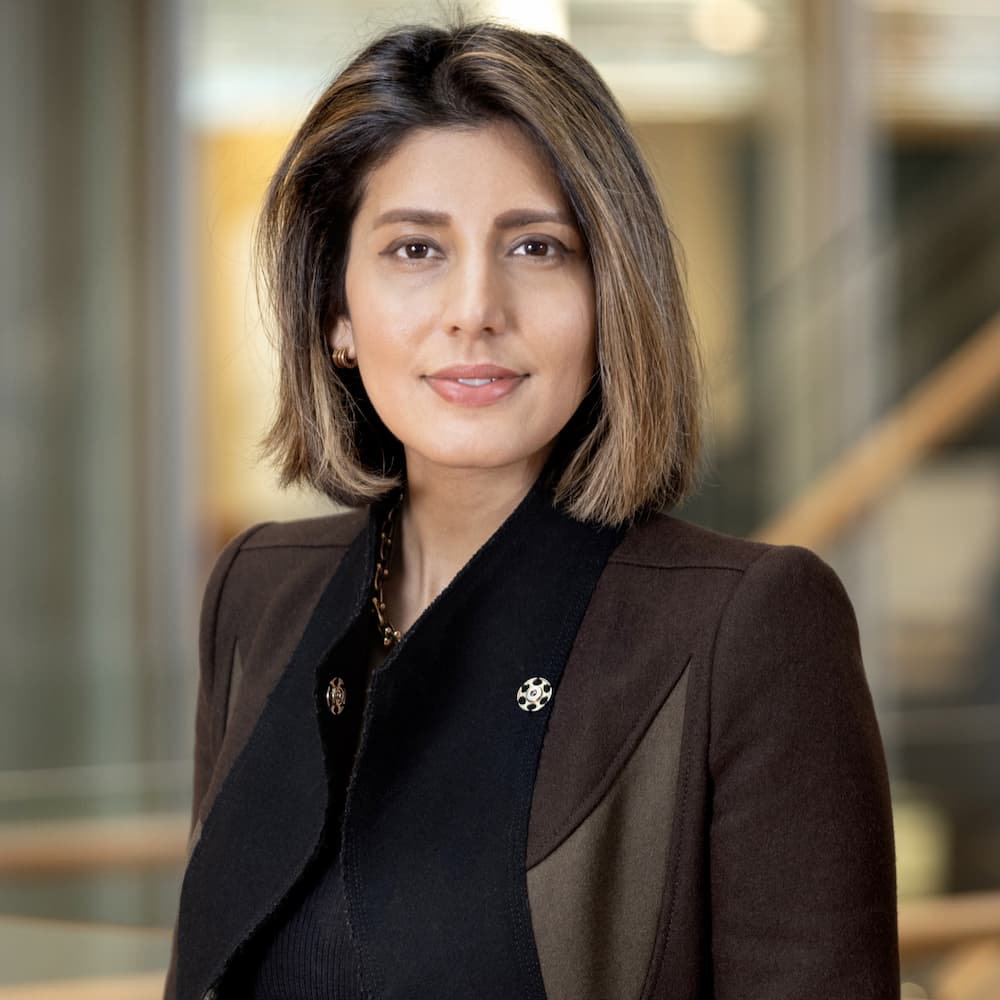
With new private banking operations opening up in recent weeks, Netherlands-headquartered ING's global head of private banking, wealth management and investments talks to this publication about its strategy.
ING's move earlier in November to expand private banking into the
Spain and Italy markets, adding to countries such as Luxembourg,
Poland, Belgium and its home market, the Netherlands, is part of
a journey the bank has been on for the past three
years.
The Dutch organisation wants the wealth side of its business to
double revenues in the next five years, Anneka Treon (main
picture), global head of private banking, wealth management and
investments, has told this news service.
At the start of this month, Amsterdam-listed ING said it is
opening private banking in Spain and Italy, aiming at clients
with financial assets of €500,000 ($546,4000) or more. (The
initial report of the Italian side of this plan was made in
May,
here.)
In July, ING announced that it was making a strategic
investment in its private banking capabilities. acquiring
approximately 40 per cent of Spanish wealth manager Singular
Bank. Singular Bank will continue to operate independently,
complementing ING’s own private banking proposition in Spain.
“Spain and Italy are new private banking markets for us, adding
to our established presence in the Netherlands, Belgium,
Luxembourg and Poland. We have been building strong local teams
to support these launches, with 35 private bankers in Spain and
around 40 in Italy. We don’t disclose specific recruitment
targets, but as we grow in these markets, we will continue to
build the capabilities around our clients,” Treon said.
In 2024, ING’s private banking, wealth management and investment
activities had approximately €1 billion of revenue and about €230
billion in assets under management and brokerage. The bank is
planning to double those revenues in the next five years, Treon
told WealthBriefing at the bank’s London
offices. In 2026 ING reached €322 billion assets under
management and brokerage, which is 35 per cent growth over 1.5
years.
A busy news cycle for ING continued this week when it announced, as reported here, its first ING exchange-traded fund (ETF) investment solution, developed in partnership with Amundi, a European asset manager and ETF provider. The solution will debut in Germany on 1 January 2027 as part of ING Germany's new Altersvorsorge-Depot pension offering.
Acceleration
To achieve a revenue growth rate of about 15 per cent per annum,
ING needs to “leapfrog” ahead in its growth strategy,
capitalising on digitalising much of its value chain,
Treon said. One ingredient in this is encouraging clients to save
and invest more, using new digital tools.
When ING started this wealth strategy, it was present in nine
locations, Treon continued. Those markets are the
Netherlands, Belgium, Luxembourg, Poland, Germany, Spain, Italy,
Romania and Türkiye. However, as yet, ING does not operate a
private bank in all of these markets.
The ascent of Poland as an economic success story, for example,
galvanised ING into seeing a private banking opportunity there,
she said.
In April, ING Bank completed the acquisition of the
remaining 55 per cent stake in Goldman Sachs TFI, taking full
ownership of the Polish asset manager. The business, which will
be renamed ING TFI, will strengthen ING’s investment and
retirement capabilities and support the growth of its
private banking proposition in Poland.
Treon is enthusiastic about the opportunities that a large,
big-brand financial organisation such as ING has in shaking up
the existing private banking and wealth management landscape,
using an established footprint that “went digital” some time
ago.
“We entered markets with ING Direct, and we not only have a lot
of clients, more than 40 million in Europe, but it is also the
way that we can talk to them. We’re digitally engaged,” Treon
said.
“Already, more than 5.2 million of them [clients] are investing
actively with us,” she continued. “We have added about one
million investors in the past two years.”
Building good habits
Another plan for driving growth is encouraging more ING
clients to move from relatively low-yielding cash to other,
potentially higher returning investments, matching the kind of
behaviours seen in the US. Treon reflected on how more than €10
trillion is sitting in cash or equivalents in Europe
– a topic that the European investment funds sector has
flagged as a concern for years.
“We have been talking about this problem for a decade and it’s
getting worse,” Treon continued.
Encouraging ING clients to build the saving and investment habit
requires deliberate, small steps that compound over
time.
Last year, the bank introduced Round Up & Invest in the
Netherlands and Belgium for retail customers, a feature in the
ING App that allows customers to automatically invest their spare
change. Every card payment is automatically rounded up. The
difference, ranging from a few cents to euros, is saved, and once
the amount reaches €10, it is automatically invested via a Simple
Investing account. ING also introduced features on the app such
as the X-Ray Investment Portfolio, giving instant insight into
investments, and a Monthly Budget Overview.
Asked where this sort of initiative touches affluent and high net
worth individuals, Treon said: “Round Up & Invest is one example
of how we can make investing simple and accessible, but this is
part of a much bigger story. Europeans need to invest more to
build long-term financial resilience, particularly as pressures
on pensions and public finances increase. Our role is to help
customers put more of their savings to work, whether they are
taking their first steps into investing or already have
significant wealth. The needs become more complex as wealth
grows, which is why we combine digital simplicity with personal
advice and expertise.”
More broadly, the bank understands the emotional barriers that
can hold people back from investing in a period risk where
assets are seen at risk, Treon said.
Citing a recent survey conducted across European markets, Treon
said more than 40 per cent of respondents characterised investing
as akin to gambling in a casino. Perhaps more positively, among
young adults, seven out of 10 said they were already investing or
planning to do so.
ING wants to encourage periodic investing, as a regular financial
habit, she said. Another important element of the approach, as
seen in its apps, is transparency, Treon said. People want to see
the companies they’re investing in, and have their investments
explained in plain language.
“We only use open-ended funds and we talk about year-on-year
returns,” she said.
This news service asked Treon where AI fits into the
strategy.
“AI can help us make the client experience simpler, faster and
more relevant, for example by reducing administrative work and
giving our advisors better tools to support clients. But in
private banking, technology should enhance rather than replace
the human relationship. Trust and personal judgment remain
essential, particularly around important financial decisions,”
she added.