


Statistics
Hong Kong's IPO Market Is Liquidity Event Bonanza – KPMG
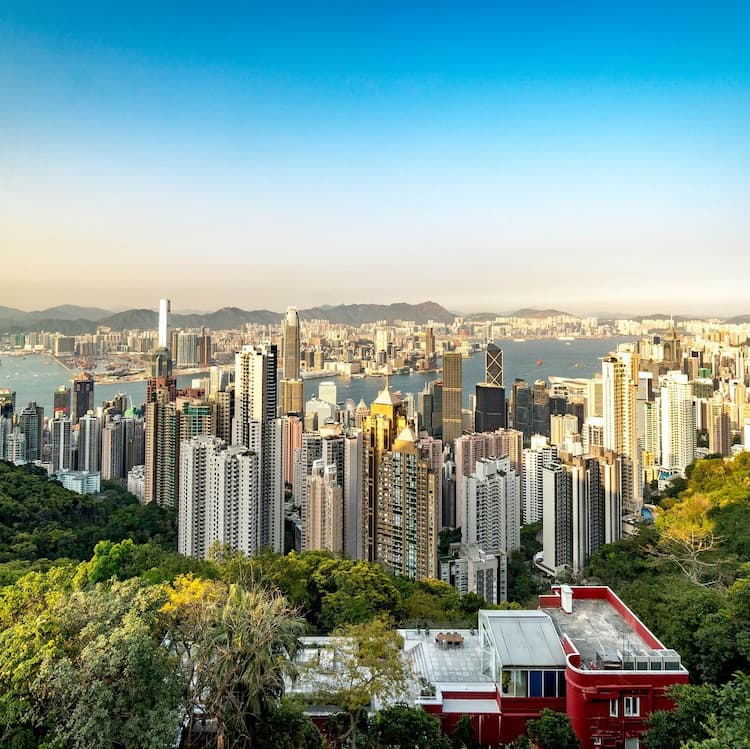
IPOs are important creators of new millionaires and therefore important for private banks, advisors and wealth managers to track in the pursuit of new clients. They also can give a barometer of the vigour of a financial centre more generally. On that reckoning, Hong Kong is in rude health.
The number of listed companies in regions such as North America
and Europe may have shrunk, but in Asia, initial public offerings
continue to be brisk, with Hong Kong regaining the crown in 2025
for the first time since 2019.
Figures from KPMG showed
that there were more than 300 active IPO applications in the
pipeline at 7 December, including 92 active A+H listing
applicants.
Funds raised in Hong Kong’s IPOs are expected to reach HK$272.1
billion ($34.9 billion) across 100 listings, covering a variety
of entities, including trusts. A record 17 A+H listings of large
firms were completed in 2025, the highest number on record. Among
them, the world’s largest EV battery manufacturer raised HK$41.0
billion through its A+H listing, making it the largest IPO
globally in 2025.
The findings came from KPMG’s latest Chinese Mainland and
Hong Kong IPO Markets 2025 Review and 2026 Outlook.
In 2025, global IPO markets raised $158.4 billion across 1,227
deals, an 18 per cent rise in funds raised and a 4 per cent drop
in deal volume compared with 2024.
Hong Kong was followed by US stock exchanges in second and third
place, which saw their combined fundraising grow by 18 per cent
year-on-year. Rounding out the top five were the National Stock
Exchange of India and the Shanghai Stock Exchange, securing the
fourth and fifth places, respectively.
Liquidity events bonanza
Initial public offerings are important minters of new high net
worth and ultra-HNW individuals – liquidity events that
wealth managers track. The data comes amid a continued shift
towards private from listed equity markets, but the figures also
show that the trend does not necessarily mean that IPOs are not
important.
At a media briefing in London yesterday, UK private bank Brown
Shipley, taking data from various sources, noted that since 2000,
the number of listed German and US business has contracted 42 per
cent; UK listed firm numbers have dropped 34 per cent; French
listed firms have shrunk by 62 per cent, and in the Netherlands,
the decline is dramatic – 74 per cent. For the eurozone, the
number has fallen 19 per cent, while there are 18 per cent fewer
Swiss listed firms.
In London, the city’s stock market has languished in terms of
IPOs, prompting UK finance minister Rachel Reeves to enact a
three-year suspension of stamp duty tax on share trading
post-IPO. The vigour of stock markets is still seen as an
important health indicator for jurisdictions.
“Key global IPO markets have trended upwards in 2025 with Hong
Kong’s threefold increase in funds raised making it the largest
single contributor to the global IPO market’s recovery and
reaffirming its status as a leading international financial
centre,” Paul Lau, partner, head of capital markets and
professional practice, KPMG in China, said. “Buoyed by this
momentum and a backlog of potential IPO candidates, we expect
this upward trend to continue into 2026. In particular, the pace
of AI-related listings is poised to accelerate as the technology
matures and is adopted more widely across various
industries.”
The A-share market is continuing its steady development; it
is expected to raise RMB163.7 billion ($23.17 billion)
across 130 deals, a 23 per cent growth in funds raised while deal
volume remained stable compared to 2024.
The Shanghai Stock Exchange STAR Market launched a science
and technology innovation growth tier in July.
Irene Chu, partner, head of new economy and life sciences, Hong
Kong KPMG in China, said: “The A-share IPO market posted steady
gains in 2025. The 15th Five-Year Plan deepens the reform for
China’s capital markets, with inclusiveness and coordinated
investment and financing at the core of market reforms. As these
strategic priorities take hold, we expect the authorities to
prioritise and sustain their efforts to foster steady,
high-quality growth in the A-share market for years to come.”
In Hong Kong, the private company space far outweighs those that
are listed. In October this year, there was a total of
151,226 incorporated companies, and 70 listed ones, according to
Hong Kong’s Companies Registry.