


Compliance
Frozen At Port: Why Monaco Yacht Arrests Are Ultimate Leverage
Police actions in the European jurisdiction shed light on important developments in compliance.
As the compliance net has tightened on certain groups of individuals, jurisdictions such as Monaco have been brought into the picture. Authors Stephan Pastor and Mélanie Manas of CMS Monaco (more details below), examine recent developments in the European principality, and reflect on what they means for compliance. The issues are clearly important for those in the wealth and private banking sector that operate in Monaco or who have clients there.
The editors are pleased to share these ideas and the usual
editorial disclaimers apply. To comment and provide ideas, and
get into the conversation, please email tom.burroughes@wealthbriefing.com
and amanda.cheesley@clearviewpublishing.com
Over the last four years, law enforcement agencies have made multiple seizures of large yachts. Many of these luxury vessels – commonly referred to as superyachts – were owned by Russian oligarch billionaires who were sanctioned following the invasion of Ukraine in February 2022.
One high-profile example was the seizure of the Quantum Blue, owned by Sergei Galitsky, the founder of Russia’s largest retail chain, Magnit, by French customs in Monaco.
More broadly, these seizures have provided a compelling illustration of how yacht arrests can be used as a leverage tool in high-value legal disputes. In particular, in cases where a considerable debt is owed by a yacht owner, there are few more effective and expedient negotiating tactics, particularly where other assets are difficult to trace or enforce against.
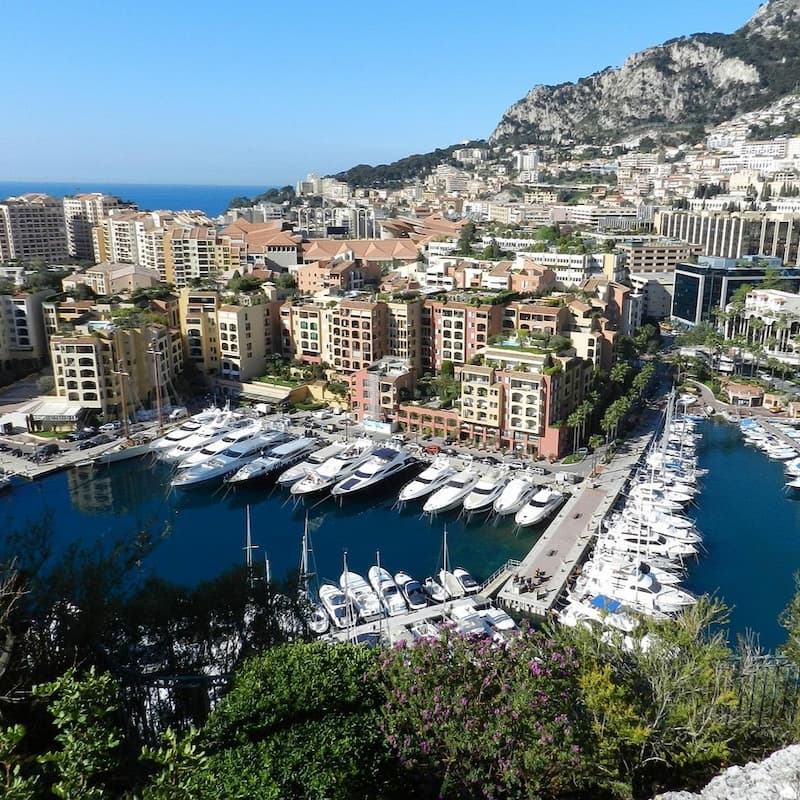
This is particularly true in Monaco, which has an ever-growing population of high net worth and ultra-HNW residents, as well as nearly 1,000 berths designed for superyachts in its world-famous port. The significant number of international events hosted in the Principality of Monaco, such as the Monaco Yacht Show, the Grand Prix, and the Rolex Monte-Carlo Masters, add to the presence of yachts in Monegasque waters.
When future proceedings on the merits of a dispute are likely to be lengthy, when the solvency of the debtor is uncertain, or where there is a risk that the debtor’s assets will be dissipated, the seizure of a yacht in Monaco can be an effective interim remedy to secure a monetary claim. The vessel arrested may be the ship directly tied to the claim, or another yacht owned by the debtor that is present in Monaco’s territorial waters or its port.
Where such a seizure is under consideration, mastery of the arrest procedure is imperative. An incorrect legal basis or insufficient evidence of a certain, prima facie claim can lead to refusal of the arrest application.
These operations often need to be conducted with real urgency; there is nothing more crucial than being quick to react. For example, if a yacht is only docking in Monaco for a few days, arrest orders must be obtained extremely quickly before the vessel leaves port. Once time-limited opportunity has passed, any attempt to take control of the yacht in Monaco would be too late, and the creditor seeking to arrest the yacht would have to try their luck in another jurisdiction, under a different procedure.
A flawless execution of the arrest itself is almost equally critical. Any missteps could void the confiscation of the yacht, including failures relating to service formalities, translation requirements, or adherence to strict timelines imposed under the order.
Advisors to the applicant seeking a seizure should also carefully consider the cost-benefit and strategic value of pursuing such a strategy, particularly as the applicant would typically be expected to advance costs such as bailiff, port, and custody fees. Obtaining expert legal and financial advice at an early stage should always be a priority to determine whether such action is warranted.
In addition to being a genuine means of recouping a debt and a powerful negotiation tool, immobilising a yacht deprives the debtor of both enjoyment of their property and potential revenue. This increases pressure to settle disputes or post security. Once arrested, the yacht cannot depart unless the claimant consents, the court lifts the order, or the debtor posts adequate security.
If the debtor ultimately fails to pay the debt and the arrest is maintained, the proceedings will continue until the forced sale of the vessel. That said, in Monaco, the precautionary immobilisation of a yacht often prompts a confidential settlement between the parties; as a result, only a small number of yachts are actually sold at public auction.
When forced sales do occur, the sale of superyachts in Monaco generally follows procedures similar to those in France. By way of example, the 41 metre superyacht “Stefania” – built in 2021 by Dynamic, a Monaco based company – was auctioned on 27 March 2025 at the La Ciotat shipyards for €10 million ($10.6 million) by the De Baecque auction house, at the request of the French authorities. It stands as the largest movable asset ever managed by France’s Agency for the Management and Recovery of Seized and Confiscated Assets.
This example underscores that seizures of superyachts are highly visible events that can attract significant media attention. Such publicity operates as a powerful deterrent and often accelerates negotiations, particularly where reputation and privacy are paramount.
Against this backdrop, Monaco distinguishes itself as a premier forum that combines legal effectiveness, speed of execution, and meaningful negotiating leverage in yacht arrest matters. To convert that leverage into tangible results or to ensure effective defence against this type of arrest, retaining experienced Monegasque counsel with deep familiarity with local procedures is essential.
About the authors
Stephan Pastor is managing partner and head of the business law team, CMS Monaco, and his colleague Mélanie Manas is advanced associate in the business law team.