


Investment Strategies
EXCLUSIVE: US Ambassador To Luxembourg Lauds Transatlantic Investment, Risk-Taking Mindset
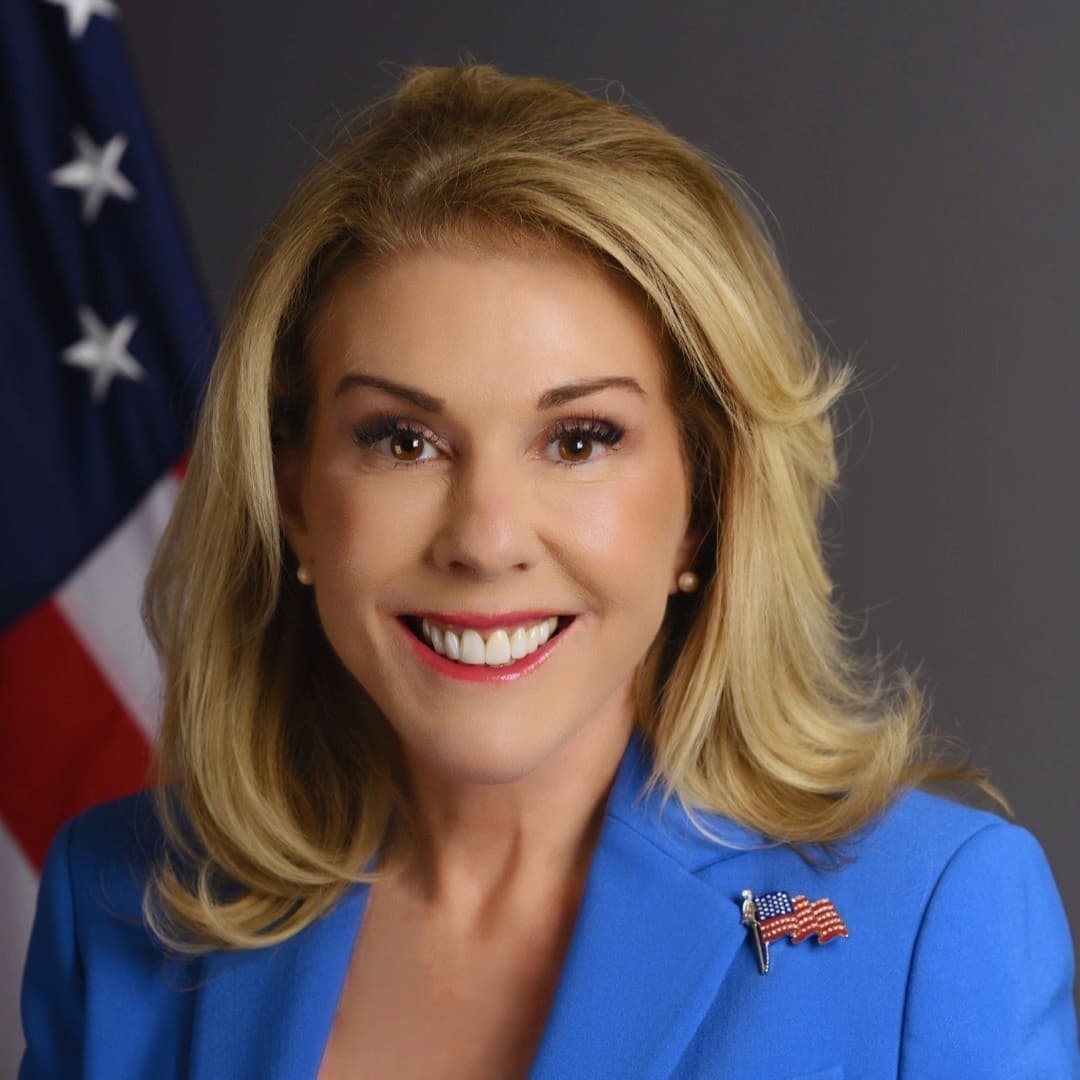
At a conference in Zurich last week, this news service interviewed Stacey Feiner, US Ambassador to Luxembourg, and heard her thoughts about transatlantic opportunities, varying approaches to risk and business, and her passion for improving women's standing in the investment industry.
Luxembourg’s position as a “lily pad” from which US business can
jump into the European market for the benefit of both sides was
stressed by the US Ambassador to the Grand Duchy at a recent
business conference.
Home to the European Union’s largest centre for cross-border
UCITS and other investment funds, this market is one that
American business must pay attention to, Stacey Feinberg (main
picture) told Apex Invest Europe 2026, the private markets
conference of Apex
Group that brought together institutional investors, family
offices and investment managers, last week in Zurich.
(WealthBriefing was present to cover the event.)
She is keen to see the US and EU seize more opportunities. Luxembourg is the “best place” for businesses and investors seeking opportunities stemming from US trade with the EU, Feinberg, who is a businesswoman by background rather than a career diplomat, said.
“We are loud and take a lot of risks and that’s something that
you may not be comfortable with,” Feinberg said, reflecting on
different attitudes towards business on either side of the
Atlantic.
Feinberg reminded delegates at the Apex conference that EU
private investors sit on considerable amounts of low-yielding
cash.
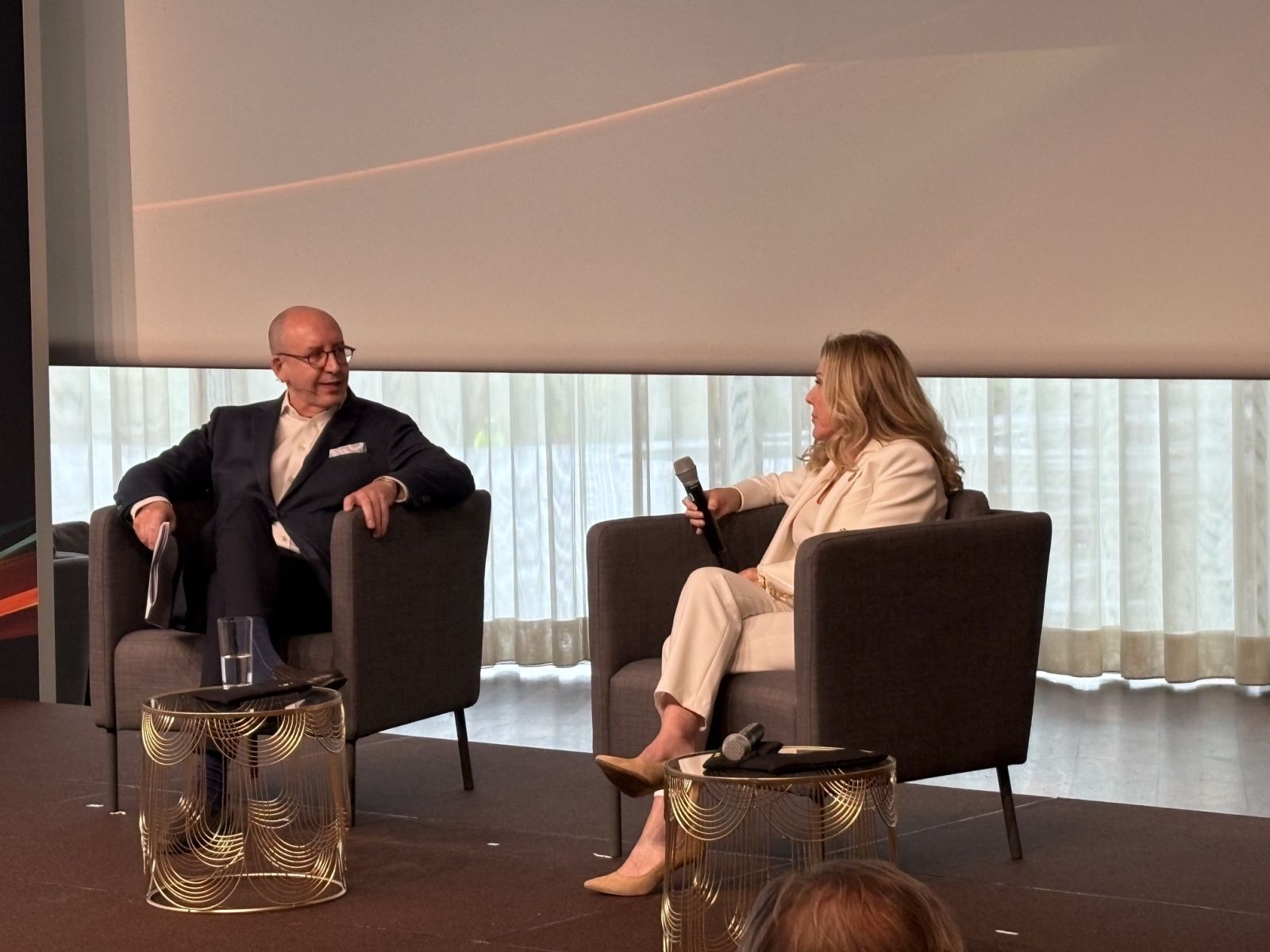
Georges Archibald, CEO Apex Distribution, on stage with Ambassador Feinberg at the conference
In contrast with the US, as has been noted for some time,
Europe has much unfilled potential in terms of putting
liquid savings to work in stocks and private markets. For
example, a 2025 report by Observatoire de L’Epargne Européenne,
on behalf of the AFG, the Employee and Retirement Savings
Commission, noted that European households’ direct holdings
of stocks are in single digits, just 6 per cent of total
financial assets in the eurozone. Overall, the average holding of
stocks by households in the euro area is 21 per cent of financial
assets. The total number of assets under management of
investment funds domiciled in Luxembourg, including UCITS and
alternative investment funds (AIFs), amounted to €9.07 trillion
($10.20 trillion), industry group ALFI said in July.
Luxembourg’s “American” qualities
Given such figures, Luxembourg is well placed to meet this type
of challenge, Feinberg said. “Luxembourg is the most
'American’ country in the entire continent,” she said, referring
to the jurisdiction’s willingness to adapt and capture business
opportunities.
“The American spirit is about risk-taking, failing and then
getting back up,” she continued.
The status of Luxembourg as a major fund hub has spawned debate
about how proposed EU attempts to harmonise capital rules might
lead to
friction. This publication has covered the fund industry
debates that have taken place about whether the bloc should take
over the job of supervising financial markets from national
authorities. At the heart of the matter is that in December 2025,
the European Commission released the Market Integration and
Supervision Package (MISP) to deepen EU capital-market
integration. The package targets barriers to cross-border
activity; the EU wants to deepen and broaden capital markets
to boost economic growth and savings. One reason for EU action is
to encourage more citizens to put money into risk assets. (See
our coverage from the ALFI industry summit
here.)
A bridge
The small jurisdiction might not be the first place
that springs to mind when considering the roster of most
desirable diplomatic postings. However, Feinberg couldn’t be
happier, and expanded on how she sees her role to
WealthBriefing.
“I’m a matchmaker. I make connections and I am a bridge. I want
FDI (foreign direct investment) to be flowing in both
directions,” she said. “There are a lot of people willing to take
risks and seeing deal-flow. It is good to get out of town,” she
said, referring to the benefits of Americans examining
opportunities in Europe and other parts of the world.
US businessmen and women need a helping hand to know how to
secure European opportunities, she continued. “A lot of them
don’t know how to get into Europe,” she said.
The switch from financial and business life to the ambassadorial
one is a challenge that Feinberg relishes. Feinberg started her
career at Bob Woolf Associates, her father’s sports and
entertainment law firm in Boston, Massachusetts. During that
time, she grappled with managing contracts and careers of
hundreds of clients, including legendary figures like Larry Bird,
Larry King, Joe Montana, and New Kids on the Block. Feinberg
founded the firm’s literary division. She’s a thought leader and
teacher, having lectured at Harvard Law School; she was
featured in Harvard’s “Getting to Yes” Negotiation Series.
Additionally, she’s worked in the hedge fund sector, giving her
an insight into the investment space. On the US State
Department’s website, it notes that Feinberg says her proudest
accomplishment is being the mother of four children.
WealthBriefing asked Feinberg about transatlantic
differences in culture and economics, and how they can be
addressed.
“The American spirit is about risk-taking, failing and getting
back up…Education is important and understanding that resilience
is the most important quality,” she said. Asked about different
cultural attitudes towards enterprise in Europe, Feinberg said
that what she can do is inspire by pointing to examples. “There
are other ways in other places.”
This unashamed optimist, a “glass is half-full
person,” told WB that she does not allow the noise
of daily current affairs and controversies to interfere with her
job. “I don’t let it get in my way. Business is business,” she
said, reiterating her point that Luxembourg strikes her as being
“the most American country in the entire continent.”
Feinberg is also keen to support women-led enterprises in Europe,
a cause that she has already embraced in the US. “There are
female entrepreneurs…I want them to meet each other. I want to
help to facilitate that,” she said.
Feinberg said low representation, in relative terms, of women in
the venture capital sector, and as beneficiaries of VC funding,
is an example of the kind of challenge that motivates
her.
According to Pitchbook in March 2024, women-founded
startups accounted for 2 per cent or less of VC funding invested
in Europe and the US in 2023.