


Strategy
EXCLUSIVE: UK's Weatherbys Appoints Fintech Expert; Explains Private Bank Strategy
As well as exclusively reporting on a senior appointment at the UK bank today, WealthBriefing also sets out a recent interview it conducted with the CEO of Weatherbys.
UK private bank Weatherbys, which launched a new business bank as well as making a number of senior hires last November, has appointed fintech expert Aileen Wallace as a non-executive director, WealthBriefing can exclusively report today.
The move comes as the lender says it is continuing to develop its “100 per cent human, 100 per cent digital” strategy – blending service with intuitive technology.
Wallace, who brings more than three decades of experience in banking and technology, previously held senior positions with Virgin Money, Cognizant and the Co-operative Bank. Her non-executive positions have included roles with International Personal Finance, Tandem Bank, Columbia Threadneedle, Target Tech Mahindra, Hodge Bank and as Chair of fintech advisory for a property ownership fintech.
“Weatherbys is well known as a family-owned bank with a strong client ethos, but it also fully appreciates the role that technology can play in enhancing the client experience,” she said.
“This combination resonated very strongly with me, and I’m now looking forward to supporting the board and the executive team with a balanced approach to innovation and stewardship.”
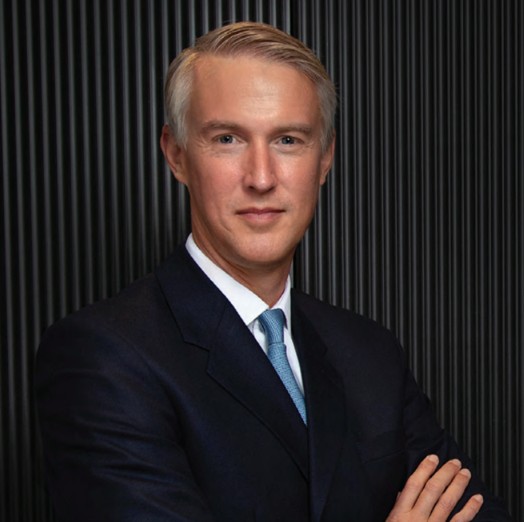
“It’s vital for a business like ours to invest in people and technology alike. We have to understand that the future lies in combining the best of both worlds,” Quentin Marshall (main picture), chief executive, said. “Our business model will always be rooted in relationships and the personal touch, but we’re also fully committed to ensuring that our clients’ digital experience is absolutely of the highest standard.
“That’s why in the past two years alone we’ve taken important steps such as completely upgrading our core banking platform and improving our measures for detecting financial fraud,” he said.
Strategy
Marshall elaborated to WealthBriefing in a recent
interview how he intends to take a bank, known for its
long-running links to the world of horse racing.m, forward.
He is mindful that while the business can grow, there are limits to scalability given the need to keep close to clients.
“We think the upper limit for being able to be so flexible is 10,000 to 15,000 private banking relationships. That still leaves us a fair bit of headroom to grow,” he said during a meeting at his London offices.
In total, across all areas of the bank, not just the private banking arm, Weatherbys had a total of 22,000 clients, according to its 2024 annual report. In 2024, it logged a pre-tax profit of £26.7 million ($36.7 million) and a return on equity of 20 per cent. The bank likes to stress that it is “unusually cautious.” Weatherbys said it had a liquidity coverage ratio of 1,079 per cent as of the end of December 2025, far exceeding the regulatory minimum. Its total capital ratio is 16.3 per cent; the loan-to-deposit ratio is 50 per cent.
The topic of how much growth can happen without changing a culture raises the issue of the pros and cons of scale. Marshall brings experience on both sides of the debate. He joined Weatherbys Private Bank as deputy head in June 2015. Before that, he was at Coutts, and prior that, at UBS, helping to build the UBS family office group.
“If you're a very large organisation, you have to run it by fairly rigid rules, and you accept that there's going to be some sub-optimality in the quality of your service because these remove any discretion from the front line. I try and leave as much judgement and discretion with the front line as I possibly can, because that's actually what clients want. They want common sense. And that allows us to meet their needs much more effectively,” Marshall continued.
“The horse racing syndicate story is a good illustration of this. I'll give you an example from my racing business. A lot of people nowadays are owning horses through syndicates. A racing syndicate is a pretty peculiar thing. You can try and open an account for it with a High Street bank, but it would be close to impossible. The computer says: 'No!’ I think there's lots of room to grow by sitting in this niche of offering high levels of service, treating people as they want to be treated, using humans where humans are best, but using technology where technology is best,” he said.
The horse racing reference touches on the “DNA” of the bank. Weatherbys traces its origins to the 1770s, when it acted as a body holding the stakes of the technical transactions of the horse-racing set; this process morphed into an institution with all the characteristics of a bank, and a full licence from the UK regulator was granted in the 1990s.
Today, there is the Weatherbys institution that is still involved in the financial and organisational side of horse-racing – a multi-billion industry – and now a growing, separate private banking business. The latter started out by providing specific services to wealthy owners of horses, but today the majority of business and new clients are from outside that sector, even though they may get a buzz from being catered to by a firm with such a history.
Lines of communication
Marshall relishes the bank’s culture.
“We're quite old fashioned – we're a family-owned company with roots back to the 18th century, and unsurprisingly, therefore, there are aspects of how we behave that are quite traditional and hierarchical,” he said. “But everyone can speak to everyone, and the lines of communication are really short. I spend a lot of my time getting around and chatting with people, and not in a sort of very grand, ‘royal progress’ way, but in a bump-into-people-in-the-corridor way. I think that's really, really important, because those short lines of communication mean that if, let's say, a client wants to do something that is not necessarily orthodox, they can ask me and we can take a decision quickly.”
“I want to grow the company and I think very carefully about how to marry that growth with culture. That’s because I think that how you behave externally is actually a product of how you behave internally. If your internal environment is horrible, it will definitely transmit externally, If we're actually all kind to one another, if we treat each other as humans first, as family, that then transmits to clients,” he continued.
“I'll give you a small example. Dementia is one of those things that affects most families. A lot of our clients speak to us quite frequently, and we have an ageing demographic because it takes time for most of us to make some money. So inevitably, we have quite a lot of clients who end up with dementia. We've hired someone to help look after these clients who has a background in that world, more than banking.
The reason for doing it is not because of what the FCA says about vulnerable clients but because I ask: `How would I feel if one of my relatives had dementia and was speaking to their bank and the people they're dealing with were unkind and got fed up and almost put the phone down?’ I’d feel really upset about that, and I think that's very disloyal to someone who’s been a wonderful client and in their later years is suffering with dementia. So I've put that role in place more out of a sense of what's right and wrong, rather than as a commercial decision. But weirdly, if you’re being really cynical, you could say there’s a commercial underpin to this, because by senior management behaving in this kind, human way, it transmits to the whole team and clients see it.”
WealthBriefing asked Marshall about the move to open the business banking business last autumn.
“We’re setting up the business bank partly because we already bank quite a lot of businesses that are ancillary to our private clients’ lives. But also because we think the same approach we bring to people’s private affairs is wanted by business owners, too. They want a bank manager that listens to them and is flexible and supportive, and we’re getting a tremendous response already to this initiative,” he added.