


Wealth Strategies
Blockchain Tech Advance Is "Wakeup Call" For Traditional Financial Hubs – Conference
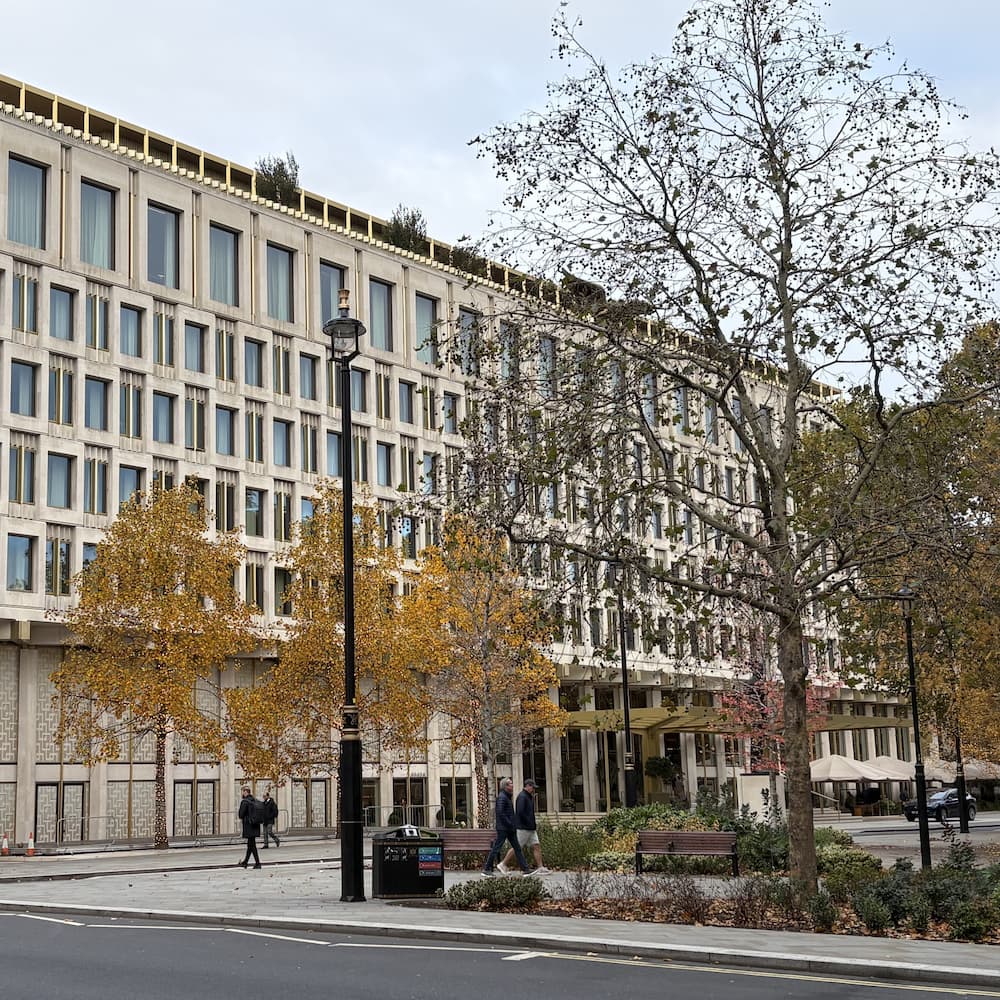
This publication joined delegates and speakers at this month's annual SALT London conference, where there was a considerable amount of discussion on digital assets and the ways in which modern technology is shaping finance, business and even sport.
Former Barclays chief
executive Bob Diamond, now CEO of an investment
business and chair of another, says the advent of
blockchain-driven financial tech represents a “wakeup call” for
London and other traditional financial centres.
Blockchain, aka distributed ledger technology, brings with it
tokens and other entities that can trade 24/7, raise liquidity
and challenge incumbent players’ dominance of financial markets,
Diamond told the annual SALT Europe conference in London earlier
this month. (The SALT conference was founded more than a decade
ago by Anthony Scaramucci, also founder of SkyBridge Capital, and
a brief member of the first Trump administration.)
“Over half of our volume [now] is in real-world assets,” Diamond, chairman of Hyperliquid Strategies and founder and CEO Atlas Merchant Capital, said in a panel discussion about how tech is changing the ways that banks, exchanges and other institutions work.
“Over the next two, three to four years we are going to see a
phenomenal amount of adoption,” Diamond said. Major banks are
already spending heavily on this area, he continued.
Diamond was joined by panellists Matteo Dante Peruccio, global
head, corporate strategy at 3iQ; Richard Shorten, founder and
general partner, Silvermine Capital Advisors; and Geoff
Kendrick, global head of digital assets research, Standard
Chartered.
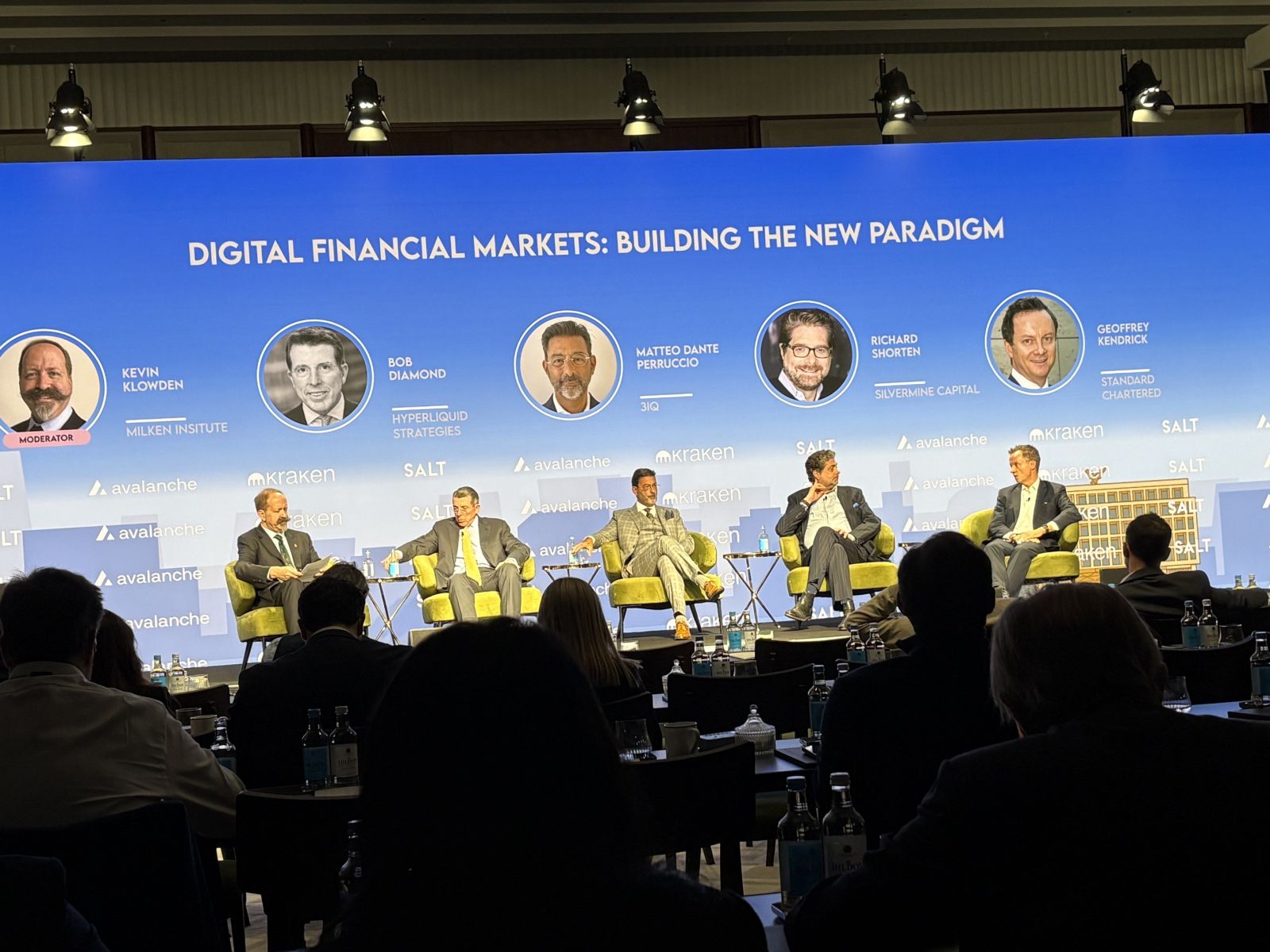
Left to right: Kevin Klowden, Milken Institute; Bob
Diamond; Matteo Dante Perruccio; Richard Shorten, and Geoffrey
Kendrick
Given his background in organisations such as Barclays and CSFB,
Diamond’s warning to London about sluggish adoption of digital
assets and related tech was sobering. Upcoming jurisdictions,
such as the Gulf, are moving fast, he said. “There’s real passion
about the importance of these new markets,” he said.
A problem, Diamond argued, is that incumbent banks in markets
such as London and New York might try and lobby regulators to
hobble new technologies and protect established positions in
custody, derivatives and other fields. “Of course, we’re going to
face resistance when [there is] a franchise based on old
technology,” he said.
Peruccio told delegates that what makes the crypto/digital assets
trend different from other financial innovations is that it has
been overwhelmingly driven by retail, private clients rather than
large institutions. “It has biased a lot of institutions into how
they see it,” he said. “We need to reframe how we look at
this.”
The panel picked up on a theme of areas such as asset
tokenisation, stablecoins and other digital entities
having become more mainstream in the financial services
sector. This was a talking point through much of the two-day
conference, held at the Chancery Rosewood in Grosvenor Square,
the site of the old US embassy (main picture).
Shorten said new blockchain-based technologies create a threat to
old bank network systems such as Swift, built in the 1970s. “If
you’re a plumber and part of this ecosystem, there are a lot of
opportunities,” he said.
Standard Chartered’s Kendrick noted that since the arrival
of Donald Trump to the US presidency for a second time in 2025,
there has been a surge of interest in the US in stablecoins and
other entities, aided by the
administration liberalising rules.
Banks must get ahead of this technology, Kendrick said.
On the second full day of the conference, your correspondent
moderated a panel, “building a modern wealth
portfolio,” alongside Stephanie Link, chief investment
strategist and portfolio manager, Hightower Advisors; Olaolu
Aganga, head of portfolio construction and analytics, Citi
Wealth; and Alicia Levine, CIO, BNY Wealth. The panel
addressed broad themes driving investments, such as AI,
energy infrastructure growth, and the need to peer through the
fog of market noise to pursue long-term returns.
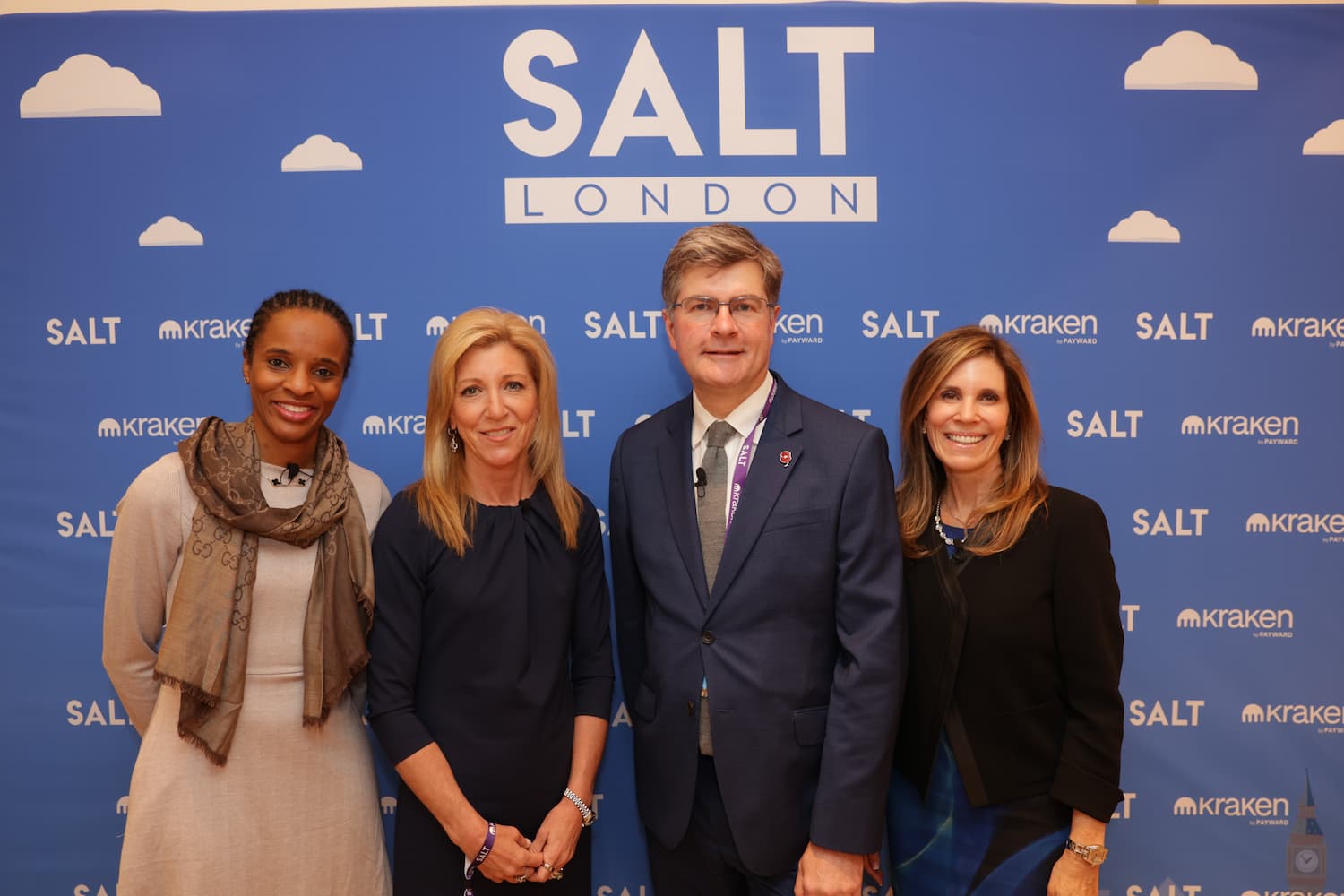
Panelists, left to right: Olaolu Aganga, Stephanie Link, Tom Burroughes, and Alicia Levine
Other speakers
Among the other panels at the conference, speakers on the first
full day included J Christopher Giancarlo, former chairman, and
senior strategic advisor, at the Commodity Futures Trading
Commission; Anthony Scaramucci, SALT chairman; Jane Moore, head
of department for payments and digital assets at the UK’s
Financial Conduct Authority; Rishu Mohanka, founder, CEO and
chief technology officer of Silicon Dreams; and Dr Peter Leek,
founder and chief scientific officer, Oxford Quantum
Circuits.
Other speakers included Maggie Fanari, CEO, J Rothschild Capital
Management; Philip Chopin, head of Europe, New Enterprise
Associates; Peter Carey, Axonic Capital; Katie Ramsey, head of
the Global Venture Capital Unit, UK Government Office of
Investment; Peter Kenyon, board advisor at Williams Racing;
Maxime Seiler, CEO, co-founder, STS Digital; Vanessa Grellet,
managing partner, Arche Capita; Enzo Villani, executive chairman
and president, Alpha Compute; and Spencer Rayner-Cook; chief
investment officer at Brevan Howard.
Continuing a mix of commentaries were Sir Richard Moore, former
chief of MI6, the UK intelligence service; Jimmy McLoughlin,
founder, Jimmy’s Jobs of the Future; Alastair Lukies, founder and
CEO, Pollinate International; Alistair Carns, a Member of
Parliament and former army officer, spoke with Rye Barcott,
co-founder and CEO of With Honor; Lord John Bird, co-founder of
The Big Issue, spoke with Jamie MacLeod, executive chair, Apex
Wealth & Apex Foundation; and Gary Lineker, former England
footballer, broadcaster and podcast businessman spoke with Katty
Kay, BBC correspondent.
On the second full day, speakers included John Nahas, chief
business officer of Ava Labs; Tom Callahan, CEO, Nasdaq Private
Market; Alex Seddon, head of impact and private equity, M&G
Investments; Matt Zhang, founder, Hivemind; Fahmi Syed,
president, Midnight Foundation; Mintoo Bhandari, foundation, head
of global institutional relationships, Monument Bank; Joshua
Rivera, general counsel, Blockchain Capital; Michalis
Fragkiadakis, director of staking, Web3 Foundation; Lord Kulveer
Ranger; Katie Harries, director and head of policy for Europe and
Americas, Coinbase; and Miller Whitehouse-Levine, founder and
CEO, Solana Policy Institute.
Other speakers include Kathryn Sherman, cyber assistant legal
attaché, US Embassy in London, FBI; Jonathan Luff, chief of
global affairs and chief of staff, Recorded Future; Ben Ashworth,
deputy director, National Cyber Security Center; Neil Lawrence,
co-founder and chief scientist, Trent AI, University of
Cambridge; Suzanne Ashman, managing partner, Sovereign AI Fund;
Nick Dais, VFX Supervisor, Netflix; Nick Finegold, founder and
executive chairman, Curation Capital; Alex Odagiu, CEO, BNB
Standard Corporation; Mark Haefele, chief investment officer, UBS
Wealth Management; and Jack Selby, MD, Thiel Capital.
As the conference concluded, the following
participants reflected on the results of the US mid-term
elections: Alastair Campbell, co-host, The Rest Is
Politics podcast, former director of communications and
strategy during the premiership of Tony Blair; and Rory
Stewart, The Rest Is Politics Podcast, and former
Conservative MP. Scaramucci moderated the panel.