


Tax
Autumn Budget 2026: Possible CGT Changes, Pre-budget Planning
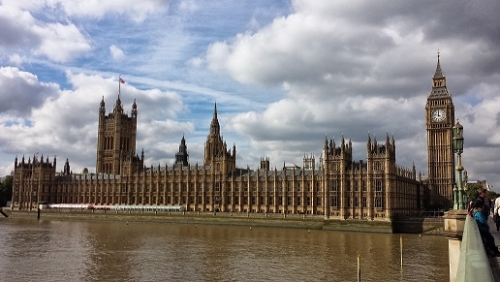
There is much speculation that the new UK finance minister might push up capital gains taxes in line with income tax rates, a move certain to have a significant market and personal financial impact. What should advisors for private clients suggest?
This year’s annual UK budget statement from the government
comes on 28 October and with public coffers under pressure as
usual, there is speculation about what the Labour administration,
now under the premiership of Andy Burnham, will do. One line of
speculation is that the Chancellor of the Exchequer, John Healey,
will align capital gains tax with income taxes. (In other words,
Healey will raise CGT.)
To discuss these and other possible outcomes and what can be done
by advisors and clients to mitigate the impact are partners Julia
Cox (pictured below) and Mary Perham (pictured below) at law firm
Charles
Russell Speechlys. Trainee Bronwen Bernstein contributed
to the article (pictured below).
The editors are pleased to share this content; the usual editorial disclaimers apply. To comment on such articles, email tom.burroughes@wealthbriefing.com and amanda.cheesley@clearviewpublishing.com

Julia Cox

Mary Perham

Bronwen Bernstein
The first Autumn Budget on 28 October 2026, under Andy Burnham's
premiership, is fast approaching, and there is increasing
speculation as to potential changes to capital gains tax
(CGT).
Given his pledge not to increase income tax, VAT and
National Insurance for working people during this parliament, CGT
is one of the more likely targets for revenue-raising
measures.
While any changes discussed below remain speculative, the
implications warrant consideration by anyone with significant CGT
exposure.
Most likely areas of reform
Raising CGT rates
Rachel Reeves [former Chancellor] previously increased the lower
main rate of CGT from 10 per cent to 18 per cent and the higher
main rate from 20 per cent to 24 per cent. Chancellor John Healey
may seek to increase these rates, whether incrementally or by
aligning CGT with income tax rates.
An incremental increase in CGT rates is the more modest option.
However, the Centre for Policy Studies think tank suggested that
a 10 per cent increase on the higher rate of CGT would reduce
revenue by £3.6 billion ($4.81 billion) by 2028/29.
If rates do substantially increase, there might be pressure to
reintroduce some form of indexation allowance or tapering relief.
Indexation allowance (available to individuals until April 1998
and companies until December 2017) ensured that taxpayers were
only charged CGT on real gains above inflation. A 2024 report by
the Institute for Fiscal Studies (IFS) argued that the current
absence of any inflation adjustment is a fundamental design flaw
of the CGT regime, and that increased rates would
disproportionately penalise long-held assets.
A more radical option is to align CGT rates with income tax
rates. First proposed by Wes Streeting in his leadership pitch in
May 2026, it would see three bands of CGT introduced, at 20 per
cent, 40 per cent and 45 per cent, with a person’s CGT band
calculated by combining their annual income and the gains
generated on assets. However, the investment platform IG’s
analysis using HMRC’s own methodology suggests that increasing
CGT from 24 per cent to 40 per cent would lose HMRC £3.2 billion
of revenue annually, and increasing it to 45 per cent a
further £4.6 billion, a total estimated loss of £7.6 billion,
driven primarily by a reduced volume of asset sales. Despite
these economic risks, the government may still pursue alignment
citing fairness and simplicity; but evidence suggests that
careful calibration would be needed.
Removing or limiting the CGT uplift on
death
Currently, assets are “rebased” to their market value at their
owner’s date of death, which wipes out any accrued gains or
losses from the date of purchase. An estimated £1.5 billion has
been forgone as a result. Two alternatives have been suggested:
that death be treated as a disposal event for CGT purposes,
triggering a charge at that point, or that such inherited assets
could pass to beneficiaries without rebasing, thereby delaying
the CGT charge arising until the asset’s subsequent disposal.
The principal objection to either change is the possible
resultant double taxation of CGT and IHT on the same asset on the
death of the current owner. There is scope to couple CGT and IHT
reform to avoid this; for example, denying the CGT uplift where
the asset qualifies for an IHT relief.
Additionally, given the reduction of Agricultural Property Relief
(APR) and Business Property Relief (BPR) to 50 per cent on assets
over £2.5 million in the 2025 Budget, further denying the CGT
uplift on any “relieved” aspect is likely to lead to very
complicated reporting calculations.
Changes to Business Asset Disposal Relief
(BADR)
The BADR lifetime limit on qualifying gains was reduced from £10
million to £1 million in the March 2020 Budget. Phased changes
from 2024 then increased the BADR rate from 10 per cent to 18 per
cent from 6 April 2026, matching the current lower main rate
of CGT. The government could seek to remove the lower rate,
taxing qualifying gains at 24 per cent, or reduce the £1 million
limit further. Prior to the 2024 Budget, the IFS
estimated that abolishing BADR would raise about £1.5
billion. That is a considerable sum, but such measures seem
likely to primarily hurt SME owners, impacting economic
growth.
The Treasury may otherwise limit or remove existing reliefs or
exemptions such as the main residence exemption or holdover
relief for gifts of business assets or gifts into trusts.
Timing
Any change would usually take effect from the new tax year, 6
April 2027, but changes applying from the day of the Budget are
not unprecedented. An immediate change in the tax regime would
leave no opportunity for individuals to plan ahead, so those
owning assets subject to significant capital gains may wish to
consider how to minimise their CGT exposure now.
Pre-Budget planning strategies
Crystallising gains
Many people are accelerating disposals to lock in current rates
on unrealised capital gains. This can mean fast-tracking an
already-planned sale. Where there is no obvious purchaser, they
could consider selling an asset into a trust at market value,
with the consideration left outstanding as a debt. This triggers
the gain at current rates but with other (tax)
considerations.
Those who have not yet considered CGT concerns may wish to
accelerate their disposal of the asset before the Budget, perhaps
to a limited extent, e.g., to cover the £1 million BADR
allowance, crystallising any gain whilst rates are certain. The
downside is that they lose control of their asset, which will
possibly not suit their personal or commercial plans.
It is worth noting that pre-Budget uncertainty benefits the
Exchequer in the short-term by triggering disposals which swell
government coffers, but risks stalling longer-term economic
activity as investors hold off hoping for better rates.
Sale and buyback of quoted shares
Individuals owning quoted shares might consider selling and later
repurchasing them either through their spouse or after waiting 30
days to avoid the “bed and breakfasting” rule (TCGA 1992, s
106A). However, HMRC may challenge pre-arranged spousal transfer
arrangements under general anti-avoidance principles, and this
strategy creates complications for family-run businesses. Stamp
duty is also generally chargeable at 0.5 per cent of the purchase
price on repurchase, a cost which should be factored in at the
outset.
Gifting into trust
An individual could gift an asset to a settlor-excluded trust and
not claim holdover relief, crystallising the gain at current CGT
rates rather than deferring it to a future disposal by the
trustees at potentially higher rates. The downsides are the loss
of control over and benefit from the asset (although a carefully
structured trust can mitigate some of these concerns), the
resultant dry tax charge and an immediate IHT charge where the
value of the asset exceeds the nil rate band.
Maximising tax-efficient wrappers and
allowances
ISAs and pensions both shelter investments from CGT entirely,
although from 6 April 2027 all registered pension schemes
(including SIPPs) will be included in individual’s estates on
death for IHT purposes. Spousal transfers remain free of CGT
until the receiving spouse disposes of the asset, and the
remaining annual £3,000 CGT allowance should be maximised where
possible.
Do nothing
The final option is simply to wait. At this stage, potential tax
changes remain speculative, and tax-planning decisions usually
carry significant financial implications of their own.