


Investment Strategies
As Countdown Nears For SpaceX IPO, Valuations Debated
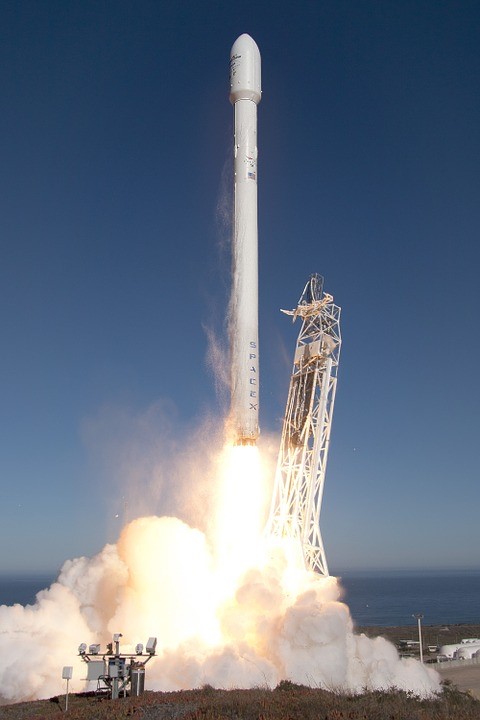
A major liquidity event expected to create a whole new roster of multi-millionaires, the SpaceX IPO promises to be one of the stock market highlights of the year. Whether its valuations live up to the hype is up for debate.
As doors have opened for applications for the record-breaking
SpaceX IPO – the first trading day is slated for 12 June – the
question arises as to how its potential $1.8 trillion price tag
can be justified.
Joakim Agerback, lead portfolio manager at the Finserve Global
Security Fund – an actively managed defence fund run by Sweden’s
Finserve – also
holds space stocks and cybersecurity equities. The firm is
not enthusiastic about the stock’s valuation assumptions. (The
fund was launched in 2019.)
SpaceX’s $1.8 trillion valuation “leaves little room for anything
short of exceptional execution and total dominance in the sector
for a long period of time,” Agerback said in a note late
last week.
The IPO will be one of the banner stock market events of the
year, coming at a time when some equity bourses, such as
London's, have languished. Agerback said tycoon Elon Musk’s
business will help lift a wider circle of space-focused
businesses.
“For long-term investors, the bigger opportunity may not be the
IPO itself but the broader space economy it helps validate and a
broader approach may therefore be preferable, with SpaceX serving
as an important component of their space allocation,” he said.
Agerback gave examples such as Rocket Lab, AST SpaceMobile,
Planet Labs, Leonardo, OHB, SES, Eutelsat, Hanwha Aerospace, SKY
Perfect JSAT and iQPS.
In a 5 June report, the Wall Street Journal quoted
sources saying that SpaceX’s revenue could reach $3.4 trillion in
2040 – based on a Morgan Stanley analysis shared with top
investors. Research analysts at Goldman Sachs and Morgan Stanley
both projected SpaceX’s revenue would be near $160 billion in
2028, the WSJ report noted. The banks are among 21 of
the lenders involved in the IPO.
As noted here, IPOs can be significant liquidity events,
minting new millionaires. As the WSJ
reported, beneficiaries of the share float will include
engineers and other white-collar workers as well as the
technicians who build the company’s rockets, and even baristas
and other salaried employees who work at SpaceX campuses in
California, Texas and Florida. Insiders and employees cannot
usually sell pre-IPO shares for several months; the newspaper
said SpaceX has provisions that could let some staff sell small
amounts as soon as July.
SpaceX filed its IPO with the Securities and Exchange Commission
on 20 May.
There is speculation over how to value SpaceX’s shares considering financial disclosures that seem minuscule by comparison. SpaceX had a net loss of $4.28 billion on revenue of $4.69 billion for the first quarter, widening from a net loss of $528 million on revenue of about $4 billion a year earlier, the filing shows.
Agerback said there will be strong retail and institutional
demand for SpaceX and considerable near-term stock
volatility.
“For long-term investors, the bigger opportunity may not be the
IPO itself but the broader space economy it helps validate and a
broader approach may therefore be preferable, with SpaceX serving
as an important component of their space allocation,” he said.
Agerback gave examples such as Rocket Lab, AST SpaceMobile,
Planet Labs, Leonardo, OHB, SES, Eutelsat, Hanwha Aerospace, SKY
Perfect JSAT and iQPS.
Other prominent IPOs of recent years include Saudi Aramco (2019);
Alibaba, Agricultural Bank of China, Meta Platforms, Bank of
China, Uber Technologies, Life Insurance Corp of India, Rivian
Automotive, NTT Mobile, and Porsche (source: Wall Street
Journal). The world’s largest firm by market cap is Nvidia,
which floated on the stock market in 1999.
“SpaceX has leadership in launch economics, vertical integration
and the self-reinforcing advantages created by Falcon9. Together,
these have established a competitive position that is unlikely to
be challenged in the near term. Combined with the support of the
world’s largest space ecosystem, these advantages justify a
substantial premium,” Agerback said.
“That said, the current valuation appears difficult to fully
justify. At roughly $1.8 trillion, SpaceX is being valued not
only as the dominant space infrastructure company but also as a
leading AI platform. Based on [full year 2025] revenues, the
company would trade at 97x, a level that remains exceptionally
demanding,” he added.
As an example of developments, in the exchange-traded funds
space, Defiance ETFs is preparing to launch the Defiance Daily
Target 2X Long SpaceX ETF on 12 June.
In an update yesterday, The Motley Fool financial
markets site said the "10 largest US IPOs in history have
collectively underperformed the S&P 500 by a wide
margin".
According to Igor Pejic, a tech investing strategist and author
of Tech Money, the SpaceX saga is more than just spacefaring
business.
"The SpaceX IPO isn't ultimately a story about rockets. It's a story about whether public markets still believe that one extraordinary founder can create an entirely new economic frontier—and whether investors are willing to pay for that future today," he said.