


Company Profiles
"Organic" Is Growth Watchword For Mirabaud's UK Wealth Business
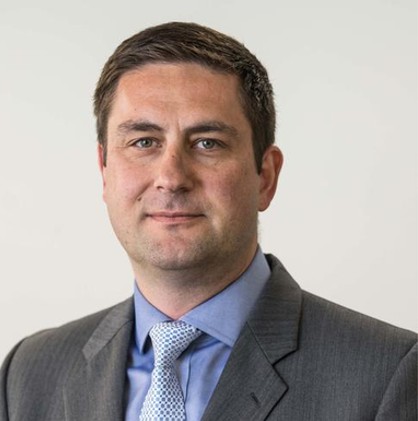
This news service recently sat down with the head of the UK business arm of Mirabaud Wealth Management to discuss the approach to growth, the impact of recent changes in the UK tax and economic scene, and more.
Mirabaud
Wealth Management is aiming to grow organically in
coming years, hiring relationship managers selectively, the firm
told this publication recently.
The UK arm of the Geneva-headquartered Mirabaud business has
operated since 1990 by establishing a London office providing
institutional and private asset management – one of a
cluster of Swiss banks operating in the UK market. It is part of
that British-Swiss financial services link that came under a
spotlight earlier this year with the
arrival of the Berne Financial Services Agreement, a
mutual recognition of standards pact between the UK and Swiss
governments.
As far as Stuart Bates (main picture), UK CEO of Mirabaud Wealth
Management, is concerned, developments such as the Berne pact
don’t directly affect it, given its established base in the UK
for over almost four decades. However, in general terms, anything
that facilities trade and financial interaction is welcome.
In expansion terms, the firm takes a cautious but deliberate
approach.
“We expect to grow even more in the next four years. This is
going to be all organic growth and about hiring the right
people,” Bates told WealthBriefing during an interview
at his office in London’s Victoria area. “The battle for talent
is a tough one; we are hiring selectively…our culture is very
important to us…two to three RMs per year [coming on board] is
what suits our setup best.”
“It is a collaborative culture and a culture of trust at
Mirabaud. It is a friendly culture, and everybody helps each
other,” he continued. “We run a flat structure with everyone
pushing in the same direction. It enables us to make decisions
quickly. It also translates into a direct [reporting] line to
Nicolas,” referring to Nicolas Mirabaud, managing partner of
Mirabaud Group and a scion of the banking dynasty.
Recent results paint a steady picture. In total, Mirabaud has
SFr31.7 billion ($39.12 billion) of assets under management, as
at the end of 2025, a dip from a year ago (SFr32.3
billion) – a result of strategic, one-off exits
from non-core assets and a refocus on wealth management
target markets.
WB asked Bates if the firm has been adversely hit
by the UK ending the resident non-domicile system,
given all the headlines about HNW and UHNW individuals leaving
the UK for foreign shores.
“We have some international clients, but they are not the bulk of
our clients. A lot of our non-dom clients have decided to remain
in the UK. As part of Mirabaud’s operating model, UK clients are
booked through our Luxembourg platform. As a result, for those
who have relocated, there has been little disruption to the way
we service them,” he said.
The human factor
Turning to the all-embracing AI theme, Bates said Mirabaud is
“starting to get to grips” with this technology. “We have begun a
huge investment into IT transformation, and we believe our
investment in it will pay off. It will reduce the burden of
administrative tasks and allow our advisors to do what they do
best – understanding clients’ needs and requirements.”
“We believe it [AI] is going to help us leapfrog into the
future,” he continued.
“We have a major transformation and digitisation project at the
bank,” Bates continued. “We are replacing our core banking system
as well as all the ancilliary systems that surround it to help
futureproof the bank. AI is a central theme to this
transformation.
“What is not going to change is the need for human interaction
and human trust,” Bates said.
Major themes that take up Mirabaud’s attention are the
well-trodden areas of intergenerational wealth transfer and
helping clients stay composed during geopolitical and economic
turbulence. Bates also referred to the importance the bank
attaches to behavioural finance – an area drawing on
understanding human psychology in decision-making as applied
to markets and finance. “It is something we put a lot of time
into and into explaining to our clients,” he said, adding the
important adage that a lot of wise investing is about time in the
market, not timing the market.