
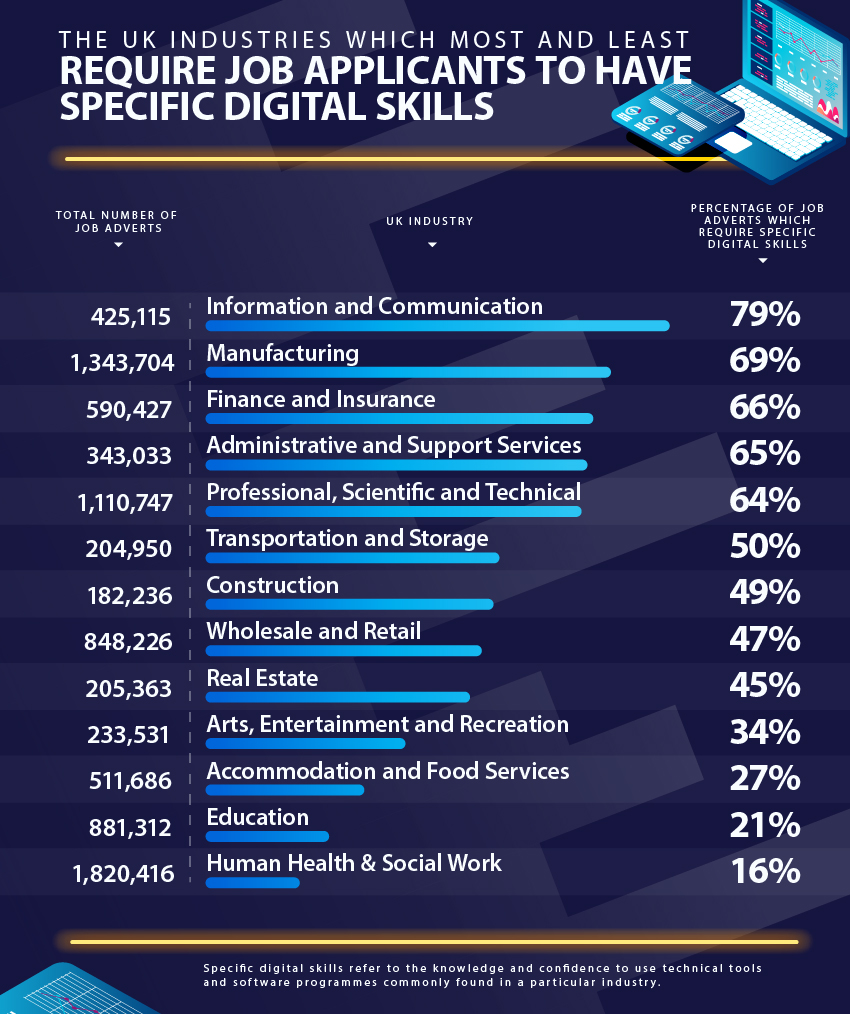
Agnostic of the sector, skills are much on the mind of companies and employees at the start of a new year. In a timely crunch of gov.uk data, has analysed over eight million job adverts to show which UK industries are the most and least demanding of applicants when it comes to digital skills.
It found that the top three sectors on digital skills requirements were information and communications (79 per cent), manufacturing (69 per cent) and finance and insurance (66 per cent). At the bottom was human health and social work, with only 16 per cent requiring candidates to have defined digital proficiencies.
And while the report did not explicitly name the wealth management industry, this sector is not immune to wider trends. The findings of the study are relevant for people working in private banks and other wealth management organisations.
The full ranking from the Knowledge Academy below
Additionally, the UK-based training company surveyed 562 UK employees (who plan to change jobs this year) to find out what barriers were most curtailing them from developing existing digital skills and learning new ones to boost career prospects.
Top factors mentioned holding development back were a lack of time (72 per cent), not knowing where to start (67 per cent), feeling too lazy or tired (64 per cent), and fear of failing (59 per cent). Cost was also high on the list, with half of those polled saying the expense of training was a deterrent.
Attracting and retaining talent in financial services has become tougher. It is no longer the required or only path for bright graduates to follow as Millennials and the generations behind them continue to shake up the world of work, invoking everything from pursuing more values-based vocations to a forensic assessment of the incentives and flexibilities a modern workplace can offer them.
This publication will be digging into the issue of talent development and the competition among wealth managers and the wider industry in the next couple of months.
From the employee perspective, the UK skills academy offers three tips for individuals wanting to increase their digital competencies in 2020:
Assess the market
Look at the required digital skills on the job specification of the roles you are interested in and then list them – this provides a focused approach towards what you should be aiming to learn.
Check resources for desired skills
Search for courses, podcasts, videos, websites, and books that provide good and concise information, guidance and interactive learning exercises on desired digital skills.
Schedule time for practice and revision
Once you have identified key learning resources, schedule time for revision and practice – don’t be too ambitious with hours and try choosing days where you are more likely to be relaxed (weekends for example).
“Given that most industries have now been revolutionised by technology, companies need employees who can comfortably use different digital tools, programs and software to drive business performance as well as achieve set objectives,” the academy’s Joseph Scott said. Those entering the job market need to be aware of this, he added, as the jobs data shows that “certain industries are more demanding than others”.